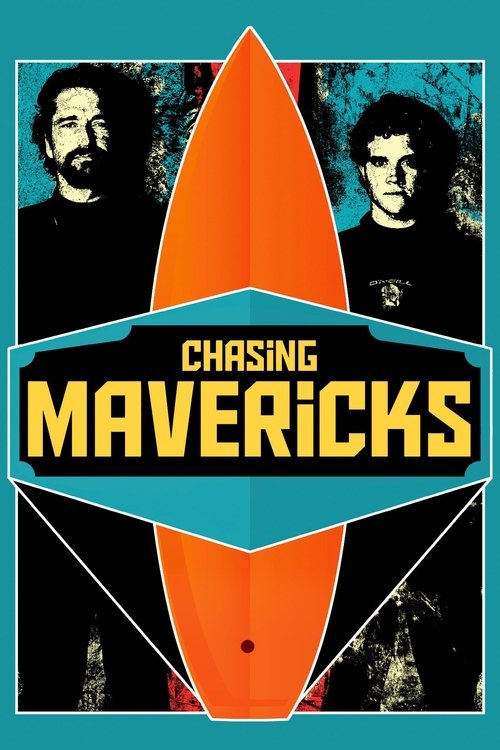
Chasing Mavericks (2012)
Directed by Curtis Hanson
No — Chasing Mavericks is not woke, scoring 0 out of 100 on our wokeness meter.
Chasing Mavericks arrives from 2012, a biographical drama about the Santa Cruz surfer Jay Moriarity, directed by Curtis Hanson and completed by Michael Apted when Hanson's health failed.
Consciousness Markers
The mentor-protégé structure delivers life-affirming lessons about dedication and the 'foundation pillars of surfing,' but these are personal-growth platitudes rather than social or political lecturing.
The cast is overwhelmingly white, led by Gerard Butler, Jonny Weston, Elisabeth Shue, and Leven Rambin, with no diverse casting choices made for representation purposes.
There are no LGBTQ+ characters, relationships, or themes anywhere in the film.
Women appear only as a supportive wife (Brenda), a love interest (Kim), and a mother; the narrative is entirely centered on male mentorship and male athletic achievement.
The film engages with no racial themes or commentary whatsoever; it is a story about white surfers in Santa Cruz.
El Niño is mentioned only as a plot device to explain the incoming swell, not as any kind of environmental or climate message.
There is no economic critique or anti-capitalist messaging; the film is a straightforward inspirational sports drama.
No body positivity themes are present; the film celebrates elite physical conditioning for big-wave surfing.
No neurodivergent characters or themes appear in the film.
The film is a conventional biographical retelling of Jay Moriarity's life and does not reinterpret history through a modern ideological lens.
Why it received this score
Chasing Mavericks arrives from 2012, a biographical drama about the Santa Cruz surfer Jay Moriarity, directed by Curtis Hanson and completed by Michael Apted when Hanson's health failed. Gerard Butler plays Frosty Hesson, the neighbor who pulls a drowning boy from the surf and later agrees to train him for the enormous winter break at Half Moon Bay. The film is sincere, unhurried, and entirely convinced that dedication is its own reward. It grossed seven million dollars against a twenty million dollar budget. The sea did not care, and neither, evidently, did the audience.
For the purposes of cultural classification, the cupboard is bare. The cast is white and the story concerns white surfers in Santa Cruz, so nothing here reaches for representational weight. Women occupy the familiar stations of supportive wife, worried mother, and eventual girlfriend, and the narrative belongs to the men and the water. There is no queer presence, no racial commentary, no economic critique, no body-positive counterargument to elite athletic conditioning. El Niño appears solely as a scheduling device, a swell with a deadline. The film has no interest in instructing anyone about society.
The mentor's foundation pillars of surfing supply a mild strain of self-improvement preaching: paddle thirty-six miles, hold your breath four minutes, write an essay about your feelings. These are platitudes about personal grit, not politics, and they land softly. Brenda Hesson dies of a stroke, Jay rides the wave, and a title card notes that he married Kim and drowned at twenty-two in the Maldives. A gentle film about a short life. It asks nothing of us but attention, and it is honest enough not to pretend otherwise.
Analysis generated by our Consciousness Algorithm


Synopsis
Surfer Jay Moriarity sets out to ride the Northern California break known as Mavericks.
Questions about Chasing Mavericks
Is Chasing Mavericks woke?
No — Chasing Mavericks is not woke, scoring 0 out of 100 on our wokeness meter. That earns it a verdict of Ultra Based.
Does Chasing Mavericks have any woke elements?
Very few. None of the 10 markers reaches 30, the level where a marker counts as present; the highest is Lecture Energy at 10.
How does Chasing Mavericks compare to other 2012 movies?
It ranks #193 of the 230 films from 2012 we've scored; their average is 12. The wokest is Killing Them Softly (92).
How is the Woke Score calculated?
An AI-assisted process researches the film and its reception, scores it 0–100 on ten markers, then combines those into one 0–100 Woke Score. It measures a specific set of 2020s cultural themes, not film quality.