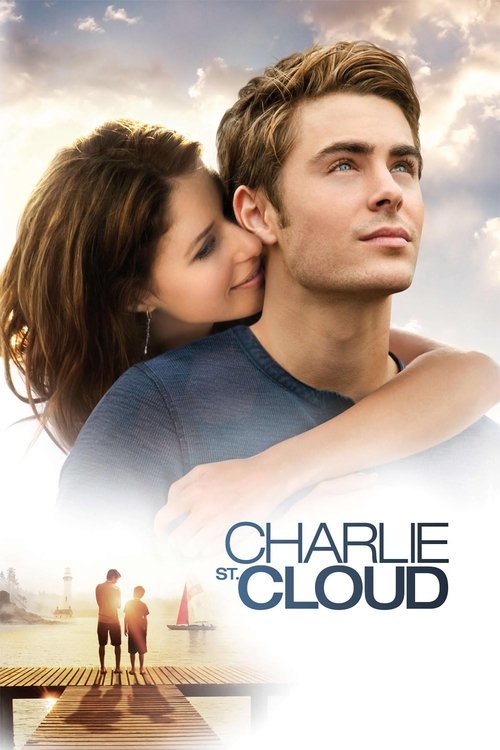
Charlie St. Cloud (2010)
Directed by Burr Steers
No — Charlie St. Cloud is not woke, scoring 3 out of 100 on our wokeness meter.
Charlie St. Cloud arrived in the summer of 2010 carrying a sailboat, a dead brother, and the solemn conviction that grief is best expressed in golden-hour close-ups.
Consciousness Markers
Tess is an independent solo sailor, which gives her some agency, but the film is squarely a male-protagonist romance and advances no feminist argument.
The cast is overwhelmingly white, with no meaningful racial or ethnic diversity and no commentary on representation. Zac Efron, Amanda Crew, Kim Basinger, and Ray Liotta lead a uniformly Caucasian ensemble.
There are no LGBTQ+ characters, relationships, or subtext anywhere in the film.
Race is entirely absent as a theme; the story unfolds in a white Pacific Northwest milieu with no racial consciousness whatsoever.
No environmental or climate themes appear; the sailing and coastal setting is purely romantic backdrop.
The film has no economic critique or class commentary; it is a sentimental supernatural romance.
Body image and body positivity are not addressed in any form.
No neurodivergent characters or themes are present.
The film is a straightforward adaptation of a contemporary novel with no historical revisionism.
The film is a maudlin ghost-story romance rather than a message movie; it preaches nothing beyond generic sentimental life lessons.
Why it received this score
Charlie St. Cloud arrived in the summer of 2010 carrying a sailboat, a dead brother, and the solemn conviction that grief is best expressed in golden-hour close-ups. Zac Efron plays the title sailor who surrenders a Stanford scholarship to rake leaves in a Pacific Northwest cemetery and play catch with the ghost of his younger brother every sunset. Amanda Crew's Tess solo-sails around the world, which is the closest the picture comes to granting a woman an interior life. It is a romance built on a technicality: the girl may already be drowned. The film is maudlin, sincere, and entirely untroubled by the world outside its own tear ducts.
For a cultural audit, the pickings are lean. The cast is uniformly white and the film has no interest in saying so, or in saying anything about it. No LGBTQ characters, no racial consciousness, no climate anxiety despite all that ocean, no class critique, no body politics, no neurodivergent framing. Tess possesses a certain independence as a solo sailor, and the film allows her that much, but she exists to be rescued and remembered. The movie preaches nothing. Its lessons are generic: let go, move on, love again. There is no sermon here, only a message about the healing power of hugging a ghost.
This is a specimen of an older dispensation, a film that wants only to make teenagers cry and sell a soundtrack. It succeeds at neither with much distinction, having grossed less than its budget and earned a critical consensus best summarized as a shrug. The cultural scoreboard reads close to empty, and for once that emptiness is not a failure of nerve. It is simply a film with nothing on its mind but the afterlife and Zac Efron's jawline. We classify it accordingly and move on.
Analysis generated by our Consciousness Algorithm
Part of


Synopsis
Accomplished sailor Charlie St. Cloud has the adoration of his mother Claire and his little brother Sam, as well as a college scholarship that will lead him far from his sleepy Pacific Northwest hometown. But his bright future is cut short when tragedy strikes and takes his dreams with it. After high school classmate Tess returns home unexpectedly, Charlie grows torn between honoring a promise he made four years earlier and moving forward with newfound love. As he finds the courage to let go of the past for good, Charlie discovers the soul most worth saving is his own.
Questions about Charlie St. Cloud
Is Charlie St. Cloud woke?
No — Charlie St. Cloud is not woke, scoring 3 out of 100 on our wokeness meter. That earns it a verdict of Ultra Based.
Does Charlie St. Cloud have any woke elements?
Very few. None of the 10 markers reaches 30, the level where a marker counts as present; the highest is Feminist Agenda at 5.
How does Charlie St. Cloud compare to other 2010 movies?
It ranks #186 of the 238 films from 2010 we've scored; their average is 11. The wokest is My Name Is Khan (84).
How is the Woke Score calculated?
An AI-assisted process researches the film and its reception, scores it 0–100 on ten markers, then combines those into one 0–100 Woke Score. It measures a specific set of 2020s cultural themes, not film quality.