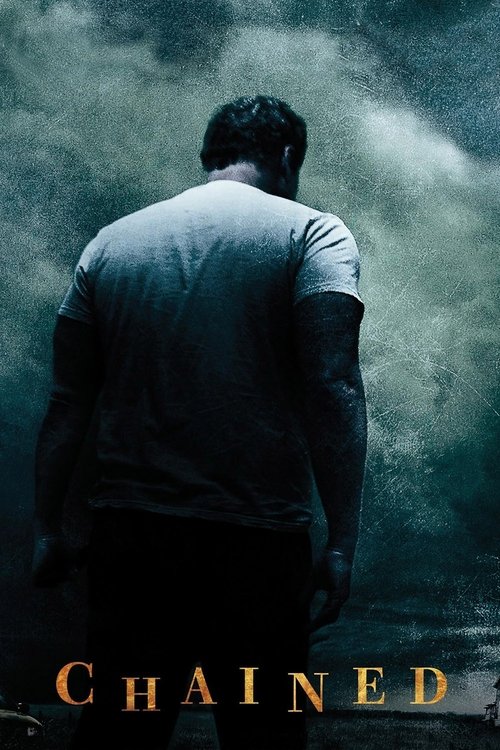
Chained (2012)
Directed by Jennifer Lynch
No — Chained is not woke, scoring 11 out of 100 on our wokeness meter.
Jennifer Lynch's Chained arrives with a title that doubles as a thesis and a premise that doubles as a dare.
Consciousness Markers
Directed by a woman (Jennifer Lynch) and framed by some critics as a female-perspective dissection of the serial-killer genre's misogyny, but the film is steeped in graphic violence against women rather than advancing a feminist agenda.
Lynch stated she wanted to 'promote a dialogue about child abuse' and explore nature vs. nurture, but the film delivers this through grim character drama rather than explicit preaching.
The cast is uniformly white with no diverse or non-traditional casting choices; the film makes no comment on representation.
There are no LGBTQ+ characters, themes, or subtext anywhere in the film.
Race is entirely absent as a theme; the story is a self-contained study of abuse and captivity with no racial commentary.
No environmental or climate themes appear in the film.
The film contains no economic critique or anti-capitalist messaging.
No body-positivity themes; the film's treatment of bodies is purely horrific and violent.
No neurodivergence is depicted or framed as a theme; the killer's behavior is attributed to childhood abuse, not neurodivergence.
The film is a fictional narrative with no historical subject matter to revise.
Why it received this score
Jennifer Lynch's Chained arrives with a title that doubles as a thesis and a premise that doubles as a dare. A serial killer named Bob, played with unsettling commitment by Vincent D'Onofrio, abducts a boy, renames him Rabbit, and spends nine years trying to raise him into an accomplice. The film is grim, patient, and shot in fifteen days in Moose Jaw, Saskatchewan. It is not a pleasant evening at the cinema.
For classificatory purposes, this one sits nearly still. The cast is uniformly white, and the story offers no racial or economic commentary, no climate concerns, no queer subtext, no interest in bodies as sites of celebration, and no framing of neurodivergence. Bob's cruelty is traced to childhood abuse, which makes it a backstory and not a diagnosis. The single flicker of cultural sensibility comes from the director's chair. Lynch, a woman working inside a lurid male tradition, frames the violence against women as the genre's own sickness, and some critics read the result as a female dissection of misogyny. We can credit that reading without endorsing it. The camera lingers on violated bodies long enough that the critique and the spectacle become difficult to separate, which is precisely the trouble.
Then there is the question of intent. Lynch said she hoped to promote a dialogue about child abuse and to explore nature versus nurture. That is a mission statement, not a homily. The film never pauses to explain itself, never turns to the audience to deliver a lesson, and for that small mercy we should be grateful. It is a nasty piece of work that argues through atmosphere and dread. We have sat through many films that lecture. This one merely loiters in a garage with a man who should not be trusted.
Analysis generated by our Consciousness Algorithm


Synopsis
A serial killer kidnaps a young boy after murdering his mother, then raises him to be his accomplice. After years in captivity, the boy must choose between escaping or following in his captor's bloody footprints.
Questions about Chained
Is Chained woke?
No — Chained is not woke, scoring 11 out of 100 on our wokeness meter. That earns it a verdict of Ultra Based.
Does Chained have any woke elements?
Very few. None of the 10 markers reaches 30, the level where a marker counts as present; the highest is Feminist Agenda at 15.
How does Chained compare to other 2012 movies?
It ranks #78 of the 230 films from 2012 we've scored; their average is 12. The wokest is Killing Them Softly (92).
How is the Woke Score calculated?
An AI-assisted process researches the film and its reception, scores it 0–100 on ten markers, then combines those into one 0–100 Woke Score. It measures a specific set of 2020s cultural themes, not film quality.