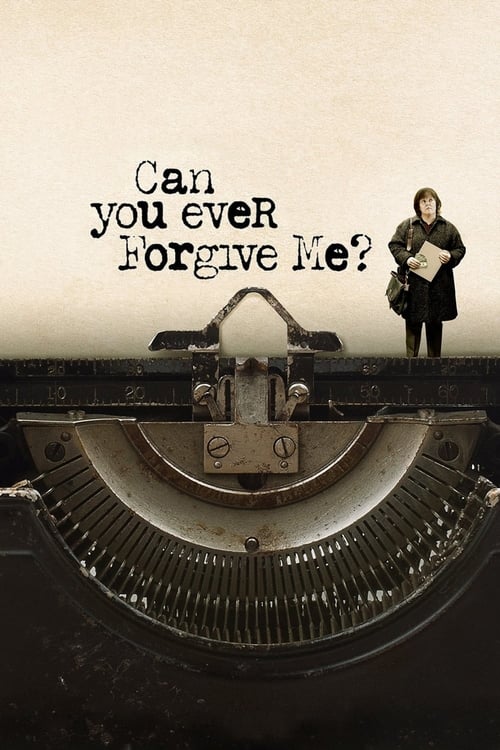
Can You Ever Forgive Me? (2018)
Directed by Marielle Heller
No — Can You Ever Forgive Me? is not especially woke, scoring 30 out of 100 on our wokeness meter.
Can You Ever Forgive Me? concerns a woman who types letters in the voices of dead people and sells them, which the film treats as a vocational crisis rather than a crime spree.
Consciousness Markers
The protagonist is a lesbian and her closest friend is an openly gay man; the film depicts gay bars, cruising, and the AIDS crisis. However, the LGBTQ content is woven into the narrative rather than foregrounded as advocacy, and critics noted the marketing downplayed it.
Melissa McCarthy headlines as the real-life lesbian author Lee Israel, with Richard E. Grant as her gay confidant Jack Hock and a supporting cast that includes actors of color in minor roles. The representation is present but largely organic to the true story rather than a casting statement.
A woman director (Marielle Heller) and a female screenwriter adapt the story of a woman fighting for relevance in a male-dominated publishing industry. The feminist angle is implicit in the premise rather than argued on screen.
The film gestures at the commercial cynicism of the publishing and autograph markets that discard an aging author, but it is a character study of personal desperation rather than a systemic indictment of capital.
The film is a wry, melancholic character piece that shows rather than tells, offering no moralizing speeches or audience instruction.
The cast includes a few non-white performers in small roles, but the film engages no racial themes or commentary whatsoever.
No environmental content of any kind.
Melissa McCarthy is a plus-size actress, but the film never addresses body image, size, or self-acceptance as a theme.
Lee is depicted as socially phobic, alcoholic, and misanthropic, but the film frames these as character flaws and addiction rather than neurodivergence to be celebrated or accommodated.
The film is a faithful adaptation of Israel's own confessional memoir and takes only minor dramatic liberties; it makes no attempt to rewrite history for ideological ends.
Why it received this score
Can You Ever Forgive Me? concerns a woman who types letters in the voices of dead people and sells them, which the film treats as a vocational crisis rather than a crime spree. Melissa McCarthy plays Lee Israel, a biographer of Estée Lauder and Fanny Brice who has fallen out of step with the market, and she plays her without a flicker of ingratiation. Marielle Heller directs the 1991 Manhattan of cramped apartments and dim bars with a melancholic exactness. The film is funny the way cold rooms are funny, which is to say slowly and at someone else's expense.
The social consciousness here is embedded in the material, not applied to it. Lee is a lesbian, Jack Hock is gay, and the narrative passes through Julius', a real gay bar, and toward the AIDS ward without stopping to explain itself. Richard E. Grant gives Jack a buoyancy that curdles as the picture proceeds. That the studio's marketing was reported to soft-pedal this aspect suggests a nervousness the film itself never shares. A woman director and a woman co-writer adapt a woman's memoir about a woman's quarrel with a male-run publishing trade, and the politics of that arrangement sit quietly in the premise. Nobody makes a speech about it.
What the film declines to do is instruct. There are no sermons, no statistics, no audience addressed from the pulpit. Lee's drinking and her social revulsion are rendered as damage and addiction, not as conditions demanding accommodation. Her body is never discussed. The publishing industry's cruelty is a texture of the story instead of an indictment of capital. This is a picture that registers lightly on the contemporary ledger, and it is better for the restraint. After a decade of films that explain themselves to the viewer twice over, this one lets a difficult woman be difficult, and trusts the audience to keep up.
Analysis generated by our Consciousness Algorithm


Synopsis
When a bestselling celebrity biographer is no longer able to get published because she has fallen out of step with current tastes, she turns her art form to deception.
Questions about Can You Ever Forgive Me?
Is Can You Ever Forgive Me? woke?
No — Can You Ever Forgive Me? is not especially woke, scoring 30 out of 100 on our wokeness meter. That earns it a verdict of Based.
Does Can You Ever Forgive Me? have any woke elements?
3 of the 10 markers register at 30 or above, led by LGBTQ+ Themes (58), Representation Casting (45) and Feminist Agenda (35). On LGBTQ+ Themes: The protagonist is a lesbian and her closest friend is an openly gay man; the film depicts gay bars, cruising, and the AIDS crisis.
How does Can You Ever Forgive Me? compare to other 2018 movies?
It ranks #69 of the 325 films from 2018 we've scored; their average is 20. The wokest is Return (92).
How is the Woke Score calculated?
An AI-assisted process researches the film and its reception, scores it 0–100 on ten markers, then combines those into one 0–100 Woke Score. It measures a specific set of 2020s cultural themes, not film quality.