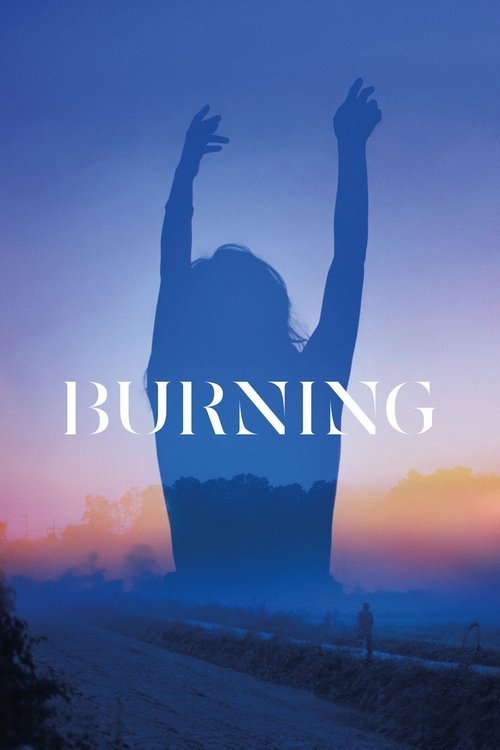
Burning (2018)
Directed by Lee Chang-dong
No — Burning is not woke, scoring 12 out of 100 on our wokeness meter.
Lee Chang-dong's Burning arrives as a slow, patient study of jealousy and class resentment, adapted loosely from a Haruki Murakami short story and wearing its ambiguities like a coat.
Consciousness Markers
The film contrasts the idle wealth of the Gatsby-like Ben with the precarious labor of Jong-su, and critics note its understated observations on class privilege. The critique is atmospheric and implicit rather than a rallying cry.
Hae-mi is largely a mystery and object of the male protagonist's obsession, and the film has drawn feminist critique for the 'missing woman' trope rather than advancing a feminist agenda. Some critics defend her interiority, but the film itself offers no explicit feminist thesis.
An entirely Korean production with Korean actors; Steven Yeun's casting as the Korean-American Ben is a natural fit rather than a deliberate diversity gesture. No conscious representation agenda is at work.
The film is deliberately ambiguous and meditative, refusing to explain its mysteries or moralize. It is the antithesis of a lecture, offering no didactic message.
The central tension is class, not race; Ben's wealth versus Jong-su's rural poverty is a socioeconomic divide within a homogeneous Korean society. No racial consciousness is articulated.
No LGBTQ+ characters, themes, or subtext appear anywhere in the film.
Ben's greenhouse-burning hobby is a private, metaphorical ritual, not an environmentalist statement. No climate themes are present.
Hae-mi's topless dance and mention of plastic surgery are narrative and thematic elements, not a body-positivity message.
No neurodivergent characters or themes are depicted.
A contemporary psychological thriller with no historical revisionism.
Why it received this score
Lee Chang-dong's Burning arrives as a slow, patient study of jealousy and class resentment, adapted loosely from a Haruki Murakami short story and wearing its ambiguities like a coat. Jong-su delivers packages, tends his father's cattle, and watches a wealthy stranger named Ben glide through life without visible labor. The film observes this imbalance without ever raising its voice. Ben burns greenhouses as a hobby, or claims to, and the audience is left to decide whether anything burned at all. The result is a thriller that refuses to solve itself, which is either its greatest virtue or an elaborate act of withholding.
On the matter of representation, the production is entirely Korean, and Steven Yeun's presence as the Korean-American Ben reads as a natural piece of casting, not a gesture toward anything. The central divide is money, not race, since everyone on screen shares a homogeneous society and the friction comes from Ben's idle Porsche wealth against Jong-su's precarious labor. That class observation is atmospheric and implicit, a mood more than a manifesto. Hae-mi, the woman both men orbit, has drawn scrutiny for vanishing into a plot device, and the film offers no explicit thesis about her interiority. She dances, she disappears, and the camera moves on.
There is no environmental sermon in the greenhouse ritual, no body-positive message in the topless dance, no neurodivergent character, and no revisionist history to speak of. This is a contemporary psychological mystery with no interest in moral instruction. It withholds, it lingers, it lets the fire do the talking. For a viewer accustomed to being told what to think, the silence can feel almost rude. For everyone else, it is simply a film that trusts its own smoke.
Analysis generated by our Consciousness Algorithm


Synopsis
Deliveryman Jong-su is out on a job when he runs into Hae-mi, a girl who once lived in his neighborhood. She asks if he'd mind looking after her cat while she's away on a trip to Africa. On her return, she introduces to Jong-su an enigmatic young man named Ben, who she met during her trip. One day Ben tells Jong-su about his most unusual hobby.
Questions about Burning
Is Burning woke?
No — Burning is not woke, scoring 12 out of 100 on our wokeness meter. That earns it a verdict of Ultra Based.
Does Burning have any woke elements?
1 of the 10 markers register at 30 or above, led by Eat the Rich (30). On Eat the Rich: The film contrasts the idle wealth of the Gatsby-like Ben with the precarious labor of Jong-su, and critics note its understated observations on class privilege.
How does Burning compare to other 2018 movies?
It ranks #169 of the 325 films from 2018 we've scored; their average is 20. The wokest is Return (92).
How is the Woke Score calculated?
An AI-assisted process researches the film and its reception, scores it 0–100 on ten markers, then combines those into one 0–100 Woke Score. It measures a specific set of 2020s cultural themes, not film quality.