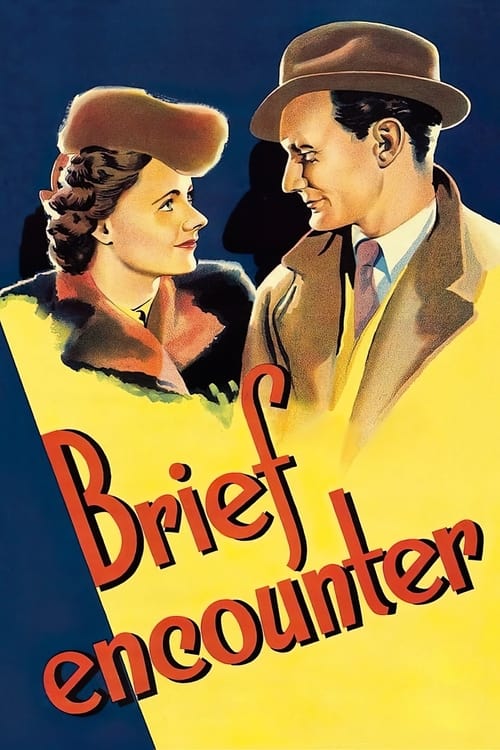
Brief Encounter (1945)
Directed by David Lean
No — Brief Encounter is not woke, scoring 0 out of 100 on our wokeness meter.
Brief Encounter arrives from 1945 with no interest in being useful to anyone.
Consciousness Markers
The cast is entirely white British, reflecting the demographics of 1945 British cinema with no attempt at inclusive or color-conscious casting.
No LGBTQ+ characters, themes, or subtext are present in this story of a heterosexual extramarital affair.
The film centers on a housewife's moral anguish over infidelity, but frames her dilemma through duty and social convention rather than any feminist critique of patriarchy or gender roles.
There is no engagement with racial identity, racism, or racial justice; the film is a wholly white, middle-class British milieu.
No environmental or climate themes appear in this domestic romantic drama.
Class is present as texture, but the film offers no critique of capitalism or wealth; it is a story of middle-class respectability.
No body-positivity themes; the film's realism about unglamorous leads is aesthetic, not ideological.
No depiction or discussion of neurodivergence.
The film is a faithful adaptation of Coward's 1936 play set in its own contemporary period, with no revisionist reframing of history.
The film is emotionally restrained and morally ambiguous rather than preachy; it dramatizes its themes through subtext and the stiff upper lip rather than delivering modern social messaging.
Why it received this score
Brief Encounter arrives from 1945 with no interest in being useful to anyone. David Lean films Noël Coward's one-act play as a study in middle-class paralysis: Laura Jesson, a suburban wife, meets a doctor at Milford Junction, and the two of them spend the running time failing to have an affair. Rachmaninoff's second piano concerto does most of the emotional labor. The cast is white, British, and unglamorous by design, and the film's realism about ordinary faces is a matter of aesthetic conviction, not of representation. Nobody here is asked to stand for a category. They are asked to suffer quietly, and they comply.
The moral architecture is entirely conventional. Laura's anguish comes from duty, from the fear of betraying her husband, from the social ruin that divorce would visit upon a woman in the late 1930s. The film dramatizes these pressures without interrogating them. No critique of the institution of marriage surfaces, and no suggestion that the arrangement itself is the problem. The screenplay treats convention as weather: immovable, impersonal, and not up for debate. Class appears as texture, with the refreshment room staff and their own thwarted flirtation serving as comic counterpoint, but there is no economic argument to make. The film observes the British middle class and finds them exactly as they believe themselves to be.
For the purposes of the present classification, the ledger is blank. No representation initiative, no queer subtext, no feminist reading of Laura's confinement, no racial consciousness in this all-white milieu, no climate anxiety, no anti-capitalist sentiment, no body-positivity program, no neurodivergent characters, no revisionist rewriting of the period, and no lecturing. The film prefers subtext and silence, and it would regard our scorecard as an impertinence. It is a great film. It is of no use to us whatsoever.
Analysis generated by our Consciousness Algorithm


Synopsis
Returning home from a shopping trip to a nearby town, bored suburban housewife Laura Jesson is thrown by happenstance into an acquaintance with virtuous doctor Alec Harvey. Their casual friendship soon develops during their weekly visits into something more emotionally fulfilling than either expected, and they must wrestle with the potential havoc their deepening relationship would have on their lives and the lives of those they love.
Questions about Brief Encounter
Is Brief Encounter woke?
No — Brief Encounter is not woke, scoring 0 out of 100 on our wokeness meter. That earns it a verdict of Ultra Based.
Does Brief Encounter have any woke elements?
No. All 10 markers score zero.
How does Brief Encounter compare to other 1945 movies?
It ranks #6 of the 7 films from 1945 we've scored; their average is 4. The wokest is To Have and Have Not (11).
How is the Woke Score calculated?
An AI-assisted process researches the film and its reception, scores it 0–100 on ten markers, then combines those into one 0–100 Woke Score. It measures a specific set of 2020s cultural themes, not film quality.