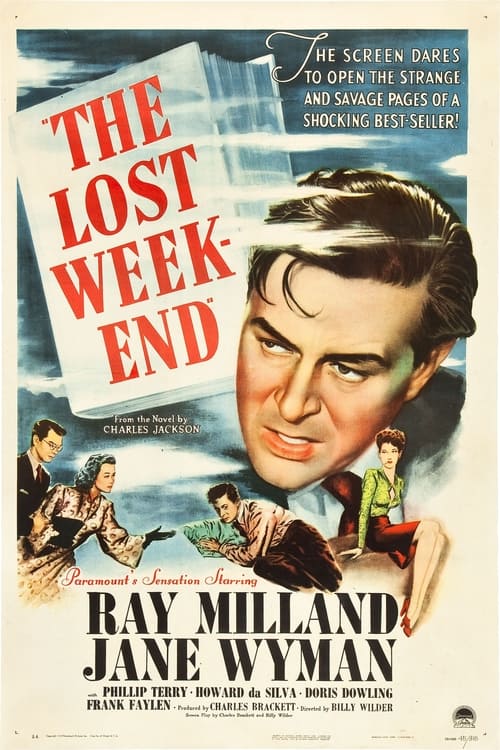
The Lost Weekend (1945)
Directed by Billy Wilder
No · Ultra Based
How we score movies →Consciousness Markers
The film's relentless focus on addiction as a moral and psychological problem creates a preachy, instructional quality. It functions partly as a cautionary narrative about the dangers of alcoholism.
The cast is entirely white and reflects no deliberate diversity casting practices. No evidence of conscious representation.
No LGBTQ+ themes, characters, or subtext present in the film.
Jane Wyman's character exists solely in relation to the male protagonist's recovery and emotional needs. No feminist consciousness evident.
No racial themes, commentary, or consciousness present in the narrative.
No climate or environmental themes present.
No critique of capitalism, wealth inequality, or systemic economic oppression evident.
No body positivity messaging or commentary on physical appearance standards.
While depicting addiction, the film does not employ modern neurodivergence frameworks or celebrate neurodivergent identity.
The film is contemporary fiction, not historical narrative, and contains no revisionist historical claims.


Synopsis
Longtime alcoholic Don Birnam has been sober for ten days and appears to be over the worst... but his craving has just become more insidious. Evading a country weekend planned by his brother and girlfriend, he begins a four-day bender that just might be his last – one way or another.
Why it received this score
The Lost Weekend presents itself as a serious examination of addiction, a subject treated as taboo in 1945 cinema. Billy Wilder's unflinching portrait of alcoholism strips away Hollywood glamour and comic relief, refusing to villainize the protagonist or offer easy moral lessons. By modern standards, this is merely humane filmmaking, but the film's commitment to depicting the addict as a sympathetic human being rather than a cautionary punchline does represent a progressive sensibility for its era.
The film's treatment of Don Birnam exhibits what we might charitably call proto-sympathetic portrayal of mental illness and addiction. Jane Wyman's female character exists primarily to facilitate the male protagonist's narrative, and the social circumstances that might explain addiction receive no examination whatsoever. The film concerns itself exclusively with individual pathology, not systemic causes or structural inequality.
What we observe here is a film of genuine artistic merit that happens to challenge contemporary attitudes toward addiction without possessing any of the specific markers of modern progressive cultural consciousness. There is no representation politics, no identity consciousness, no systemic critique. The film earns its modest score through historical progressivism alone, not through any engagement with contemporary social awareness frameworks.
Analysis generated by our Consciousness Algorithm
Critic Reviews
“On review aggregator Rotten Tomatoes, the film has an approval rating of 97% based on 70 reviews, with an average rating of 8.4/10.”
“Discover reviews, ratings, and trailers for The Lost Weekend on Rotten Tomatoes.”
“Through Milland's lead performance and Wilder's writing and direction, it's easy to see how The Lost Weekend earned the Best Picture Oscar and a place among the greatest films of all time.”
“On Nov. 29, 1945, Paramount Pictures and Billy Wilder brought their adaptation of 'The Lost Weekend' to theaters in Los Angeles.”