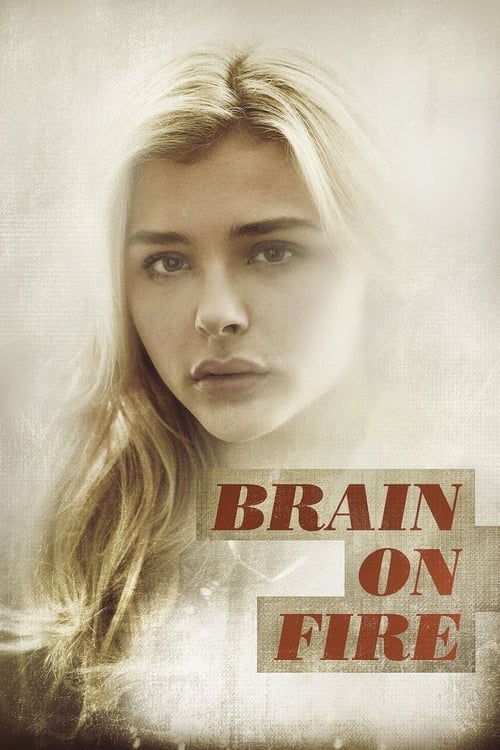
Brain on Fire (2017)
Directed by Gerard Barrett
No — Brain on Fire is not especially woke, scoring 22 out of 100 on our wokeness meter.
Another memoir, another medical mystery, another prestige drama with a streaming afterlife.
Consciousness Markers
Casting includes Tyler Perry as Susannah's boss and Navid Negahban as the Syrian-American neurologist who diagnoses her, providing some diverse representation in supporting roles, though the leads are white.
The film centers on a female journalist whose medical symptoms are initially dismissed and her mother's advocacy, but it does not advance an explicit feminist agenda.
The film raises awareness about anti-NMDA receptor encephalitis and medical misdiagnosis, with closing text that is informative, but it remains primarily a personal drama rather than a lecture.
No LGBTQ+ characters or themes are present.
The film does not explore racial issues or consciousness; the Middle Eastern doctor's ethnicity is incidental and not commented upon.
No environmental or climate themes.
No critique of capitalism or wealth inequality.
No body positivity themes.
The protagonist suffers from an autoimmune brain inflammation, not a neurodivergent identity; the film does not engage with neurodiversity as a social concept.
It is a faithful adaptation of a memoir, not a revisionist historical narrative.
Why it received this score
Another memoir, another medical mystery, another prestige drama with a streaming afterlife. The machinery here is familiar: a young journalist's mind comes apart, the doctors shrug, and the culture's preferred narrative of the dismissed female patient sputters into view. The film has the good sense not to push. It wants to be a horror story about the self dissolving, and it settles for being a procedural about the self being restored. Competent, watchable, gone by morning.
The casting does a modest amount of cultural bookkeeping. Tyler Perry appears as the newspaper editor, Navid Negahban as the neurologist whose clock-drawing test cracks the case. His ethnicity is never mentioned, which is either restraint or an oversight, and the film does not care enough to tell us which. Chloë Grace Moretz is asked to play a woman losing her grip, and she delivers the shivering, the slurring, the blank stare with commitment. The film's sympathies rest with her and with her mother, who spends the third act advocating for a daughter the medical establishment has already written off. This registers as social awareness in the mildest possible key, a gentle hum beneath the plot.
The closing text is the real thesis. Hundreds diagnosed, thousands treated, a memoir that did measurable good in the world. That is a public service announcement wearing a drama's clothes, and it lands harder than anything in the preceding ninety minutes. Otherwise the picture is content to be a decent account of a terrible month, with no interest in the larger arguments about medicine or gender that a more ambitious version might have chased. It is a case study. It knows it. It hands over the chart and waits for someone to sign.
Analysis generated by our Consciousness Algorithm

Synopsis
Susannah Cahalan, an up-and-coming journalist at the New York Post becomes plagued by voices in her head and seizures, causing a rapid descent into insanity.
Questions about Brain on Fire
Is Brain on Fire woke?
No — Brain on Fire is not especially woke, scoring 22 out of 100 on our wokeness meter. That earns it a verdict of Based.
Does Brain on Fire have any woke elements?
1 of the 10 markers register at 30 or above, led by Representation Casting (35). On Representation Casting: Casting includes Tyler Perry as Susannah's boss and Navid Negahban as the Syrian-American neurologist who diagnoses her, providing some diverse representation in supporting roles, though the leads are white.
How does Brain on Fire compare to other 2017 movies?
It ranks #83 of the 309 films from 2017 we've scored; their average is 19. The wokest is I Am Not Your Negro (92).
How is the Woke Score calculated?
An AI-assisted process researches the film and its reception, scores it 0–100 on ten markers, then combines those into one 0–100 Woke Score. It measures a specific set of 2020s cultural themes, not film quality.