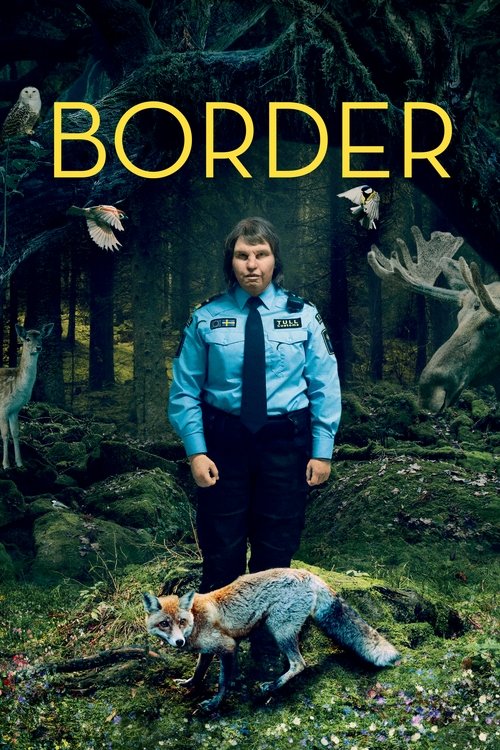
Border (2018)
Directed by Ali Abbasi
No — Border is not especially woke, scoring 22 out of 100 on our wokeness meter.
The border guard Tina can smell guilt, shame, and contraband, which makes her useful to the Swedish customs service and unbearable at dinner.
Consciousness Markers
The central relationship involves two trolls with intersex/non-binary genitalia and a fluid approach to gender and sexuality, though the film treats this as fantasy biology rather than an explicit LGBTQ+ social thesis.
Tina is a capable female protagonist with agency who rejects a controlling partner, but the film does not advance a feminist agenda or critique patriarchy in a modern activist sense.
The trolls function as an oppressed hidden minority with a history of persecution, offering an allegorical parallel to racial or ethnic otherness, but the film never explicitly engages with real-world racial politics.
The film touches on moral questions of compassion versus revenge, but it presents them through narrative and character rather than preachy exposition.
The protagonist has an unconventional body and the film normalizes her physical difference within its fantasy world, but it does not promote a body-positivity message about real-world beauty standards.
The cast is entirely Nordic and the protagonist's non-normative appearance is achieved through prosthetics and weight gain, not through casting actors from marginalized real-world groups.
There is no environmental or climate-related theme in the film.
The film contains no critique of capitalism, wealth inequality, or economic systems.
Tina's heightened senses and social awkwardness are framed as troll biology, not as neurodivergence or a neurodiversity theme.
The film invents a fictional history of troll persecution in the 1970s, which does not constitute revisionist history of real events.
Why it received this score
The border guard Tina can smell guilt, shame, and contraband, which makes her useful to the Swedish customs service and unbearable at dinner. Ali Abbasi's film, adapted from a short story by John Ajvide Lindqvist, opens as a procedural and then takes a hard left into stranger territory: a love story between two trolls in the Scandinavian woods. It won the Un Certain Regard prize at Cannes and picked up an Oscar nomination for makeup, which indicates where the industry's affections settled. Prosthetics and weight gain, not casting, carry the burden of Tina's Neanderthal face, and the film is content to let that stand without comment.
Tina's romance with Vore is where the film's more adventurous instincts surface. He arrives with maggots in his luggage and female genitalia beneath his clothes. She discovers an erect penis she did not know she possessed. The film treats this biology as fantasy, mining it for wonder and discomfort instead of argument, so the queerness stays folded inside the creature design. Tina is a capable woman who evicts a controlling boyfriend and claims her own identity, though the film never builds a case against patriarchy. Her body is odd, and the film simply accepts it, declining to convert that acceptance into a lesson about anyone's real waistline.
Beneath all of it sits an allegory about a hidden minority, a people tortured in psychiatric hospitals during the 1970s and now plotting a patient revenge. The parallel to ethnic persecution is present but never named, and no real history is rewritten to make the point. Vore's scheme raises questions about compassion and vengeance, and the film lets character carry them instead of a monologue. There is no climate sermon. There is no indictment of capital. The whole affair unfolds in a moral universe that predates our current vocabulary. Refreshing, if you can stomach the maggots.
Analysis generated by our Consciousness Algorithm


Synopsis
When a border guard with a sixth sense for identifying smugglers encounters the first person she cannot prove is guilty, she is forced to confront terrifying revelations about herself and humankind.
Questions about Border
Is Border woke?
No — Border is not especially woke, scoring 22 out of 100 on our wokeness meter. That earns it a verdict of Based.
Does Border have any woke elements?
1 of the 10 markers register at 30 or above, led by LGBTQ+ Themes (45). On LGBTQ+ Themes: The central relationship involves two trolls with intersex/non-binary genitalia and a fluid approach to gender and sexuality, though the film treats this as fantasy biology rather than an explicit LGBTQ+ social thesis.
How does Border compare to other 2018 movies?
It ranks #91 of the 325 films from 2018 we've scored; their average is 20. The wokest is Return (92).
How is the Woke Score calculated?
An AI-assisted process researches the film and its reception, scores it 0–100 on ten markers, then combines those into one 0–100 Woke Score. It measures a specific set of 2020s cultural themes, not film quality.