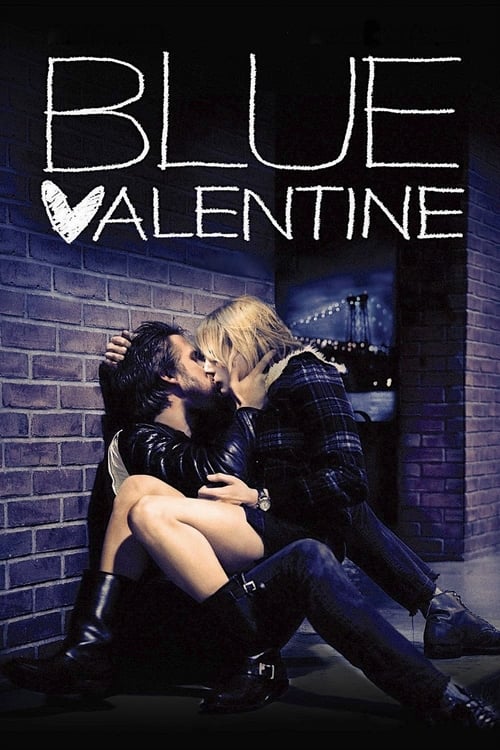
Blue Valentine (2010)
Directed by Derek Cianfrance
No — Blue Valentine is not woke, scoring 13 out of 100 on our wokeness meter.
Derek Cianfrance's Blue Valentine arrived in 2010 with two movie stars, a Super 16mm camera, and a marriage to dismantle.
Consciousness Markers
Cindy's exhaustion with unequal domestic labor and her thwarted career ambitions are sympathetically rendered, and the film critiques Dean's man-child inertia, though it offers no explicit feminist thesis.
The film observes a marriage's collapse with ambivalence rather than moral instruction, offering almost no didactic messaging.
The cast is uniformly white, with no meaningful racial or ethnic diversity in principal or supporting roles.
No LGBTQ+ characters, themes, or subtext appear anywhere in the film.
Race is entirely absent as a subject; the film concerns a white working-class couple in Pennsylvania.
No environmental or climate themes are present.
Dean's lack of ambition and modest house-painting job are character traits, not a systemic economic critique.
No body-positivity messaging; the film's nudity is intimate drama, not a statement about body acceptance.
Dean's alcoholism and volatility are portrayed as character flaws, not framed through a neurodivergence lens.
The film is a contemporary fictional drama with no historical revisionism.
Why it received this score
Derek Cianfrance's Blue Valentine arrived in 2010 with two movie stars, a Super 16mm camera, and a marriage to dismantle. It alternates between the giddy Brooklyn courtship of Dean and Cindy and the sour Pennsylvania aftermath, and it does so without narration, without a thesis, and without any interest in telling us how to feel. Ryan Gosling and Michelle Williams improvised much of it, and the result has the texture of something found rather than composed. The film was briefly threatened with an NC-17 for a scene of oral sex performed on a woman, a ruling Gosling called sexist and not without reason.
Where the picture carries any social charge, it sits with Cindy. She is a nurse who once studied pre-med. She manages the child, the breakfast, the schedule, the emotional labor, while Dean paints houses, drinks beer behind the wheel, and clings to the notion that loving hard is the same as trying. Her fatigue is rendered with real sympathy, and the film is honest about how a woman's ambitions get quietly absorbed by a man's contentment. It never announces this. It lets the dishes pile up and the offer of a better job go unanswered. Dean is not a villain. He is a man who stopped growing and cannot see it, and the script declines to hand either of them a speech.
The rest of the contemporary checklist goes untouched. Race is not a subject. Class is a detail of wardrobe and budget, not an argument. The nudity is intimate drama, not a statement about bodies. Dean's drinking is a flaw, not a diagnosis. There is no environment to save and no system to indict. The film leaves us with a portrait of two people failing at close range, and it is better for having no sermon in it. The vintage is dry, bitter, and entirely of its own making.
Analysis generated by our Consciousness Algorithm


Synopsis
Dean and Cindy live a quiet life in a modest neighborhood. They appear to have the world at their feet at the outset of the relationship. However, his lack of ambition and her retreat into self-absorption cause potentially irreversible cracks in their marriage.
Questions about Blue Valentine
Is Blue Valentine woke?
No — Blue Valentine is not woke, scoring 13 out of 100 on our wokeness meter. That earns it a verdict of Ultra Based.
Does Blue Valentine have any woke elements?
Very few. None of the 10 markers reaches 30, the level where a marker counts as present; the highest is Feminist Agenda at 22.
How does Blue Valentine compare to other 2010 movies?
It ranks #63 of the 238 films from 2010 we've scored; their average is 11. The wokest is My Name Is Khan (84).
How is the Woke Score calculated?
An AI-assisted process researches the film and its reception, scores it 0–100 on ten markers, then combines those into one 0–100 Woke Score. It measures a specific set of 2020s cultural themes, not film quality.