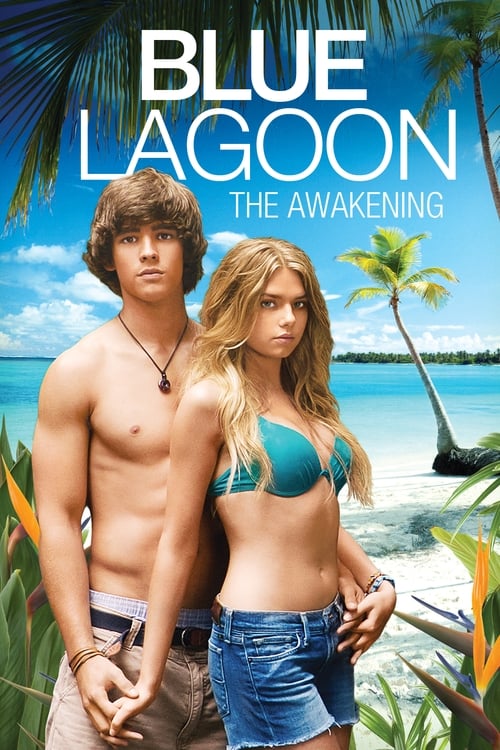
Blue Lagoon: The Awakening (2012)
Directed by Jake Newsome
No — Blue Lagoon: The Awakening is not woke, scoring 0 out of 100 on our wokeness meter.
There is a certain purity to a film that refuses to mean anything at all, and Blue Lagoon: The Awakening arrives with the serene confidence of a Lifetime original that knows precisely what it is and aspires to nothing further.
Consciousness Markers
Cast is predominantly white with a few minority actors in supporting roles, but the film makes no deliberate effort at inclusive or race-conscious casting.
No LGBTQ+ characters, themes, or subtext are present.
The female lead exists within a conventional romance narrative, with no feminist critique or agenda.
The Trinidad setting and charity trip are mere background; the film does not engage with racial politics or consciousness.
No environmental or climate-related themes are present.
The film contains no critique of capitalism, wealth, or economic inequality.
No body positivity themes or messaging are present.
Dean is portrayed as a troubled loner, but not through a neurodivergent lens.
The film updates the Victorian source to contemporary times, but this is not a woke revisionist history.
The film has no preachy or lecture-like messaging.
Why it received this score
There is a certain purity to a film that refuses to mean anything at all, and Blue Lagoon: The Awakening arrives with the serene confidence of a Lifetime original that knows precisely what it is and aspires to nothing further. Two photogenic teenagers, Emma and Dean, are marooned on a Caribbean island after a boat party goes sideways, and the ensuing hundred days consist of fire-building, fishing, a skeleton, a tastefully lit consummation, and the gradual bloom of young love. The Trinidad school-building trip that opens the proceedings is scaffolding, not statement. Nobody gazes upon the less fortunate children and delivers a monologue about global inequity. The island is a backdrop, not a metaphor. The tide simply takes the dinghy, and the plot moves on.
One searches the runtime for a thesis and finds only salt water and adolescent longing. Emma's parents have pre-planned her future, a detail that could have been pressed into service as a mild indictment of parental expectation, but the film treats it as a passing grievance on the way to the prom. Dean carries guilt over his mother's death and behaves as a sullen loner, which the screenplay presents as moody romance rather than any clinical condition requiring a label. The couple's shared wish to have children is spoken aloud and then dropped, no commentary attached. The rescue arrives by helicopter, the media swarms, and the only conflict left is whether a popular girl will cross a parking lot to kiss the boy nobody talks to.
The result is a remake that updates its Victorian source without arguing with it, adapting a 1908 novel into contemporary clothes while leaving every social question unasked. It is sentimental, understated, and entirely free of sermonizing. We are left with two attractive people, a lagoon, and the quiet hum of a franchise going through its motions. There is nothing here to classify beyond the obvious, and the obvious is enough. The film is silly, watchable, and innocent of every cultural preoccupation of its decade.
Analysis generated by our Consciousness Algorithm
Part of
Synopsis
Two high school students become stranded on a tropical island and must rely on each other for survival. They learn more about themselves and each other while falling in love.
Questions about Blue Lagoon: The Awakening
Is Blue Lagoon: The Awakening woke?
No — Blue Lagoon: The Awakening is not woke, scoring 0 out of 100 on our wokeness meter. That earns it a verdict of Ultra Based.
Does Blue Lagoon: The Awakening have any woke elements?
No. All 10 markers score zero.
How does Blue Lagoon: The Awakening compare to other 2012 movies?
It ranks #193 of the 230 films from 2012 we've scored; their average is 12. The wokest is Killing Them Softly (92).
How is the Woke Score calculated?
An AI-assisted process researches the film and its reception, scores it 0–100 on ten markers, then combines those into one 0–100 Woke Score. It measures a specific set of 2020s cultural themes, not film quality.