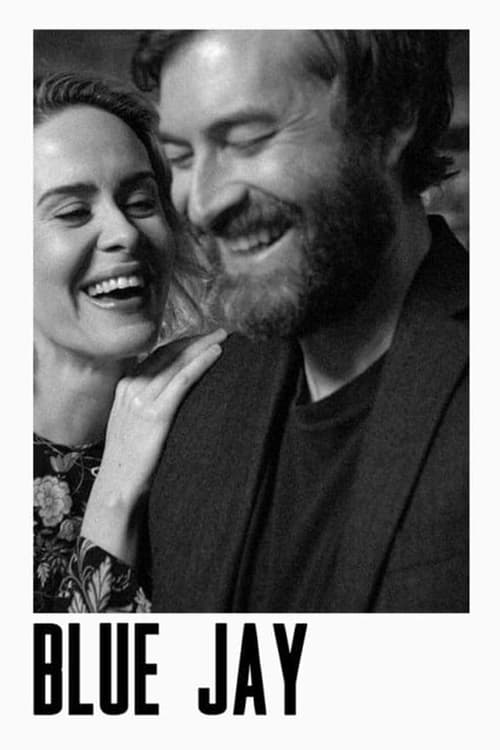
Blue Jay (2016)
Directed by Alex Lehmann
No — Blue Jay is not woke, scoring 3 out of 100 on our wokeness meter.
Alex Lehmann's Blue Jay arrives dressed in black and white, a decision its director framed as a stripping away of the unnecessary.
Consciousness Markers
Amanda is given interiority and a past abortion that shaped the relationship, but the film treats this as personal drama rather than a feminist thesis.
The cast is led by two white actors with a small supporting ensemble; there is no deliberate diverse or inclusive casting effort.
The film centers on a heterosexual former couple and contains no LGBTQ+ characters or themes.
Race is entirely absent from the film's concerns; it is a two-hander about memory and regret.
No environmental or climate themes appear.
No economic critique or class-based messaging; the house renovation is a personal, not political, detail.
No body image or body positivity themes.
Amanda mentions anti-depressants and emotional numbness, but this is portrayed as grief and depression, not framed as neurodivergence advocacy.
No historical revisionism; the film is a contemporary fictional character study.
A quiet, improvised two-hander with no didactic messaging or moralizing.
Why it received this score
Alex Lehmann's Blue Jay arrives dressed in black and white, a decision its director framed as a stripping away of the unnecessary. Two former high school sweethearts, Jim and Amanda, collide in a supermarket in their tiny California hometown and spend an evening wandering through liquor stores, lakesides, and the empty house of Jim's late mother. Mark Duplass and Sarah Paulson improvise their way through the reunion with a naturalism that keeps the thing from curdling into nostalgia bait. It is a small film, and it knows it.
As a piece of cultural messaging, the film is nearly inert, and this is meant as a compliment to its honesty if not its timeliness. There is no diverse casting initiative at work here, no LGBTQ subplot, no climate anxiety, no class warfare, no body politics, no examination of race. Amanda's past abortion surfaces late and lands as personal devastation, the private wound that ended a teenage romance. The film grants her interiority and lets her carry the weight of a decision made decades ago, though it never organizes that grief into a thesis. She mentions anti-depressants and a numbness that has lasted for years, which reads as depression and loss, not as a platform. The whole enterprise is a conversation between two people in a room, and the room has no agenda.
This is an artifact from a vanishing tradition: the modest American indie romance, content to observe instead of instruct. It offers no sermon, no lesson, no corrective to the audience's behavior. For viewers conditioned to expect a moral at the end of every tunnel, the silence may feel like a void. For the rest of us, it is simply two fine actors crying in a kitchen, and that remains sufficient.
Analysis generated by our Consciousness Algorithm


Synopsis
Meeting by chance when they return to their tiny California hometown, two former high-school sweethearts reflect on their shared past.
Questions about Blue Jay
Is Blue Jay woke?
No — Blue Jay is not woke, scoring 3 out of 100 on our wokeness meter. That earns it a verdict of Ultra Based.
Does Blue Jay have any woke elements?
Very few. None of the 10 markers reaches 30, the level where a marker counts as present; the highest is Feminist Agenda at 12.
How does Blue Jay compare to other 2016 movies?
It ranks #252 of the 285 films from 2016 we've scored; their average is 16. The wokest is 13th (92).
How is the Woke Score calculated?
An AI-assisted process researches the film and its reception, scores it 0–100 on ten markers, then combines those into one 0–100 Woke Score. It measures a specific set of 2020s cultural themes, not film quality.