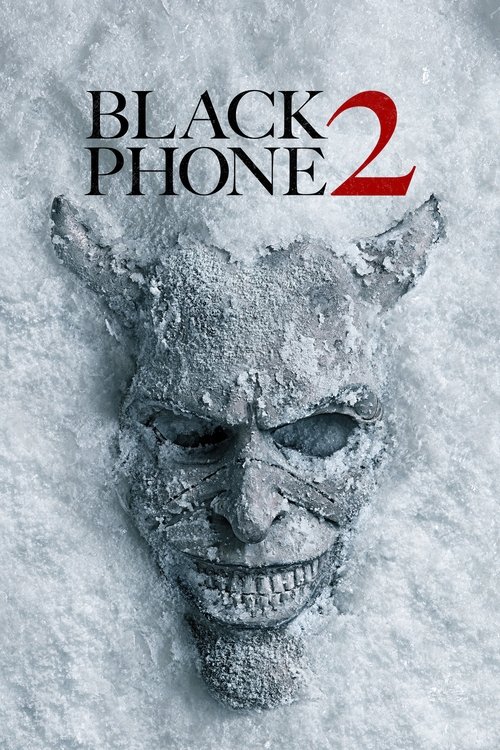
Black Phone 2 (2025)
Directed by Scott Derrickson
No — Black Phone 2 is not woke, scoring 12 out of 100 on our wokeness meter.
The Black Phone 2 returns us to the Blake siblings four years on, because the horror genre does not believe in closure.
Consciousness Markers
Gwen is a capable young female protagonist who drives the investigation and ultimately defeats the villain, but the film frames this as a horror-story necessity rather than a feminist thesis.
The film engages themes of trauma, abuse, and addiction, with Gwen confronting her father's substance use, but these are woven into the drama rather than delivered as a sermon.
The cast includes Latino performers such as Demián Bichir and Miguel Mora in prominent roles, but their presence is natural to the story and never framed as a statement.
No LGBTQ+ characters, relationships, or themes appear anywhere in the film.
Race is never a subject of commentary or thematic concern in the narrative.
The blizzard and frozen lake are atmospheric horror devices, not environmental messaging.
No economic critique or class-based commentary is present.
No body-image or body-acceptance themes appear.
No neurodivergence is depicted or referenced.
The 1957 and 1982 settings are genre backdrop, not historical revisionism.
Why it received this score
The Black Phone 2 returns us to the Blake siblings four years on, because the horror genre does not believe in closure. Finney, still flinching at doorways, and Gwen, whose dreams serve as a switchboard for the murdered, travel to a snowbound youth camp where the Grabber has learned to haunt from the other side. Scott Derrickson stages the whole affair with a sommelier's patience for temperature. The blizzard is a wall. The frozen lake is a lid. The payphone rings anyway.
The film's progressive credentials are modest and, refreshingly, incidental. Demian Bichir and Miguel Mora occupy the frame with an easy authority the screenplay never annotates for us, and the movie is better for its silence. Gwen carries the investigation and lands the decisive blow, though this reads as narrative economy, not a manifesto. She is the only one who can do the job, so she does it. Elsewhere the picture grows unexpectedly devout, folding prayer and a mother's voice from the afterlife into its machinery, a blend a Los Angeles critic found surprising. Faith and gore make a strange cocktail. Derrickson pours it without spilling.
Where the film raises its voice, gently, is on the subject of trauma and the things families swallow to avoid it. Gwen confronts her father and her brother about the bottles and the pills, and the moment lands as character work instead of a public service announcement. No sermon follows. The audience is trusted to connect the dots. This is the correct approach and a rarer one than it should be. What we have, then, is a competent haunted-house picture with a conscience it keeps mostly to itself. It scares, it mourns, and it declines to explain itself. For a sequel about a man in a mask, that restraint is close to heroic.
Analysis generated by our Consciousness Algorithm
Part of


Synopsis
Four years after defeating The Grabber, Finney Blake is struggling with life after captivity. When his younger sister Gwen begins receiving calls in her dreams from the Black Phone and seeing disturbing visions of three boys being stalked at a winter camp, the siblings become determined to solve the mystery and confront a killer who has grown more powerful in death and more significant to them than either could imagine.
Questions about Black Phone 2
Is Black Phone 2 woke?
No — Black Phone 2 is not woke, scoring 12 out of 100 on our wokeness meter. That earns it a verdict of Ultra Based.
Does Black Phone 2 have any woke elements?
Very few. None of the 10 markers reaches 30, the level where a marker counts as present; the highest is Feminist Agenda at 22.
How does Black Phone 2 compare to other 2025 movies?
It ranks #153 of the 217 films from 2025 we've scored; their average is 26. The wokest is STRAW (92).
How is the Woke Score calculated?
An AI-assisted process researches the film and its reception, scores it 0–100 on ten markers, then combines those into one 0–100 Woke Score. It measures a specific set of 2020s cultural themes, not film quality.