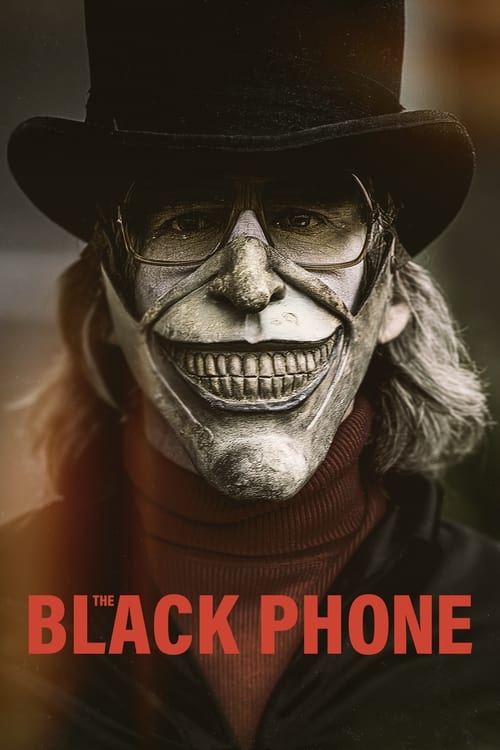
The Black Phone (2022)
Directed by Scott Derrickson
No · Ultra Based
How we score movies →Consciousness Markers
The protagonist displays some resourcefulness and problem-solving that might suggest neurodivergence, but this is never explicitly addressed or thematized in the film. The score reflects minimal ambiguity rather than intentional representation.
The cast includes actors of various ethnicities, but this appears incidental to the story rather than a deliberate representation choice. No characters are defined by their racial or ethnic identity.
No LGBTQ+ themes, characters, or representation are present in the film. The story makes no reference to sexual orientation or gender identity.
No feminist agenda or gender-based commentary appears in the film. The protagonist happens to be male, and the narrative does not engage with gender politics.
The film contains no racial consciousness, commentary on racism, or engagement with racial themes. Race is not thematized in any way.
No climate-related themes, environmental consciousness, or climate advocacy appears in the film.
The film contains no anti-capitalist messaging, critique of wealth inequality, or commentary on economic systems.
No body positivity messaging or commentary on body standards appears in the film. Bodies are presented without thematic significance.
The film does not engage in historical revisionism. It is set in a period-inspired setting but makes no claims about or reinterpretations of historical events.
The film contains no preachy messaging, moral lectures, or attempts to educate the audience about social issues. It prioritizes plot and atmosphere over exposition.


Synopsis
Finney Blake, a shy but clever 13-year-old boy, is abducted by a sadistic killer and trapped in a soundproof basement where screaming is of little use. When a disconnected phone on the wall begins to ring, Finney discovers that he can hear the voices of the killer's previous victims. And they are dead set on making sure that what happened to them doesn't happen to Finney.
Why it received this score
The Black Phone is a horror thriller that pursues its genre obligations with professional competence and minimal interest in contemporary cultural discourse. The narrative unfolds as a straightforward kidnapping tale punctuated by supernatural intervention, with the protagonist's cleverness serving as the mechanism of his eventual escape rather than as commentary on any particular social issue. The supporting cast includes characters of various backgrounds, but these are presented as incidental to the story rather than as deliberate representation choices. Scott Derrickson's direction prioritizes atmospheric dread and practical scares over any engagement with social consciousness. The film exists in a deliberately timeless setting, further distancing itself from contemporary cultural commentary. This is genre filmmaking in its purest form, which is to say it is filmmaking that has chosen not to participate in the broader cultural conversation at all. The result is a movie that functions as entertainment without apology or subtext, a commodity designed to provide ninety minutes of distraction in a darkened theater. There is nothing here to praise or criticize on the basis of progressive sensibilities, which may itself be the most honest approach available to a contemporary horror film.
Analysis generated by our Consciousness Algorithm
Critic Reviews
“Stylistically, the film is nostalgic, reminiscent of vintage photographs and the era of striped baby tees, flared jeans, and The Ramones. Warm browns and oranges, film grain, and filtered light flood the screen. But this idyllic '70s suburbia is corrupted by Derrickson’s horror. ”
“The Black Phone is a succinct and stressful terror blanketed with themes of friendship, family, and inventive portrayals of resiliency.”
“The Black Phone doesn’t disappoint, although it delivers in ways unexpected. And though it takes time, the payoff is worth the effort put into packing up old expectations and unpacking new. But fair warning: The Black Phone is not the easy-to-digest horror film you might think. ”
“It’s the film that’s hell – and a very dull, desperate hell at that, as if these dungeon masters have realised we aren’t sufficiently scared by the main event, and try throwing the kitchen sink at us, almost literally. ”