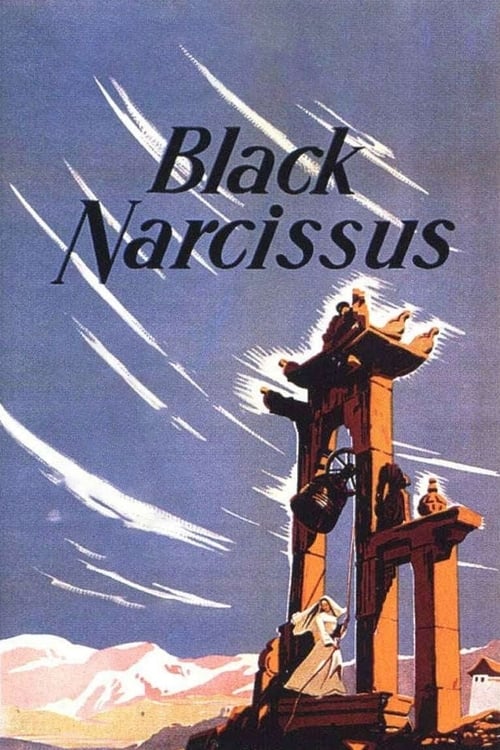
Black Narcissus (1947)
Directed by Emeric Pressburger
No — Black Narcissus is not woke, scoring 9 out of 100 on our wokeness meter.
Black Narcissus arrives from 1947 wearing the full ceremonial regalia of the Powell and Pressburger partnership, and it remains a strange, gorgeous object: a Technicolor fever dream about Anglican nuns losing their footing in a Himalayan palace that used to be a harem.
Consciousness Markers
The film centers on women's interior lives, desire, and the conflict between religious vows and temptation, which is notable for 1947, but it offers no feminist critique or agenda in the modern sense.
Set during the final years of British colonial rule in India, the film depicts the failure of the colonial mission and cultural clash, but it is a colonial-era production that does not interrogate race in a modern critical framework.
This is a moody psychological drama and visual spectacle, not a preachy or message-driven film; any thematic content is atmospheric rather than didactic.
The film casts white actors in brownface for the Indian roles of Kanchi (Jean Simmons) and the Old General (Esmond Knight), the opposite of modern representation casting; only Sabu was cast as an ethnic Indian.
No LGBTQ+ themes or characters of any kind appear in this 1947 psychological drama about Anglican nuns.
The harsh Himalayan climate and monsoon are plot devices creating tension, not an environmentalist message or climate crusade.
No economic critique or eat-the-rich themes are present; the conflict is spiritual, psychological, and colonial rather than class-based.
No body positivity themes; the film's treatment of physical desire and the erotic is framed through repression and temptation, not body acceptance.
Sister Ruth's mental breakdown is portrayed as madness and emotional instability, not as neurodivergence in any affirming modern sense.
The film is a faithful adaptation of a 1939 novel set in its contemporary colonial context; it does not rewrite history to serve a modern narrative.
Why it received this score
Black Narcissus arrives from 1947 wearing the full ceremonial regalia of the Powell and Pressburger partnership, and it remains a strange, gorgeous object: a Technicolor fever dream about Anglican nuns losing their footing in a Himalayan palace that used to be a harem. The eroticism here is real and unsettling, which is not the same thing as a social program. The nuns' repressed desire, the wall paintings, Kathleen Byron's Sister Ruth applying lipstick as an act of personal liberation: these are raw materials of psychological melodrama, deployed for atmosphere, not instruction. Jack Cardiff's camera won an Oscar, and Alfred Junge's art direction won another, which tells us where the film's ambitions actually live. Mood is the whole enterprise.
On the question of representation, the record is unambiguous and unflattering. Of the three principal Indian roles, only Sabu was played by an ethnic Indian; Jean Simmons and Esmond Knight performed in brownface, and the Indian extras were recruited from dockworkers at Rotherhithe. The film observes the failure of the colonial mission with a certain rueful clarity, and critics at the time read the closing descent from the mountain as a farewell to empire. That is a mood, not a critique. No character interrogates the racial order, and the film is a product of that order.
The rest of the ledger is quiet. There is no economic argument, no environmental sermon, no body-acceptance thread, no affirming account of neurodivergence; Sister Ruth's collapse is presented as madness, full stop. The sisters themselves get a measure of interiority that was uncommon for 1947, and the film takes their longing seriously. It simply has no interest in explaining them to us. The nuns come down the mountain, the monsoon arrives ahead of schedule, and nobody is lectured. We are left with weather, color, and a grave that needs tending.
Analysis generated by our Consciousness Algorithm


Synopsis
A group of Anglican nuns, led by Sister Clodagh, are sent to a mountain in the Himalayas. The climate in the region is hostile and the nuns are housed in an odd old palace. They work to establish a school and a hospital, but slowly their focus shifts. Sister Ruth falls for a government worker, Mr. Dean, and begins to question her vow of celibacy. As Sister Ruth obsesses over Mr. Dean, Sister Clodagh becomes immersed in her own memories of love.
Questions about Black Narcissus
Is Black Narcissus woke?
No — Black Narcissus is not woke, scoring 9 out of 100 on our wokeness meter. That earns it a verdict of Ultra Based.
Does Black Narcissus have any woke elements?
Very few. None of the 10 markers reaches 30, the level where a marker counts as present; the highest is Feminist Agenda at 15.
How does Black Narcissus compare to other 1947 movies?
It is the wokest of the 6 films from 1947 we've scored; their average is 3.
How is the Woke Score calculated?
An AI-assisted process researches the film and its reception, scores it 0–100 on ten markers, then combines those into one 0–100 Woke Score. It measures a specific set of 2020s cultural themes, not film quality.