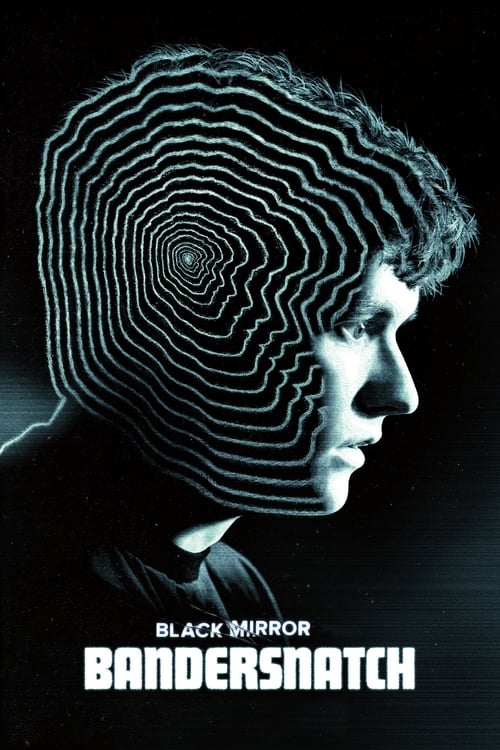
Black Mirror: Bandersnatch (2018)
Directed by David Slade
No — Black Mirror: Bandersnatch is not woke, scoring 13 out of 100 on our wokeness meter.
Black Mirror: Bandersnatch arrives as an interactive contraption, a choose-your-own-adventure about a choose-your-own-adventure.
Consciousness Markers
Cast includes Asim Chaudhry as Mohan Thakur, a South Asian character in a supporting role, but the film does not foreground diversity as a theme.
Black Mirror's trademark social commentary is present in themes of free will and technology, but the interactive format dilutes any preachy lecture.
No LGBTQ+ characters, relationships, or themes are present.
Female characters exist (therapist, girlfriend, daughter) but the narrative does not engage with feminist themes or gender politics.
Mohan's South Asian identity is incidental; the film does not explore race or racial injustice.
No environmental or climate-related themes.
The film critiques corporate game development and control, but not through an anti-capitalist or eat-the-rich lens.
No body positivity themes or diverse body representation as a focus.
Stefan experiences mental breakdown and therapy, but the film treats this as psychological horror/plot mechanism, not neurodivergent identity or advocacy.
Fictional narrative inspired by a real unreleased game, but no revisionist historical claims.
Why it received this score
Black Mirror: Bandersnatch arrives as an interactive contraption, a choose-your-own-adventure about a choose-your-own-adventure. In 1984, young programmer Stefan Butler adapts a dark fantasy gamebook while his grip on reality loosens. The technical ambition is real. The social agenda is mostly absent. This is a film about free will, control, and narrative machinery, not a vehicle for contemporary progressive messaging. Its cultural awareness is thin, almost nostalgic.
Casting gives us Asim Chaudhry as Mohan Thakur, a South Asian supporting figure in the game company. His presence is natural and unremarked. That is the extent of representational interest. There is no LGBTQ content, no feminist argument, no racial consciousness, no climate concern, no body positivity, and no neurodivergent advocacy. Stefan's therapy and breakdown function as horror mechanics, not identity politics. The script gestures at corporate control of game development, but it does not build an eat-the-rich sermon. The 1984 setting is fictionalized around a real unreleased game, and it makes no revisionist historical claims.
There remains Black Mirror's familiar techno-paranoia, delivered with a faint lecture hum. The interactive format keeps the moralizing in check. Every choice interrupts the sermon. The viewer is too busy selecting cereal or deciding whether to dismember a father to receive a tidy lesson about society. The result is a clever, chilly curio, more concerned with branching pathways than with changing hearts. Its progressive sensibilities are minimal, incidental, and largely exhausted by a supporting performance. The film earns its place in the catalog as a technical experiment, not as a cultural battering ram. It asks who controls the story. It does not ask us to applaud our own virtue for watching.
Analysis generated by our Consciousness Algorithm
Synopsis
In 1984, a young programmer begins to question reality as he adapts a dark fantasy novel into a video game. A mind-bending tale with multiple endings.
Questions about Black Mirror: Bandersnatch
Is Black Mirror: Bandersnatch woke?
No — Black Mirror: Bandersnatch is not woke, scoring 13 out of 100 on our wokeness meter. That earns it a verdict of Ultra Based.
Does Black Mirror: Bandersnatch have any woke elements?
Very few. None of the 10 markers reaches 30, the level where a marker counts as present; the highest is Representation Casting at 25.
How does Black Mirror: Bandersnatch compare to other 2018 movies?
It ranks #160 of the 325 films from 2018 we've scored; their average is 20. The wokest is Return (92).
How is the Woke Score calculated?
An AI-assisted process researches the film and its reception, scores it 0–100 on ten markers, then combines those into one 0–100 Woke Score. It measures a specific set of 2020s cultural themes, not film quality.