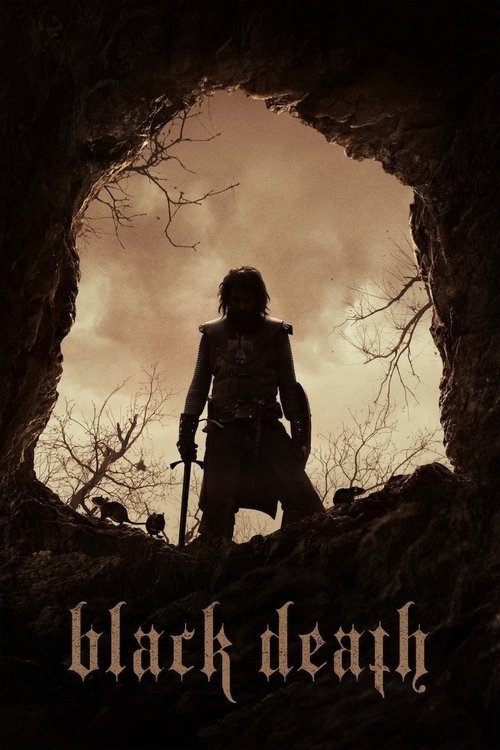
Black Death (2010)
Directed by Christopher Smith
No — Black Death is not woke, scoring 2 out of 100 on our wokeness meter.
Black Death presents itself as a harrowing exploration of medieval faith and terror, but it remains utterly resistant to any contemporary cultural analysis.
Consciousness Markers
The director frames the film as a 'dark parable' touching on fundamentalism and how little has changed in 600 years, but the messaging is atmospheric and ambiguous rather than preachy or didactic.
The cast is entirely white European actors in a medieval English setting; no diverse or color-conscious casting choices are present.
No LGBTQ+ characters or themes appear anywhere in the film.
Langiva is a female antagonist and village leader, but she functions as a manipulative villain rather than any vehicle for feminist messaging or gender critique.
The film engages religious persecution and plague-era superstition, but has no racial themes or commentary whatsoever.
The plague is a pandemic backdrop, not a climate or environmental allegory; no ecological messaging is present.
There is no economic critique or eat-the-rich theme; the conflict is entirely theological and violent.
No body-positivity themes or messaging appear in the film.
No neurodivergence themes or neurodiverse representation are present.
The film is a fictional horror tale set against the historical Black Death; it does not rewrite or reinterpret historical events for ideological purposes.
Why it received this score
Black Death presents itself as a harrowing exploration of medieval faith and terror, but it remains utterly resistant to any contemporary cultural analysis. The film operates in a space so distant from modern social consciousness that it is almost admirable for its lack of self-awareness. We observe a narrative steeped in religious fundamentalism and pagan superstition, yet it offers zero commentary on issues of race, gender equality, or climate awareness. The entire cast, presented within this meticulously recreated English setting, is entirely devoid of diverse representation. This is not a film attempting to engage with the complexities of the modern progressive sensibility; it is a historical artifact of medieval paranoia.
The film does manage to achieve a high degree of intellectual resonance, though not through any form of overt social messaging. Director Smith frames the story as a dark parable concerning the enduring nature of human conviction and superstition. This is delivered with a certain gravity. We find the structural intent here to be fascinating. The director succeeds in making the viewer consider how little human nature has changed over centuries. The message is heavy, atmospheric, and ambiguous. It is a lesson delivered through dread, not through a preachy lecture.
Ultimately, Black Death is a deeply traditional piece of cinema. Its cultural awareness is focused entirely inward on the theological anxieties of the 14th century. It refuses to acknowledge the expansive political or social landscapes of the present. It is a powerful piece of dark storytelling that prioritizes primal dread and spiritual conflict over any progressive agenda. It achieves a kind of historical resonance by simply not trying to be relevant to us.
Analysis generated by our Consciousness Algorithm


Synopsis
As the plague decimates medieval Europe, rumours circulate of a village immune from the plague. There is talk of a necromancer who leads the village and is able to raise the dead. A fearsome knight joined by a cohort of soldiers and a young monk are charged by the church to investigate. Their journey is filled with danger, but it's upon entering the village that their true horror begins.
Questions about Black Death
Is Black Death woke?
No — Black Death is not woke, scoring 2 out of 100 on our wokeness meter. That earns it a verdict of Ultra Based.
Does Black Death have any woke elements?
Very few. None of the 10 markers reaches 30, the level where a marker counts as present; the highest is Lecture Energy at 10.
How does Black Death compare to other 2010 movies?
It ranks #191 of the 238 films from 2010 we've scored; their average is 11. The wokest is My Name Is Khan (84).
How is the Woke Score calculated?
An AI-assisted process researches the film and its reception, scores it 0–100 on ten markers, then combines those into one 0–100 Woke Score. It measures a specific set of 2020s cultural themes, not film quality.