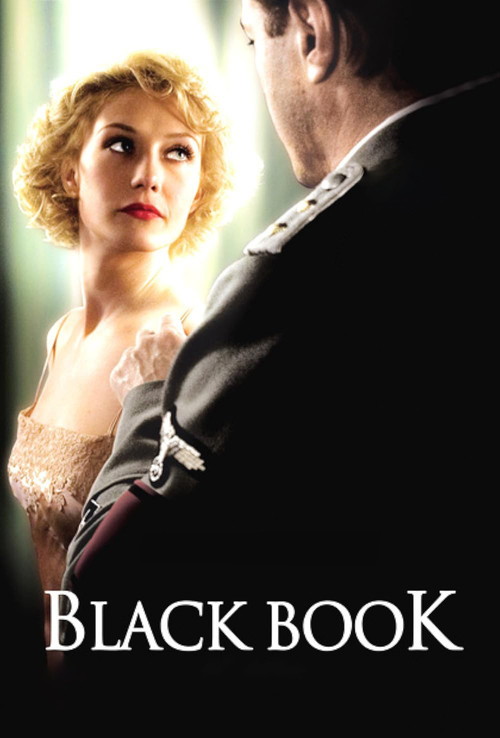
Black Book (2006)
Directed by Paul Verhoeven
No — Black Book is not woke, scoring 12 out of 100 on our wokeness meter.
Paul Verhoeven returned to the Netherlands after two decades in Hollywood and made a film about a Jewish singer who survives a massacre, joins the resistance, seduces an SS officer, and discovers that nearly everyone around her is for sale.
Consciousness Markers
The film centers on a female Jewish spy with agency and complexity, but it does not advance an explicit feminist agenda or critique patriarchy.
The film challenges the heroic Dutch resistance narrative by showing moral ambiguity, betrayal, and collaboration, but it is not a modern ideological revision.
The film depicts antisemitic persecution and Dutch complicity during WWII, but it does not frame this through a modern racial-justice lens.
The plot involves stolen Jewish wealth and profiteering by Nazis and collaborators, but it is not a systemic anti-capitalist critique.
The film is a thriller that prioritizes moral ambiguity and suspense over didactic messaging.
The cast is entirely white European, with no modern diverse casting choices; the Jewish protagonist is played by a white Dutch actress.
No LGBTQ+ characters or themes are present.
No environmental or climate themes.
No body-positivity themes.
No neurodivergence themes.
Why it received this score
Paul Verhoeven returned to the Netherlands after two decades in Hollywood and made a film about a Jewish singer who survives a massacre, joins the resistance, seduces an SS officer, and discovers that nearly everyone around her is for sale. The engine here is betrayal, and it runs without moral instruction. Rachel Stein, played by Carice van Houten with a composure that borders on the unnerving, has agency, intelligence, and a full interior life, which is more than most wartime heroines are granted. The film never pauses to congratulate itself for this. It simply proceeds.
Verhoeven has said he wanted no obvious moral contrast between his characters, and he means it. The resistance men are petty, cowardly, and murderous. The SS officer is courteous and weary. The liberated Dutch crowd beats its own women in the street. This is a revisionism of the older, less comfortable variety: it punctures a national myth of heroic suffering and leaves the puncture open. The persecution of Dutch Jews is rendered as catastrophe and fact, not as a lesson aimed at a modern audience. The stolen gold and jewels function as a plot device, the object everyone chases, not as an argument about capital.
What the film does not do is lecture. There is no checklist, no sermon, no character standing in for a thesis. It is a thriller, assembled with craft, and it trusts the audience to sit with ambiguity. A lesser production would have told us what to feel. This one, to its credit, declines. The frame device, Israel in 1956 with sirens in the distance, offers no resolution, only a shrug toward the next conflict.
Analysis generated by our Consciousness Algorithm


Synopsis
Israel, 1956: Jewish teacher Rachel Stein rather unexpectedly meets an old friend at the kibbutz. It brings back memories of her experiences in the Netherlands during the war, memories of betrayal. In September 1944, Rachel's hiding place is bombed by Allied troops; she makes contact with a resistance member and joins a group of Jews to be smuggled across the Biesbosch to the freed South Netherlands. Only Rachel escapes a massacre by patrol Germans, and is rescued by a resistance group under the leadership of Gerben Kuipers, whose son is captured trying to smuggle weapons. Kuipers asks Rachel to seduce SS-hauptsturmführer Ludwig Müntze, a mission that she will soon learn that the boat attack wasn't a coincidence.
Questions about Black Book
Is Black Book woke?
No — Black Book is not woke, scoring 12 out of 100 on our wokeness meter. That earns it a verdict of Ultra Based.
Does Black Book have any woke elements?
Very few. None of the 10 markers reaches 30, the level where a marker counts as present; the highest is Feminist Agenda at 20.
How does Black Book compare to other 2006 movies?
It ranks #60 of the 211 films from 2006 we've scored; their average is 11. The wokest is An Inconvenient Truth (92).
How is the Woke Score calculated?
An AI-assisted process researches the film and its reception, scores it 0–100 on ten markers, then combines those into one 0–100 Woke Score. It measures a specific set of 2020s cultural themes, not film quality.