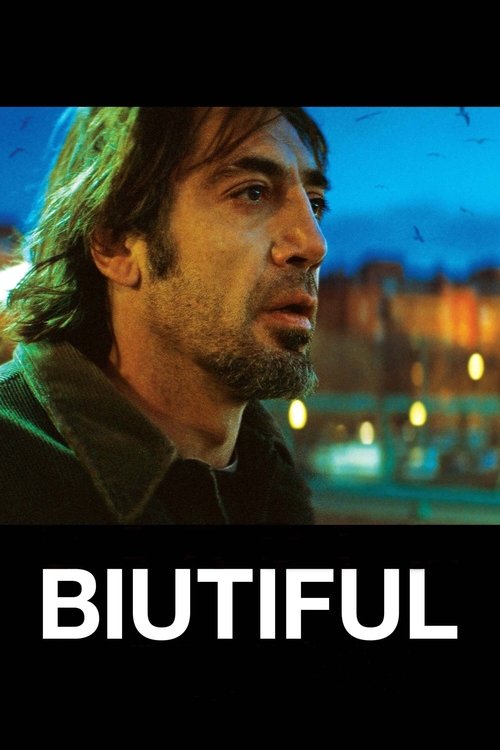
Biutiful (2010)
Directed by Alejandro G. Iñárritu
No — Biutiful is not especially woke, scoring 24 out of 100 on our wokeness meter.
Biutiful arrives from 2010, a year when the cultural machinery had not yet settled into its current configuration, and it carries itself accordingly.
Consciousness Markers
The ensemble includes Chinese and Senegalese actors playing immigrant characters, but this diversity is organic to the Barcelona underworld setting rather than a deliberate representational statement.
The film depicts the exploitation of undocumented Chinese and African workers in Spain, but treats it as grim human tragedy rather than a racial-justice polemic.
The underground economy of forged goods and exploited immigrant labor is shown as sordid, but the film offers no systemic anti-capitalist argument.
Marambra's bipolar disorder is portrayed as a real, destabilizing condition affecting her fitness as a mother, but it is not framed through a neurodivergence-affirming lens.
The film is a bleak tone poem of guilt and mortality rather than a preachy message vehicle; it observes more than it lectures.
Female characters exist (the estranged wife, the Senegalese widow) but are framed through the male protagonist's crisis; no feminist agenda is advanced.
No LGBTQ+ characters or themes appear anywhere in the narrative.
No environmental or climate themes are present.
No body-positivity themes or messaging.
No historical revisionism; the brief Franco-era reference is incidental backstory.
Why it received this score
Biutiful arrives from 2010, a year when the cultural machinery had not yet settled into its current configuration, and it carries itself accordingly. Alejandro González Iñárritu follows a dying man named Uxbal through the damp corridors of Barcelona's informal economy, and the film's interest lies in guilt, fatherhood, and the slow failure of the body. Javier Bardem plays the role with a heaviness that borders on geological. This is not a film with a message to deliver. It is a film with a mood to inflict.
The supporting cast includes Chinese and Senegalese performers, and they are given genuine dramatic weight as undocumented workers making forged goods and selling them on the street. The camera regards them as people inside a tragedy, not as representatives of a cause. Their exploitation is rendered as sordid fact. No systemic indictment follows, and none is requested. Marambra, the estranged wife, drinks and suffers from bipolar disorder, and the screenplay treats her instability as a practical obstacle to custody. The women here orbit a man's decline. They are not permitted their own thesis.
There is no environmental sermon, no body-positive rejoinder, no queer subplot, and no attempt to revise the historical record. A passing reference to Franco serves as backstory, nothing more. The film is content to be bleak. It observes a man drowning and declines to hand the audience a pamphlet on drowning prevention. Iñárritu has made a long, humid exercise in sorrow, and we are left to sit with it. Some will find this admirable. Others will find it exhausting. The classification, in either case, is straightforward.
Analysis generated by our Consciousness Algorithm
Part of


Synopsis
This is a story of a man in free fall. On the road to redemption, darkness lights his way. Connected with the afterlife, Uxbal is a tragic hero and father of two who's sensing the danger of death. He struggles with a tainted reality and a fate that works against him in order to forgive, for love, and forever.
Questions about Biutiful
Is Biutiful woke?
No — Biutiful is not especially woke, scoring 24 out of 100 on our wokeness meter. That earns it a verdict of Based.
Does Biutiful have any woke elements?
3 of the 10 markers register at 30 or above, led by Racial Consciousness (40), Representation Casting (40) and Eat the Rich (30). On Racial Consciousness: The film depicts the exploitation of undocumented Chinese and African workers in Spain, but treats it as grim human tragedy rather than a racial-justice polemic.
How does Biutiful compare to other 2010 movies?
It ranks #19 of the 238 films from 2010 we've scored; their average is 11. The wokest is My Name Is Khan (84).
How is the Woke Score calculated?
An AI-assisted process researches the film and its reception, scores it 0–100 on ten markers, then combines those into one 0–100 Woke Score. It measures a specific set of 2020s cultural themes, not film quality.