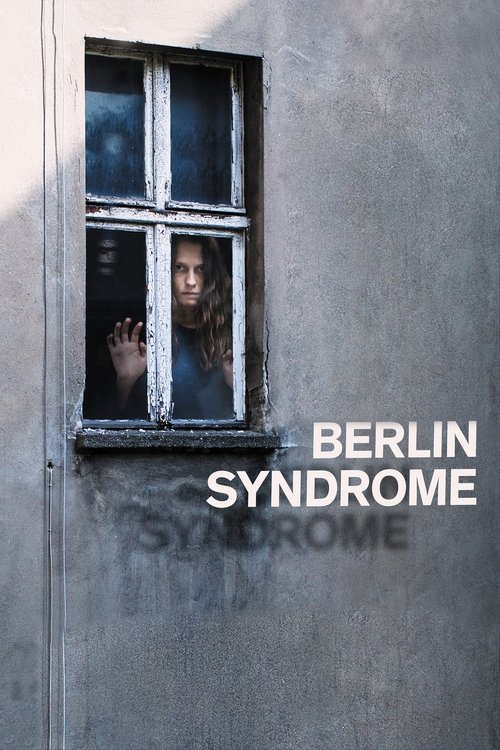
Berlin Syndrome (2017)
Directed by Cate Shortland
No — Berlin Syndrome is not woke, scoring 0 out of 100 on our wokeness meter.
Berlin Syndrome arrives with the trappings of a serious European co-production and the disposition of a locked door.
Consciousness Markers
Cast is predominantly white with no deliberate diverse casting or commentary on representation.
No LGBTQ+ characters or themes are present.
Despite a female protagonist and director, the film is a captivity thriller without explicit feminist messaging or critique.
No engagement with racial issues or consciousness.
No environmental or climate themes.
No critique of capitalism or wealth inequality.
No body positivity themes.
The antagonist's obsessive behavior is not framed as neurodivergence or treated with sensitivity.
No revisionist history; the East German nostalgia is character detail, not historical revisionism.
No preachy or lecture-like messaging.
Why it received this score
Berlin Syndrome arrives with the trappings of a serious European co-production and the disposition of a locked door. Cate Shortland directs Teresa Palmer through a holiday romance that curdles into captivity, and the film holds its nerve without reaching for a lesson. The camera stays close, the apartment stays cold, and Shaun Grant's screenplay keeps its attention fixed on the mechanics of confinement. There is no chorus standing by to explain what we should feel. The plexiglass windows do the arguing.
The picture has a female director and a female protagonist who spends most of the runtime in a room she cannot leave. A lazier reading would demand a thesis about gender. The film declines. Clare's ordeal is specific, physical, and stubbornly individual, and it is treated as a story about two people instead of a case study. The antagonist's nostalgia for the East Germany of his childhood is offered as private delusion, a man's cracked attempt to rebuild a utopia in a flat, not an argument about history. The cast is white, the setting is Berlin, and nobody pauses to remark on either fact. The dog does not survive, but nothing else is made to carry a message.
Genres like this one tend to resist the sermon. A hostage thriller has no room for a lecture because a lecture would require the characters to stop being held. The film's cultural temperature is that of a cellar in February. It is well made, grim, and entirely content to be about what it is about. As a specimen of contemporary social consciousness, it registers at nearly absolute zero, and we record that finding without complaint. A restrained vintage. The cellar is clean, the door is shut, and the sommelier has nothing further to add.
Analysis generated by our Consciousness Algorithm


Synopsis
A passionate holiday romance leads to an obsessive relationship when an Australian photojournalist wakes one morning in an abandoned Berlin apartment and is unable to leave.
Questions about Berlin Syndrome
Is Berlin Syndrome woke?
No — Berlin Syndrome is not woke, scoring 0 out of 100 on our wokeness meter. That earns it a verdict of Ultra Based.
Does Berlin Syndrome have any woke elements?
No. All 10 markers score zero.
How does Berlin Syndrome compare to other 2017 movies?
It ranks #281 of the 309 films from 2017 we've scored; their average is 19. The wokest is I Am Not Your Negro (92).
How is the Woke Score calculated?
An AI-assisted process researches the film and its reception, scores it 0–100 on ten markers, then combines those into one 0–100 Woke Score. It measures a specific set of 2020s cultural themes, not film quality.