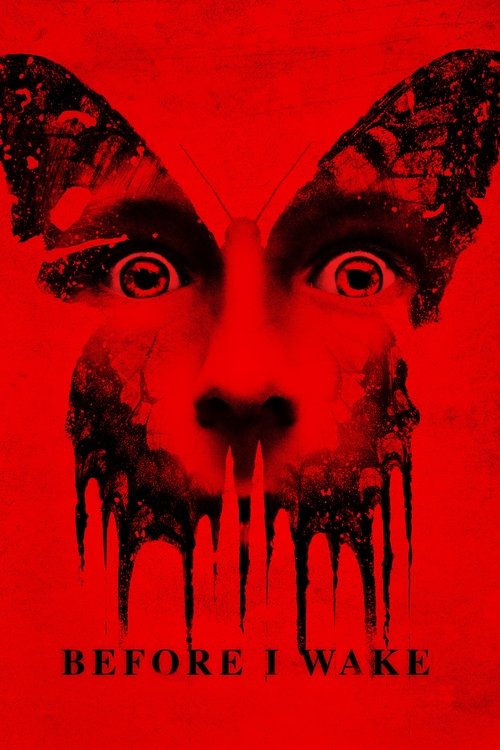
Before I Wake (2016)
Directed by Mike Flanagan
No — Before I Wake is not woke, scoring 9 out of 100 on our wokeness meter.
Mike Flanagan's Before I Wake is a somber supernatural drama about a foster child whose dreams and nightmares take physical form.
Consciousness Markers
The film carries a gentle thematic message about grief, foster care, and not exploiting a child's gift, but it delivers this through story and imagery rather than preachy exposition.
The cast is overwhelmingly white, with a handful of Black supporting players (Lance E. Nichols, Jay Karnes) existing naturally in the story without comment. No deliberate diversity-driven casting agenda is evident.
Jessie Hobson is the emotional protagonist who ultimately confronts and resolves the threat, but this is standard maternal-grief horror structure rather than a feminist statement.
No LGBTQ+ characters, themes, or subtext appear anywhere in the film.
The film engages no racial themes, commentary, or social-justice framing whatsoever.
No environmental or climate-related content is present.
No critique of wealth, capitalism, or class structures appears in the narrative.
The Canker Man's disfigurement is framed as a horror manifestation of cancer and fading memory, not as a body-positivity statement.
No neurodivergent characters or themes are explored.
The film is a contemporary supernatural fiction with no historical subject matter to revise.
Why it received this score
Mike Flanagan's Before I Wake is a somber supernatural drama about a foster child whose dreams and nightmares take physical form. The film is well made, emotionally serious, and mostly interested in the mechanics of grief. Its engagement with contemporary social sensibilities is modest at best. The cast is overwhelmingly white, with a few Black supporting players (Lance E. Nichols, Jay Karnes) moving through the story without comment. No racial themes, no LGBTQ+ content, no climate concerns, and no class critique disturb the domestic horror. This is not a film that arrives with a clipboard and a slogan. It simply wants to scare us with a child's sleeping mind.
Kate Bosworth's Jessie is the emotional center and eventually confronts the threat, though this follows the standard maternal-grief template. The Canker Man's disfigurement is a horror effect tied to cancer and fading memory, not a body-positivity statement. Neurodivergence and historical revisionism are absent. The film does carry a gentle message about grief, foster care, and not exploiting a child's gift, but it delivers this through story and imagery instead of exposition. That restraint is welcome. Nobody stands at a lectern. The horror does the arguing.
The result is a film that mostly minds its own business. It has enough thematic weight to avoid emptiness and enough narrative discipline to avoid sermonizing. For those keeping score, the dossier is thin, and the film seems content to leave it that way. It earns its classification through absence, which is a strange sort of purity. We are left with a competent, melancholy ghost story about loss, and very little else. That is not a complaint. It is an observation.
Analysis generated by our Consciousness Algorithm


Synopsis
An orphaned child's dreams—and nightmares—manifest physically as he sleeps.
Questions about Before I Wake
Is Before I Wake woke?
No — Before I Wake is not woke, scoring 9 out of 100 on our wokeness meter. That earns it a verdict of Ultra Based.
Does Before I Wake have any woke elements?
Very few. None of the 10 markers reaches 30, the level where a marker counts as present; the highest is Lecture Energy at 15.
How does Before I Wake compare to other 2016 movies?
It ranks #158 of the 285 films from 2016 we've scored; their average is 16. The wokest is 13th (92).
How is the Woke Score calculated?
An AI-assisted process researches the film and its reception, scores it 0–100 on ten markers, then combines those into one 0–100 Woke Score. It measures a specific set of 2020s cultural themes, not film quality.