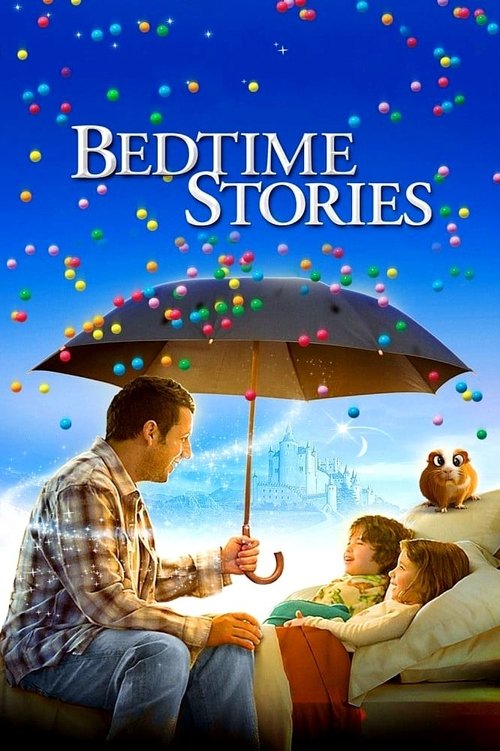
Bedtime Stories (2008)
Directed by Adam Shankman
No — Bedtime Stories is not woke, scoring 2 out of 100 on our wokeness meter.
Bedtime Stories arrives from the winter of 2008, a moment when a family comedy could still be assembled from a hotel handyman, a magic bedtime ritual, and the reliable comic furniture of Adam Sandler.
Consciousness Markers
The cast is predominantly white, and any minority presence is incidental rather than a deliberate modern representation statement.
There are no LGBTQ+ characters, themes, or subtext in the film.
Female characters exist in conventional family-comedy roles, but the film advances no feminist agenda or gender-conscious critique.
The film does not engage with race, racism, or racial identity as themes.
There is no environmental or climate-related messaging in the story.
Corporate hotel development serves as a mild plot obstacle, but the film does not mount an anti-capitalist or eat-the-rich critique.
The film contains no body-positivity themes or body-image commentary.
There is no exploration or representation of neurodivergence.
The film is a contemporary fantasy comedy and does not revise or reinterpret historical events.
The film aims for broad family entertainment and does not lecture the audience on social or political issues.
Why it received this score
Bedtime Stories arrives from the winter of 2008, a moment when a family comedy could still be assembled from a hotel handyman, a magic bedtime ritual, and the reliable comic furniture of Adam Sandler. The premise is simple. A man tells stories to his niece and nephew, the children's embellishments come true, and chaos follows in manageable, PG-rated increments. Guy Pearce sneers. Russell Brand gesticulates. A guinea pig with prominent eyes steals scenes. The machinery is visible at all times, and it chugs along with the confidence of a studio that knows exactly which quadrant it is courting.
Examined for contemporary social consciousness, the film offers almost nothing to seize upon. Its antagonists are a germaphobic hotel magnate and a smug future son-in-law, and the conflict resolves through property negotiation, a motorcycle chase, and a heartfelt speech about family. Corporate ambition is treated as a personality flaw, not a system to be dismantled. The school closure subplot gestures at community loss, then settles the matter with a beachfront relocation and a wedding. Women in the cast occupy the roles of sister, love interest, and spoiled heiress. The film has no interest in interrogating any of it.
Nothing here lectures. Nothing here corrects the historical record, since the historical record is not at issue. The film's most pointed observation is that a germaphobe can be rehabilitated into a school nurse, which is a joke about a supporting character and not a thesis about public health. We are left with a competent, largely forgotten artifact of the pre-streaming family matinee. It made money. It was reviewed unkindly. It has the texture of a movie designed for a portable DVD player on a long car trip, which is not an insult so much as an accurate classification. The picture offers nothing for our ledger, in any column. Not because it is innocent, but because it predates the vocabulary. It wants to sell tickets and gumballs, and it does.
Analysis generated by our Consciousness Algorithm
Part of


Synopsis
Skeeter Bronson is a down-on-his-luck guy who's always telling bedtime stories to his niece and nephew. But his life is turned upside down when the fantastical stories he makes up for entertainment inexplicably turn into reality. Can a bewildered Skeeter manage his own unruly fantasies now that the outrageous characters and situations from his mind have morphed into actual people and events?
Questions about Bedtime Stories
Is Bedtime Stories woke?
No — Bedtime Stories is not woke, scoring 2 out of 100 on our wokeness meter. That earns it a verdict of Ultra Based.
Does Bedtime Stories have any woke elements?
No. All 10 markers score zero.
How does Bedtime Stories compare to other 2008 movies?
It ranks #168 of the 212 films from 2008 we've scored; their average is 12. The wokest is Milk (68).
How is the Woke Score calculated?
An AI-assisted process researches the film and its reception, scores it 0–100 on ten markers, then combines those into one 0–100 Woke Score. It measures a specific set of 2020s cultural themes, not film quality.