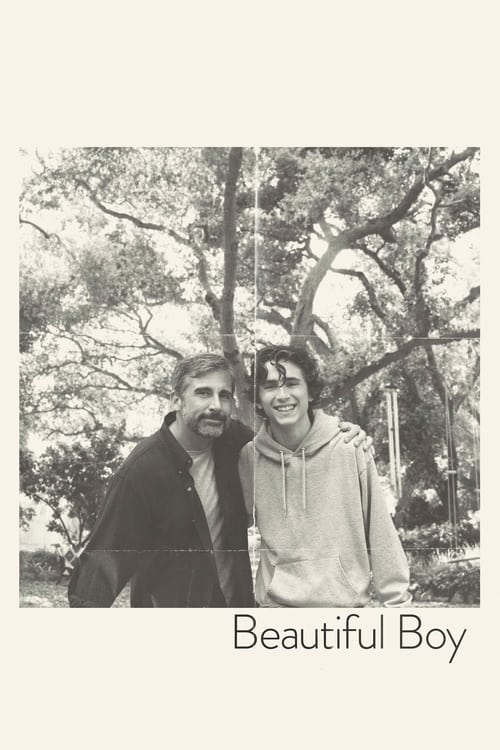
Beautiful Boy (2018)
Directed by Felix van Groeningen
No — Beautiful Boy is not woke, scoring 7 out of 100 on our wokeness meter.
Beautiful Boy arrives with serious intentions and two fine performances.
Consciousness Markers
The cast is overwhelmingly white, with LisaGay Hamilton and Andre Royo in small supporting roles; diversity is incidental rather than a stated priority.
The closing title cards and Bukowski recitation carry a mild moral about family support and recovery, but the film largely dramatizes rather than preaches.
Karen and Vicki are given moments of agency, particularly Karen's insistence that David cannot fix Nic, but the film is squarely a father-son story with no feminist framework.
No LGBTQ+ characters or themes appear anywhere in the film.
Race is never addressed or thematized; the addiction narrative unfolds in an affluent white milieu without comment.
No environmental content whatsoever.
The film has no economic critique; the Sheff family's affluence and access to private rehab are simply the setting.
Chalamet deliberately lost roughly twenty pounds to depict emaciation from addiction, the antithesis of body-positivity messaging.
Addiction is treated as a disease of compulsion, but the film makes no neurodivergence framing or advocacy.
It is a faithful adaptation of two memoirs with no revisionist reframing of history.
Why it received this score
Beautiful Boy arrives with serious intentions and two fine performances. Steve Carell plays David Sheff, a journalist who watches his son Nic, played by Timothée Chalamet, slide from experimentation into methamphetamine addiction. The film is adapted from two memoirs, one by the father and one by the son. It is a domestic tragedy set in an affluent white milieu. The cast is overwhelmingly white, with LisaGay Hamilton and Andre Royo in small supporting roles that exist without any stated diversity agenda. There is no LGBTQ content. Race is never addressed. The film has no interest in identity categories. It simply watches a family suffer.
Karen and Vicki, the mother figures, are allowed moments of clarity. Karen tells David he cannot fix Nic, which is a sound observation and a rare instance of female agency. The story remains a father-son narrative. It offers no feminist framework. There is no environmental content. There is no economic critique. Private rehab, access to doctors, and comfortable homes are simply the setting. The film does not question the system that produces such access. Body positivity is absent by design. Chalamet lost weight to depict emaciation, which is the opposite of that project. Addiction is treated as a compulsion and a disease, but the film makes no neurodivergence argument.
Revisionist history is not on the menu. This is a faithful adaptation of two memoirs, with no reframing of events for contemporary political purposes. The lecture energy is mild. Closing title cards and a Bukowski recitation carry a soft moral about family support and recovery. For the most part, the film dramatizes instead of preaching. It is a well-meaning issue drama from an older tradition. Its social consciousness is modest, incidental, and largely uninterested in the cultural flashpoints of the present. The result is a serious film that asks for tears, not allegiance.
Analysis generated by our Consciousness Algorithm

Synopsis
After he and his first wife separate, journalist David Sheff struggles to help their teenage son, who goes from experimenting with drugs to becoming devastatingly addicted to methamphetamine.
Questions about Beautiful Boy
Is Beautiful Boy woke?
No — Beautiful Boy is not woke, scoring 7 out of 100 on our wokeness meter. That earns it a verdict of Ultra Based.
Does Beautiful Boy have any woke elements?
Very few. None of the 10 markers reaches 30, the level where a marker counts as present; the highest is Representation Casting at 18.
How does Beautiful Boy compare to other 2018 movies?
It ranks #233 of the 325 films from 2018 we've scored; their average is 20. The wokest is Return (92).
How is the Woke Score calculated?
An AI-assisted process researches the film and its reception, scores it 0–100 on ten markers, then combines those into one 0–100 Woke Score. It measures a specific set of 2020s cultural themes, not film quality.