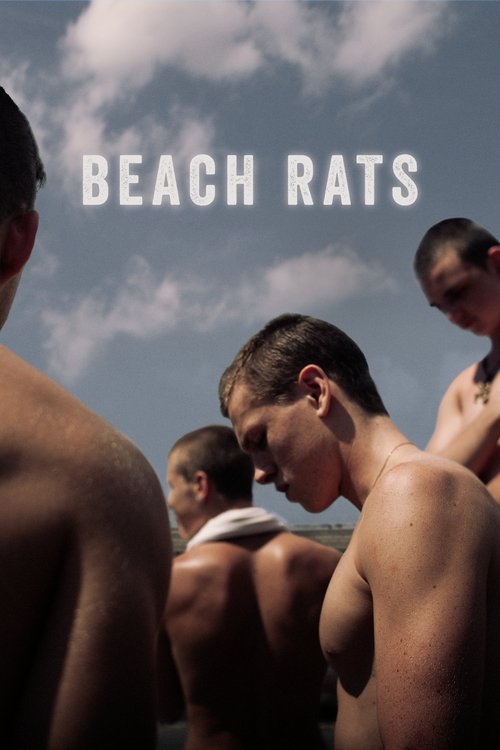
Beach Rats (2017)
Directed by Eliza Hittman
Yes — Beach Rats is woke, scoring 60 out of 100 on our wokeness meter.
Eliza Hittman's Beach Rats arrives with its cards held close to the chest, which is the correct posture for a film about a young man who cannot say what he wants.
Consciousness Markers
Frankie's closeted bisexuality and gay hookups are the film's central subject, with explicit themes of coming out, online gay cruising, and same-sex desire.
The film centers a gay/bisexual protagonist and is directed by a woman, but the cast is otherwise largely white and does not foreground broad demographic representation.
A woman director explores male fragility and toxic masculinity, but the narrative is not structured around feminist advocacy or women's perspectives.
The film is deliberately restrained and visual, avoiding didactic speeches or moralizing takeaways.
The film features an all-white milieu and does not engage with racial identity or systemic racism.
No environmental or climate themes are present.
No critique of capitalism or wealth inequality is present.
Shirtless selfies and body image appear incidentally, but the film does not promote body positivity as a theme.
No neurodivergent characters or themes are present.
The film is a contemporary fictional drama with no historical revisionism.
Why it received this score
Eliza Hittman's Beach Rats arrives with its cards held close to the chest, which is the correct posture for a film about a young man who cannot say what he wants. Frankie, nineteen and adrift on the edges of Brooklyn, spends his evenings on a webcam site for older men, tilting his hat to hide his eyes from strangers and from himself. The closeted bisexuality here is not a subplot or a garnish. It is the whole architecture of the thing: the motel rooms, the anonymous hookups, the girlfriend he cannot perform for, the pills he takes to blur the distance between who he is with his friends and who he is alone. This is a film saturated in same-sex desire and the shame that trails it, and it earns every point of that designation.
What it declines to be is a pamphlet. There is no racial reckoning in its all-white beach-town milieu, no climate anxiety, no indictment of late capitalism, no celebration of bodies in any of the approved registers, no neurodivergent interiority, no historical revisionism. Hittman is a woman directing a study of male fragility and the theater of masculinity, but she is not building an argument about gender so much as observing its casualties. The shirtless selfies are documentation, not advocacy.
And the film refuses to lecture. It tells its story through atmosphere, through the 16 mm grain and Harris Dickinson's laconic blankness, trusting us to assemble the meaning. That reticence has drawn criticism, some of it fair, about who gets to tell this story and what the violence at the end is for. The film does not answer. It just watches Frankie watch the fireworks, and then it stops.
Analysis generated by our Consciousness Algorithm


Synopsis
On the outskirts of Brooklyn, Frankie, an aimless teenager, suffocates under the oppressive glare cast by his family and a toxic group of delinquent friends. Struggling with his own identity, Frankie begins to scour hookup sites for older men.
Questions about Beach Rats
Is Beach Rats woke?
Yes — Beach Rats is woke, scoring 60 out of 100 on our wokeness meter. That earns it a verdict of Woke.
What makes Beach Rats woke?
2 of the 10 markers register at 30 or above, led by LGBTQ+ Themes (95) and Representation Casting (35). On LGBTQ+ Themes: Frankie's closeted bisexuality and gay hookups are the film's central subject, with explicit themes of coming out, online gay cruising, and same-sex desire.
How does Beach Rats compare to other 2017 movies?
It ranks #18 of the 309 films from 2017 we've scored; their average is 19. The wokest is I Am Not Your Negro (92).
How is the Woke Score calculated?
An AI-assisted process researches the film and its reception, scores it 0–100 on ten markers, then combines those into one 0–100 Woke Score. It measures a specific set of 2020s cultural themes, not film quality.