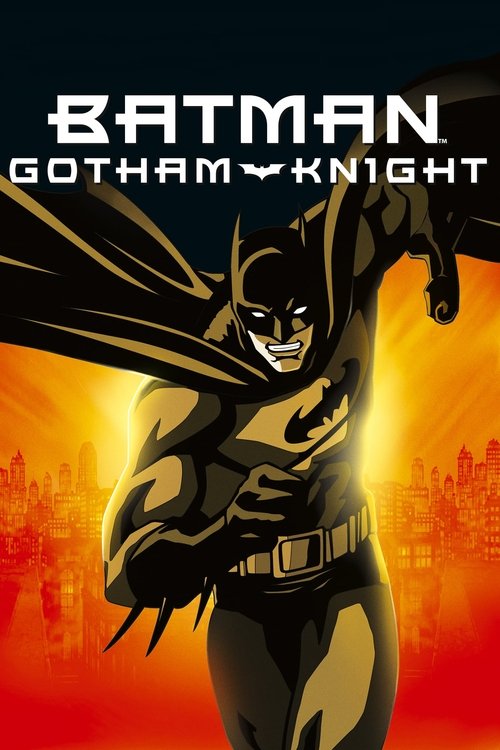
Batman: Gotham Knight (2008)
Directed by Yasuhiro Aoki
No — Batman: Gotham Knight is not woke, scoring 0 out of 100 on our wokeness meter.
Six Japanese and Korean animation studios were handed the Batman franchise in 2008 and asked to fill the gap between Batman Begins and The Dark Knight.
Consciousness Markers
The film features minority characters such as Crispus Allen and Anna Ramirez, but they exist naturally in the story without any commentary or deliberate race-conscious casting, so no woke marker is present.
No LGBTQ+ characters, themes, or subtext are present.
While Cassandra serves as a female mentor, the film does not advance a feminist agenda or critique patriarchy.
No exploration of racial identity, systemic racism, or racial justice themes.
No environmental or climate change themes.
Bruce Wayne is a billionaire, but the film does not critique capitalism or wealth inequality.
No body positivity or fat acceptance themes.
No neurodivergent characters or themes.
No historical revisionism; it is a fictional superhero story.
The film has philosophical dialogue about pain and purpose, but it does not lecture on social or political issues.
Why it received this score
Six Japanese and Korean animation studios were handed the Batman franchise in 2008 and asked to fill the gap between Batman Begins and The Dark Knight. The result, Batman: Gotham Knight, is an anthology of shorts sharing a voice cast (Kevin Conroy, returning to the cowl) and a mood of damp urban exhaustion. The segments run from a Rashomon-style retelling of a rooftop fight by four skate-park children to a wounded Batman crawling through sewers with a bullet in his gut, reflecting on the teacher who taught him to sleep on a bed of needles.
Audited against the social concerns of the present decade, the film returns a clean sheet. Crispus Allen and Anna Ramirez are Gordon's hand-picked detectives, and their race is never the subject of a speech. Cassandra trains Bruce in the management of pain, an act of mentorship with no ideological freight attached. Bruce Wayne is a billionaire, and the film offers no reckoning with that arrangement, no redistribution, no apology. The Scarecrow puts a cardinal on trial for the church's failure to house the homeless, but this is a madman's grievance staged in a flooded crypt, not a position paper.
The film's real subject is suffering as a discipline. A field-test gadget that deflects bullets turns out to work too well, wounding the wrong man, and Batman hands it back. Deadshot, hired to kill him, begs for his life, and Batman knocks him out in disgust. Alfred suggests a higher purpose; Bruce stares at the Bat-Signal. It is a somber, well-made, entirely unpersuasive piece of franchise filler, and it has nothing to say about the culture that produced it. That is not a flaw. It is simply a fact of its vintage.
Analysis generated by our Consciousness Algorithm
Part of


Synopsis
Six interlocking stories reveal Bruce Wayne's earliest adventures as Batman and the steps he took to become the grim avenger of Gotham City.
Questions about Batman: Gotham Knight
Is Batman: Gotham Knight woke?
No — Batman: Gotham Knight is not woke, scoring 0 out of 100 on our wokeness meter. That earns it a verdict of Ultra Based.
Does Batman: Gotham Knight have any woke elements?
No. All 10 markers score zero.
How does Batman: Gotham Knight compare to other 2008 movies?
It ranks #175 of the 212 films from 2008 we've scored; their average is 12. The wokest is Milk (68).
How is the Woke Score calculated?
An AI-assisted process researches the film and its reception, scores it 0–100 on ten markers, then combines those into one 0–100 Woke Score. It measures a specific set of 2020s cultural themes, not film quality.