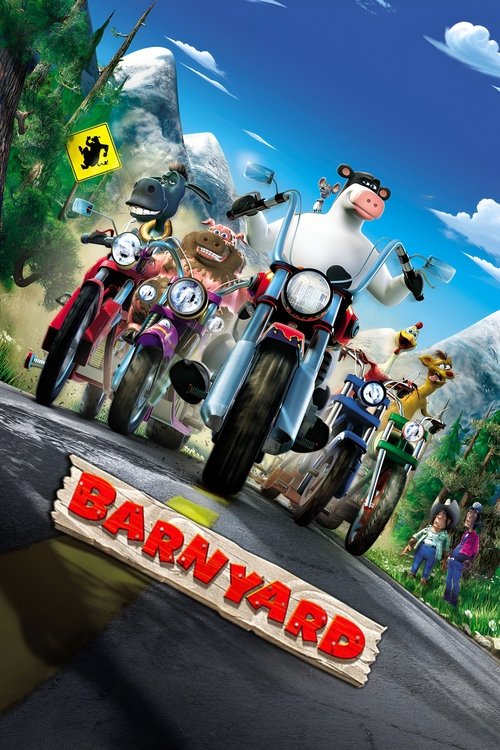
Barnyard (2006)
Directed by Steve Oedekerk
No — Barnyard is not woke, scoring 3 out of 100 on our wokeness meter.
Barnyard arrives from 2006, a year when every studio with a render farm believed it could bottle the Pixar lightning and sell it by the crate.
Consciousness Markers
The voice cast includes Black performers such as Danny Glover and Wanda Sykes, but the characters are anthropomorphic farm animals and race is never a factor in the story or casting rationale.
The film carries a conventional coming-of-age moral about responsibility and fatherhood, delivered through plot rather than preachy messaging.
No LGBTQ+ characters, themes, or subtext appear anywhere in the film.
Daisy is defined largely as a widowed, pregnant love interest and Bessy as a 'sassy' sidekick; there is no feminist framing or commentary.
The film contains no engagement with racial identity, racism, or racial justice themes.
Environmental or climate concerns are entirely absent from the story.
There is no critique of capitalism, wealth, or class structures; the farm setting is purely a comedic backdrop.
Duke the overweight Border Collie is played for comedy rather than any body-positive message; no body-positivity themes are present.
Freddy is described as 'neurotic,' but this is a comedic character quirk, not a depiction or advocacy of neurodivergence.
The film makes no historical claims and does not revise or reinterpret any historical record.
Why it received this score
Barnyard arrives from 2006, a year when every studio with a render farm believed it could bottle the Pixar lightning and sell it by the crate. Steve Oedekerk's contribution concerns a Holstein bull named Otis who dances, pranks, and shirks his night watch until a coyote named Dag kills his adoptive father and hands him a farm to run. The animals speak only when humans are not looking. The cows, we are told, are all bulls, a biological detail the film declines to address and audiences of a certain age declined to forgive. It is a coming-of-age story wearing a barn as a hat.
The film carries no cultural agenda to speak of. Danny Glover and Wanda Sykes lend their voices to a mule and a cow, and the film makes nothing of it, a quiet testament to a casting philosophy that predates the era of the annotated ensemble. There is no racial commentary, no environmental sermon, no critique of the farmer's economic arrangements. Daisy exists to be widowed and pregnant. Bessy exists to be sassy. Duke the Border Collie exists to be overweight and laughed at. Freddy the ferret is called neurotic in the production notes and nothing further is made of it. The moral concerns responsibility and fatherhood, and it arrives through plot, as morals in children's films once did, without a spokesperson stepping forward to explain it.
We are left with a ninety-minute exercise in competent mediocrity, reviewed poorly at the time and remembered mostly for the udders. The sequel series ran on Nickelodeon for two seasons and replaced the love interest, which tells you everything about the durability of the emotional stakes. A film can be harmless without being interesting. This one manages both.
Analysis generated by our Consciousness Algorithm
Part of


Synopsis
Otis is a mischievous, carefree Holstein cow who lives on a farm where, unbeknownst to humans, the animals are anthropomorphic. He prefers having fun with his best friends: Pip the mouse, Freddy the ferret, Peck the rooster, and Pig the pig - rather than following strict rules and accepting responsibility. But when his adoptive father is killed in a coyote attack, he has a heavy responsibility thrust upon him to become leader of his farm home's community.
Questions about Barnyard
Is Barnyard woke?
No — Barnyard is not woke, scoring 3 out of 100 on our wokeness meter. That earns it a verdict of Ultra Based.
Does Barnyard have any woke elements?
Very few. None of the 10 markers reaches 30, the level where a marker counts as present; the highest is Lecture Energy at 8.
How does Barnyard compare to other 2006 movies?
It ranks #164 of the 211 films from 2006 we've scored; their average is 11. The wokest is An Inconvenient Truth (92).
How is the Woke Score calculated?
An AI-assisted process researches the film and its reception, scores it 0–100 on ten markers, then combines those into one 0–100 Woke Score. It measures a specific set of 2020s cultural themes, not film quality.