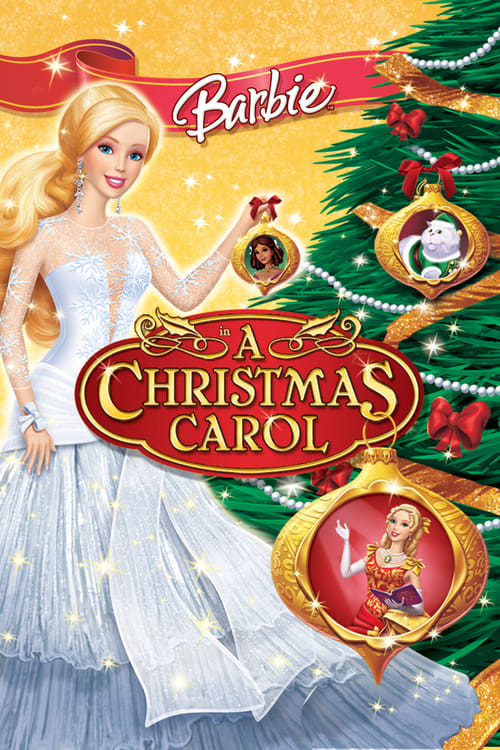
Barbie in 'A Christmas Carol' (2008)
Directed by William Lau
No — Barbie in 'A Christmas Carol' is not especially woke, scoring 27 out of 100 on our wokeness meter.
The 2008 reimagining of a Victorian classic for a modern animated audience presents a surprisingly sturdy, if traditional, framework for social commentary.
Consciousness Markers
A woman owns the theater, drives the narrative, and the classic male miser is recast as a female soprano; Catherine rises to become a self-made fashion designer. The female-forward framing is baked into the Barbie brand rather than argued as a thesis.
Eden is a wealthy theater owner who hoards her fortune, denies her employees a holiday, and is contrasted against a struggling orphanage; the redemption arc is a critique of greed and miserliness, though it resolves into personal charity rather than structural change.
The cast is overwhelmingly female, and the production gender-flips the traditionally male Scrooge into the diva Eden Starling, but the voice roster remains largely white and the diversity is incidental rather than a stated aim.
The film delivers a gentle moral about generosity and the true spirit of Christmas, but the lesson is delivered through story rather than sermonizing, keeping the preaching mild.
No LGBTQ+ characters, relationships, or subtext appear anywhere in this Victorian Christmas tale.
The story contains no engagement with race as a theme; the orphanage and class dynamics are colorblind in the Dickensian tradition.
No environmental or climate themes are present in the narrative.
No body-positive messaging or diverse body types are featured.
No neurodivergent characters or themes are depicted.
The gender-swap of Scrooge is an adaptation choice, not a rewriting of real historical events; the film makes no revisionist claims about history.
Why it received this score
The 2008 reimagining of a Victorian classic for a modern animated audience presents a surprisingly sturdy, if traditional, framework for social commentary. The decision to recast the traditional miser as a glamorous female diva offers a strong foundation for a feminist reading. We see a woman who owns the theater, which drives the narrative, and a character who rises to become a successful fashion designer. This framing is effective at drawing the viewer into a critique of corporate greed and miserliness. The central conflict, where a wealthy theater owner hoards her fortune and denies her staff the holiday, provides a clear, albeit gentle, anti-capitalist thesis. However, the film’s social consciousness feels baked into the existing brand rather than argued as a revolutionary statement.
The progressive sensibilities stop short of any modern cultural reckoning. The narrative avoids engaging with critical issues of race, climate, or body image, relying instead on a Dickensian colorblind tradition that feels comfortably distant from today’s flashpoints. The moral lesson, which the film delivers through story rather than a stern sermonizing, remains focused on personal redemption and general generosity. While the film excels at offering a story about a woman finding her own strength, it does not push boundaries regarding contemporary gender theory or systemic social issues. This is a story of individual change, which is far less ambitious than the kind of cultural deconstruction we require.
Ultimately, the film is a charming piece of family animation with a functional, if mild, social message. It achieves a level of cultural awareness that feels appropriate for its target demographic, yet it ultimately avoids the more complex and challenging progressive territory. We are left with a story of a diva learning charity, a concept that has been refined to near exhaustion by previous interpretations. It is a competent, well-animated holiday picture. It is not a cultural event.
Analysis generated by our Consciousness Algorithm


Synopsis
On Christmas Eve, Kelly is reluctant to go to a Christmas Eve ball, so Barbie tells her the story of Eden Starling, a glamorous singing diva in the Victorian England and the owner of a theatre house. However, Eden is self-centered and loves only herself. She is frequently accompanied by her snooty cat, Chuzzlewit. She does not believe in Christmas and orders all her employees to work on Christmas.
Questions about Barbie in 'A Christmas Carol'
Is Barbie in 'A Christmas Carol' woke?
No — Barbie in 'A Christmas Carol' is not especially woke, scoring 27 out of 100 on our wokeness meter. That earns it a verdict of Based.
Does Barbie in 'A Christmas Carol' have any woke elements?
3 of the 10 markers register at 30 or above, led by Feminist Agenda (40), Eat the Rich (35) and Representation Casting (30). On Feminist Agenda: A woman owns the theater, drives the narrative, and the classic male miser is recast as a female soprano; Catherine rises to become a self-made fashion designer.
How does Barbie in 'A Christmas Carol' compare to other 2008 movies?
It ranks #20 of the 212 films from 2008 we've scored; their average is 12. The wokest is Milk (68).
How is the Woke Score calculated?
An AI-assisted process researches the film and its reception, scores it 0–100 on ten markers, then combines those into one 0–100 Woke Score. It measures a specific set of 2020s cultural themes, not film quality.