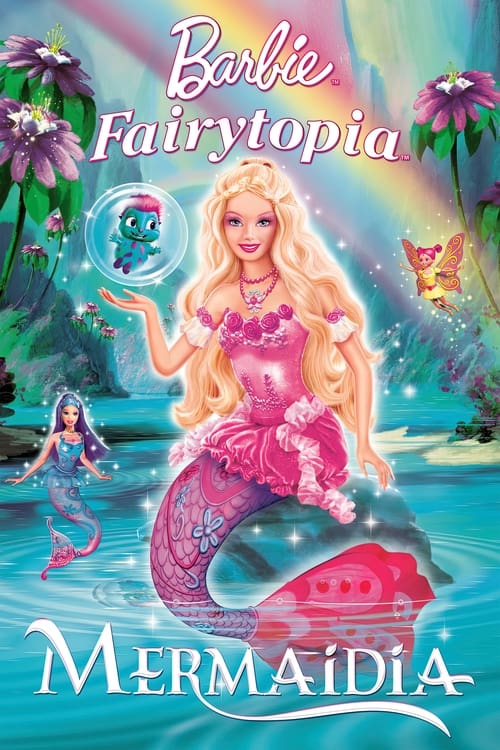
Barbie Fairytopia: Mermaidia (2006)
Directed by Walter P. Martishius
No — Barbie Fairytopia: Mermaidia is not woke, scoring 9 out of 100 on our wokeness meter.
Barbie Fairytopia: Mermaidia arrives from 2006 as the seventh Barbie animated feature and the first sequel to Fairytopia, a direct-to-video product of Mattel and Mainframe Entertainment.
Consciousness Markers
A female lead, female antagonist, and a female friendship that resolves a romantic rivalry, but this is standard Barbie-brand girl-power framing rather than a modern feminist thesis.
A 2006 direct-to-video Barbie feature with a uniformly white voice cast; the female protagonist is notable but there is no diversity-conscious casting intent.
No LGBTQ+ characters, themes, or subtext whatsoever.
No engagement with race or racial identity; the fantasy world is entirely race-neutral and race-silent.
No environmental or climate themes; the magical poison is a plot device, not an ecological parable.
No critique of capitalism, wealth, or class structures; the royal/commoner romance is treated as a personal obstacle, not a political one.
No body-positivity messaging; characters are conventionally slender fairy-tale designs.
No neurodivergent characters or themes; Bibble's comic antics are slapstick, not representation.
No historical revisionism; the story is pure original fantasy with no real-world history to reinterpret.
The film tells its story through adventure and song with no preachy moralizing or direct address to the audience about social issues.
Why it received this score
Barbie Fairytopia: Mermaidia arrives from 2006 as the seventh Barbie animated feature and the first sequel to Fairytopia, a direct-to-video product of Mattel and Mainframe Entertainment. Its plot is modest: Elina trades her wings for a tail, teams with the prickly mermaid Nori, and rescues Prince Nalu from Laverna's fungal henchmen. The film moves through oracle visits, magical berries, and a cave of transforming fruit with the efficiency of a toy commercial that has learned to tell a story. Nothing in this underwater errand carries the specific social agenda of later decades.
There is a female protagonist, a female antagonist, and a central friendship between women that resolves a romantic rivalry. Nori's jealousy gives way to alliance. That is standard Barbie-brand girl power, a mild and marketable feminism of the mid-2000s. The voice cast is uniformly white, and the film makes no gesture toward diversity-conscious casting. Race as a subject does not exist here. Nor do LGBTQ themes, climate anxiety, class critique, body-positive messaging, or neurodivergent representation. Bibble's slapstick yodeling and opera singing are comic relief, not a portrait of cognitive difference. The magical poison threatens Mermaidia only as a plot device, not as an ecological parable.
The film also avoids historical revisionism and preachy lecture energy. It tells its story through adventure, songs, and a few mild lessons about courage and trust. Laverna is defeated by a swapped berry and becomes a toad. Elina regains her wings, Nori confesses her feelings for Nalu, and the Magic Meadow offers congratulations. The result is gentle, harmless, and culturally weightless in the modern sense. It is a product of its time, which is to say a time before children's animation felt obliged to explain the world's injustices between musical numbers. As a specimen of 2006 direct-to-video Barbie cinema, it earns its low placement on any serious scale of contemporary social consciousness, and it seems entirely at peace with that.
Analysis generated by our Consciousness Algorithm


Synopsis
In this animated follow-up to Fairytopia, Elina enlists the help of a mermaid, Nori, to save her friend Nalu, a merman prince who has been captured by the wicked Laverna.
Questions about Barbie Fairytopia: Mermaidia
Is Barbie Fairytopia: Mermaidia woke?
No — Barbie Fairytopia: Mermaidia is not woke, scoring 9 out of 100 on our wokeness meter. That earns it a verdict of Ultra Based.
Does Barbie Fairytopia: Mermaidia have any woke elements?
Very few. None of the 10 markers reaches 30, the level where a marker counts as present; the highest is Feminist Agenda at 20.
How does Barbie Fairytopia: Mermaidia compare to other 2006 movies?
It ranks #75 of the 211 films from 2006 we've scored; their average is 11. The wokest is An Inconvenient Truth (92).
How is the Woke Score calculated?
An AI-assisted process researches the film and its reception, scores it 0–100 on ten markers, then combines those into one 0–100 Woke Score. It measures a specific set of 2020s cultural themes, not film quality.