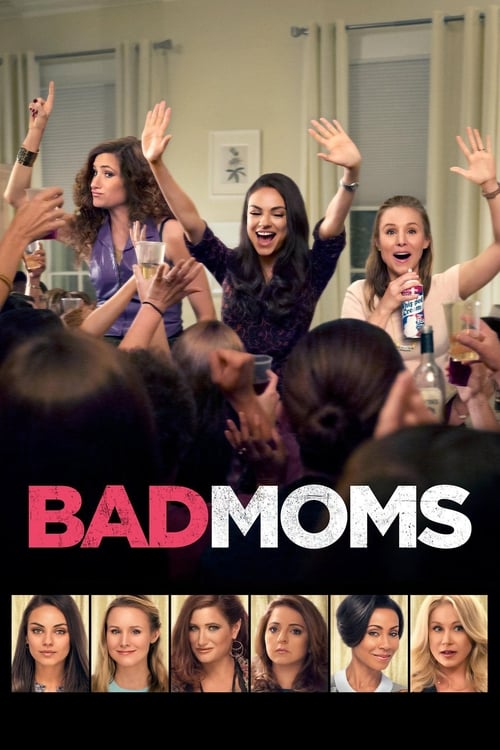
Bad Moms (2016)
Directed by Scott Moore
No — Bad Moms is not especially woke, scoring 26 out of 100 on our wokeness meter.
Bad Moms arrives in 2016 with a modest proposition: that the suburban mother, having spent years packing wholesome lunches and attending PTA meetings, might enjoy a drink.
Consciousness Markers
The entire premise is women rebelling against the oppressive 'perfect mom' ideal and reclaiming autonomy, with a climactic speech about overworked mothers deserving freedom and the right to make mistakes.
A female-led ensemble with a notably diverse cast including Jada Pinkett Smith in a prominent supporting role, though the film never foregrounds identity as a theme.
The film builds to an 'inspiring' election speech about the need for moms to do less and allow themselves to make mistakes, delivering a fairly direct thesis about modern motherhood.
There is a mild critique of a boss who fires Amy for taking time off and later rehires her with better pay, but this is a personal workplace grievance rather than a systemic anti-capitalist argument.
The cast is multiracial but race is never addressed or thematized; the story is squarely about affluent suburban motherhood.
No LGBTQ+ characters, relationships, or themes appear anywhere in the film.
No environmental or climate themes are present.
No body positivity themes; the film's humor around Carla's sexuality is not framed as body-acceptance messaging.
No neurodivergent characters or themes are present.
No historical revisionism; the film is a contemporary original comedy.
Why it received this score
Bad Moms arrives in 2016 with a modest proposition: that the suburban mother, having spent years packing wholesome lunches and attending PTA meetings, might enjoy a drink. The film assembles a capable ensemble, Mila Kunis as the harried protagonist, Kathryn Hahn as the libidinous id, Kristen Bell as the timid stay-at-home, and Christina Applegate as the PTA tyrant. Jada Pinkett Smith rounds out the group in a supporting turn, and the cast is multiracial in a casual, unremarked way. Race never surfaces as a subject. Neither does much else. The film lets its demographics sit there, pleasant and inert, like furniture in a staged home.
The governing idea is that mothers have been conscripted into an unwinnable contest of perfection, and that opting out is both possible and liberating. This is a genuine thesis, and the film states it plainly, building to an election speech in which Kunis tells a gymnasium of women to do less, to schedule fewer events, and to permit themselves failure. That speech is the spine of the thing and also its most sermonizing moment. A workplace subplot has a boss firing our heroine for taking time off, then rehiring her at better pay. It registers as a personal grievance, settled by an apology and a raise, not an argument about labor.
Left unaddressed are the categories the era would come to expect: no queer characters, no environmental anxiety, no meditation on the body, no neurodivergent perspective, no reworking of the historical record. What remains is a comedy of affluent exhaustion that wants credit for candor while keeping its edges sanded. The jokes land often enough. The rebellion, such as it is, concludes with everyone happier, the villain softened, and the private jet still available for a day of fun. A tidy resolution for a film about refusing tidiness. The credits roll on cast members interviewing their real mothers, a gesture toward authenticity that the preceding ninety minutes never quite earned.
None of this is objectionable. It is merely mild, a studio comedy that locates a real frustration and then declines to press on it. The classification is straightforward: a film of modest social consciousness, comfortable in its own suburb, unlikely to disturb anyone who bought a ticket.
Analysis generated by our Consciousness Algorithm


Synopsis
When three overworked and under-appreciated moms are pushed beyond their limits, they ditch their conventional responsibilities for a jolt of long overdue freedom, fun, and comedic self-indulgence.
Questions about Bad Moms
Is Bad Moms woke?
No — Bad Moms is not especially woke, scoring 26 out of 100 on our wokeness meter. That earns it a verdict of Based.
Does Bad Moms have any woke elements?
3 of the 10 markers register at 30 or above, led by Feminist Agenda (50), Representation Casting (40) and Lecture Energy (35). On Feminist Agenda: The entire premise is women rebelling against the oppressive 'perfect mom' ideal and reclaiming autonomy, with a climactic speech about overworked mothers deserving freedom and the right to make mistakes.
How does Bad Moms compare to other 2016 movies?
It ranks #53 of the 285 films from 2016 we've scored; their average is 16. The wokest is 13th (92).
How is the Woke Score calculated?
An AI-assisted process researches the film and its reception, scores it 0–100 on ten markers, then combines those into one 0–100 Woke Score. It measures a specific set of 2020s cultural themes, not film quality.