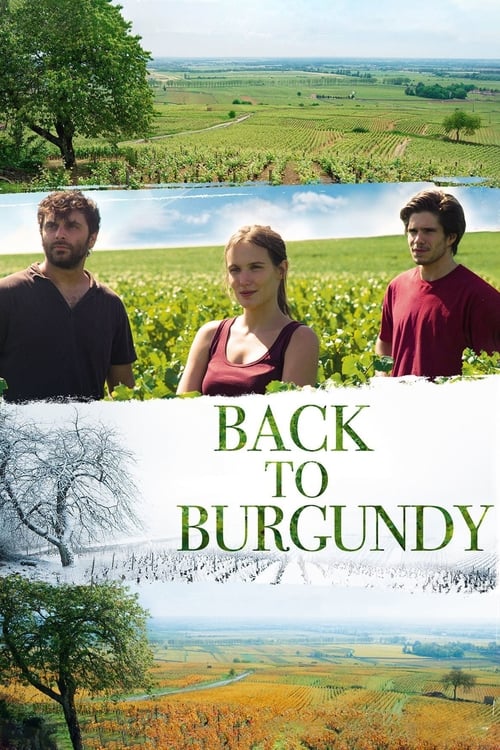
Back to Burgundy (2017)
Directed by Cédric Klapisch
No — Back to Burgundy is not woke, scoring 7 out of 100 on our wokeness meter.
Cédric Klapisch returns to the family table with Back to Burgundy, a film in which three siblings inherit a vineyard, a tax bill they cannot pay, and a father's silence that outlives him.
Consciousness Markers
Juliette is portrayed as one of the two most skilled winegrowers, outshining the older generation, and has her own romantic subplot, but the film frames this as family drama rather than a feminist statement.
The cast includes Black and Spanish-French actors (Karidja Touré, María Valverde, Tewfik Jallab) in supporting roles, but this reflects the natural diversity of contemporary French cinema rather than any deliberate, commented-upon diversity initiative.
The plot involves inheritance taxes and a smug landowner father-in-law angling to buy the best parcels, but this is familial friction rather than an eat-the-rich critique.
This is a gentle, sentimental French family drama that observes rather than preaches; there is no didactic messaging.
No LGBTQ+ characters or themes appear anywhere in the film.
Race plays no thematic role in this Burgundy-set family drama.
Despite its vineyard setting and the agricultural cycle of seasons, the film makes no environmental or climate-themed argument.
No body-positivity themes are present.
No neurodivergent characters or themes are depicted.
The film is a contemporary fictional family story with no historical revisionism.
Why it received this score
Cédric Klapisch returns to the family table with Back to Burgundy, a film in which three siblings inherit a vineyard, a tax bill they cannot pay, and a father's silence that outlives him. Jean has spent a decade in Chile and Australia, drinking wine and avoiding France. He comes home when the old man starts dying, which is the classic schedule for such returns. What follows is a patient seasonal drama: pruning, harvest, the inheritance tax, the brother-in-law's father sniffing around the best parcels. The camera loves the rows of vines. The film does not love much else with the same intensity.
The social consciousness on display here is of the ambient, unremarked variety. The cast includes Black and Spanish-French performers in supporting parts, which reflects the ordinary makeup of French cinema and not an agenda. Juliette is revealed to be among the two finest winemakers in the family, surpassing the older generation, and she is granted a romantic life of her own. The film treats this as family business, not as a thesis. There is a grasping landowner father-in-law, and there are inheritance taxes, and one can read a mild grumble about money into it all, but the anger never rises above the level of a dinner-table sigh. No one lectures. Nobody is asked to check a privilege. The vineyard is not a metaphor for the climate. It is a vineyard.
What we get instead is a sentimental, well-made drama about a father who was not hated as much as his son believed, and a letter that arrives too late. It is pleasant, unhurried, and entirely content to observe. The oenophiles will be intoxicated. The rest of us will note the clunky plotting and move on to the next bottle.
Analysis generated by our Consciousness Algorithm


Synopsis
Jean left his hometown ten years ago. When his father falls ill, he comes back and reunites with his sister Juliette and his brother Jérémie. As seasons go by around their vineyard, they'll have to trust each other again.
Questions about Back to Burgundy
Is Back to Burgundy woke?
No — Back to Burgundy is not woke, scoring 7 out of 100 on our wokeness meter. That earns it a verdict of Ultra Based.
Does Back to Burgundy have any woke elements?
Very few. None of the 10 markers reaches 30, the level where a marker counts as present; the highest is Feminist Agenda at 15.
How does Back to Burgundy compare to other 2017 movies?
It ranks #208 of the 309 films from 2017 we've scored; their average is 19. The wokest is I Am Not Your Negro (92).
How is the Woke Score calculated?
An AI-assisted process researches the film and its reception, scores it 0–100 on ten markers, then combines those into one 0–100 Woke Score. It measures a specific set of 2020s cultural themes, not film quality.