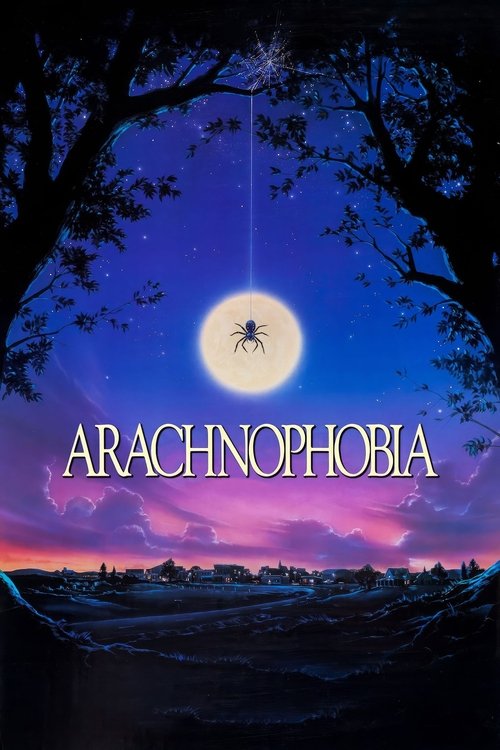
Arachnophobia (1990)
Directed by Frank Marshall
No — Arachnophobia is not woke, scoring 0 out of 100 on our wokeness meter.
The 1990 creature feature Arachnophobia arrives from the Spielberg-adjacent Amblin factory with a single, uncluttered objective: to make audiences squirm.
Consciousness Markers
The cast is a uniformly white ensemble of 1990 Hollywood character actors (Jeff Daniels, John Goodman, Harley Jane Kozak); no diverse or color-conscious casting is present.
No LGBTQ+ characters, themes, or subtext appear anywhere in this creature feature.
The female characters occupy conventional wife-and-victim roles; there is no feminist framing or gender commentary.
The film engages no racial themes whatsoever; the Venezuelan setting is mere exotic backdrop for the spider's origin.
While the plot involves an invasive species and a throwaway 'ecological crisis' phrase, there is no environmentalist messaging or climate advocacy.
No critique of wealth, class, or capitalism; the small-town exterminator is celebrated, not condemned.
No body-positivity themes; bodies exist only to be bitten and desiccated.
The protagonist's arachnophobia is a plot device, not a neurodivergence narrative, and no such themes are explored.
The film makes no historical claims to revise; it is pure fictional creature-feature entertainment.
The film is a Spielberg-produced thrill-omedy with zero preachy messaging or moral instruction.
Why it received this score
The 1990 creature feature Arachnophobia arrives from the Spielberg-adjacent Amblin factory with a single, uncluttered objective: to make audiences squirm. Frank Marshall, directing for the first time, stages the invasion of the fictional California town of Canaima with the efficiency of a man who has studied Hitchcock's The Birds and concluded the birds should be spiders. Jeff Daniels plays Ross Jennings, a San Francisco physician who relocates to the countryside for a quieter life and receives, instead, a lethal arachnid colony in his barn.
The film's cultural ledger is remarkably empty. The ensemble is white, the gender roles are drawn from a 1950s catalog, and the female characters exist to be bitten, widowed, or reassured. No racial themes intrude on the Venezuelan prologue, which functions purely as an exotic delivery mechanism for the general. Capitalism escapes scrutiny: the exterminator Delbert McClintock, played with relish by John Goodman, is the town's hero precisely because he shows up, charges money, and kills things. Bodies are present only to be desiccated. There is no messaging to be extracted here, no sermon, no moral instruction tucked into the closing credits.
The result is a machine for thrills, and it runs clean. Critics at the time called it slick and oddly unresonant, which reads today as praise of a certain kind. The film does not wish to improve us. It wishes to make us check our shoes before putting them on. Steven Kutcher's three hundred Avondale spiders perform with more conviction than most human casts, and the sound of crushed mustard packets has never been put to nobler ends. A remake is reportedly in development, which raises the question of what contemporary sensibilities might be grafted onto a premise this innocent. Let us hope the spiders retain top billing.
Analysis generated by our Consciousness Algorithm


Synopsis
A large spider from the jungles of South America is accidentally transported in a crate with a dead body to America where it mates with a local spider. Soon after, the residents of a small California town disappear as the result of spider bites from the deadly spider offspring. It's up to a couple of doctors with the help of an insect exterminator to annihilate these eight legged freaks.
Questions about Arachnophobia
Is Arachnophobia woke?
No — Arachnophobia is not woke, scoring 0 out of 100 on our wokeness meter. That earns it a verdict of Ultra Based.
Does Arachnophobia have any woke elements?
No. All 10 markers score zero.
How does Arachnophobia compare to other 1990 movies?
It ranks #54 of the 68 films from 1990 we've scored; their average is 9. The wokest is Nightbreed (60).
How is the Woke Score calculated?
An AI-assisted process researches the film and its reception, scores it 0–100 on ten markers, then combines those into one 0–100 Woke Score. It measures a specific set of 2020s cultural themes, not film quality.