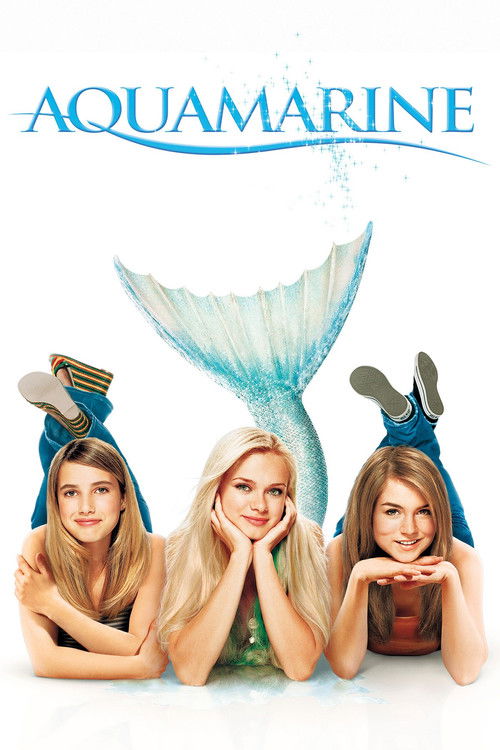
Aquamarine (2006)
Directed by Elizabeth Allen Rosenbaum
No — Aquamarine is not woke, scoring 9 out of 100 on our wokeness meter.
The 2006 tween fantasy Aquamarine arrives with the particular pedigree of a studio picture that knows exactly whom it serves and asks little of anyone else.
Consciousness Markers
A female director and a story whose emotional core is the bond between two girls, with a self-confidence message for young women. However, the plot engine is still getting a boy to fall for the mermaid.
The film delivers life lessons about friendship, altruism, and self-worth, but critics noted these are passed along in a 'not-that-obvious fashion' rather than preached.
The film carries a general 'you are fine just the way you are' self-acceptance message, but it is not specifically about body image or size.
The cast is almost entirely white, but the film is female-led with a female director and centers two teenage girls. Diversity casting is essentially absent.
No LGBTQ+ characters or themes appear in the film; the romance is strictly heterosexual. Chappell Roan's later 'gay' homage is external to the text.
No racial themes, commentary, or non-white principal characters. The setting is a generic white beach town.
A marine-biologist mother and ocean setting provide environmental flavor, but there is no climate advocacy or ecological messaging.
No economic critique; the film is a light family comedy with no class or wealth commentary.
Aquamarine's confusion over human social cues stems from being a mermaid out of water, not from any neurodivergent framing.
No historical setting or reinterpretation of past events; the film is a contemporary fantasy.
Why it received this score
The 2006 tween fantasy Aquamarine arrives with the particular pedigree of a studio picture that knows exactly whom it serves and asks little of anyone else. Elizabeth Allen directs, in her feature debut, a loose adaptation of Alice Hoffman's young adult novel about a mermaid washed ashore in a Florida beach town and the two thirteen-year-old girls who hide her. The camera stays low and warm. The performances are loose. The whole thing smells faintly of sunscreen and magazine quizzes, which is the point.
On the matter of representation, the film offers a female director and a pair of girls at its center, which in 2006 counted for something, but the cast is otherwise a wall of whiteness and the town a study in beige. The romance is strictly boy-meets-mermaid. No queer current runs beneath these waves, whatever a later pop star may have read into them. The friendship between Claire and Hailey carries real emotional weight, and the film treats their loyalty with a respect that most teen comedies reserve for kisses. Yet the plot still turns on a lifeguard's attention, and the girls spend their summer consulting CosmoGirl for tricks to win him.
The lessons arrive quietly. Friendship over popularity, altruism over trend-chasing, and a closing note that the audience is fine as it is. That last sentiment is general enough to avoid any specific claim about bodies or minds. Aquamarine's bafflement at human customs is the bafflement of a fish out of water, not a diagnosis. There is no economic grievance here, no climate sermon, no revision of the historical record, and the ocean remains a backdrop instead of a cause. We are left with a small, sincere thing that has somehow become a cult object for a generation that found it later, and there are worse fates for a movie about a girl with a tail.
Analysis generated by our Consciousness Algorithm


Synopsis
Two teenage girls discover that mermaids really do exist after a violent storm washes one ashore. The mermaid, a sassy creature named Aquamarine, is determined to prove to her father that real love exists, and enlists the girls' help in winning the heart of a handsome lifeguard.
Questions about Aquamarine
Is Aquamarine woke?
No — Aquamarine is not woke, scoring 9 out of 100 on our wokeness meter. That earns it a verdict of Ultra Based.
Does Aquamarine have any woke elements?
1 of the 10 markers register at 30 or above, led by Feminist Agenda (35). On Feminist Agenda: A female director and a story whose emotional core is the bond between two girls, with a self-confidence message for young women.
How does Aquamarine compare to other 2006 movies?
It ranks #75 of the 211 films from 2006 we've scored; their average is 11. The wokest is An Inconvenient Truth (92).
How is the Woke Score calculated?
An AI-assisted process researches the film and its reception, scores it 0–100 on ten markers, then combines those into one 0–100 Woke Score. It measures a specific set of 2020s cultural themes, not film quality.