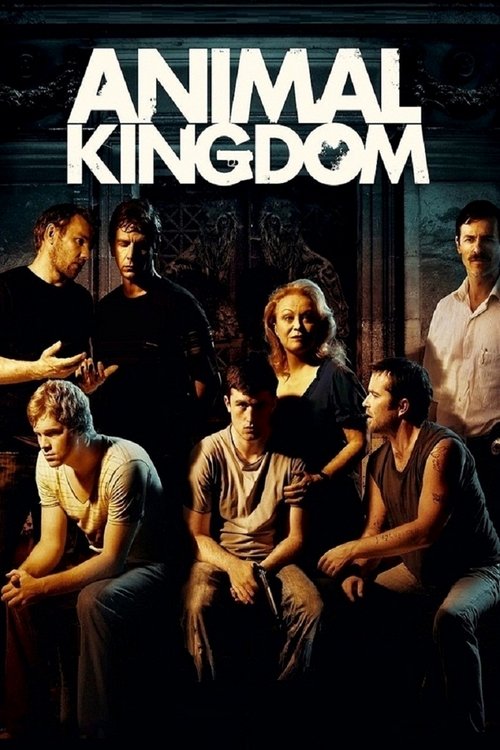
Animal Kingdom (2010)
Directed by David Michôd
No — Animal Kingdom is not woke, scoring 2 out of 100 on our wokeness meter.
Animal Kingdom arrives from 2010, which is to say from a period when the cinema did not feel obliged to justify itself to anyone.
Consciousness Markers
Jacki Weaver's Smurf is a commanding female crime matriarch, but the film treats this as character drama rather than feminist critique or empowerment.
The cast is entirely white and the film makes no effort at diverse or inclusive casting.
There are no LGBTQ+ characters, themes, or subtext.
The film does not engage with race, racism, or racial identity.
There is no environmental or climate-related content.
The crime family's activities are not framed as a critique of capitalism or wealth inequality.
The film contains no body-positivity themes or messaging.
Pope's psychopathic behavior is not presented as neurodivergence or neurodiversity representation.
The film is loosely inspired by real Melbourne crimes, but it does not revise history for modern social-justice purposes.
The film is a restrained crime drama with no preachy or didactic messaging.
Why it received this score
Animal Kingdom arrives from 2010, which is to say from a period when the cinema did not feel obliged to justify itself to anyone. David Michod's debut concerns the Cody family of Melbourne, a clan of armed robbers presided over by a grandmother who keeps her sons close and her knives closer. Joshua, newly orphaned at eighteen, is folded into the household and learns its rules one grim errand at a time. The film observes. It does not instruct.
The lone point of cultural interest is Jacki Weaver's Janine, known as Smurf, a matriarch who runs the operation with a smile and a hand on the knee. She is the most powerful person on screen, and the film never once pauses to celebrate the fact. That is character, not commentary, the difference between a woman who happens to command and a film that wants credit for letting her. The remaining ensemble is white, male, and preoccupied with guns, heroin, and the Walsh Street shootings of 1988, and those matters are treated as material rather than as argument. Nobody in the cast exists to satisfy a spreadsheet.
There is no sermon here. No lecture on the carceral state, no lesson about money, no tidy moral waiting at the exit. Guy Pearce's honest detective exists to offer J a door, and the film declines to announce which choice was correct. The result is a cold, patient, superbly acted piece of work whose only agenda is its own story. For those of us who classify such things professionally, it is a quiet vintage. Nothing added, nothing fortified, no messaging on the label.
Analysis generated by our Consciousness Algorithm


Synopsis
Joshua “J” is taken in by his extended family after his mother dies of an overdose. The clan, ruled by J’s scheming grandmother, is heavily involved in criminal activities, and J is soon indoctrinated into their way of life. But J is given a chance to take another path when a cop seeks to help him.
Questions about Animal Kingdom
Is Animal Kingdom woke?
No — Animal Kingdom is not woke, scoring 2 out of 100 on our wokeness meter. That earns it a verdict of Ultra Based.
Does Animal Kingdom have any woke elements?
Very few. None of the 10 markers reaches 30, the level where a marker counts as present; the highest is Feminist Agenda at 8.
How does Animal Kingdom compare to other 2010 movies?
It ranks #191 of the 238 films from 2010 we've scored; their average is 11. The wokest is My Name Is Khan (84).
How is the Woke Score calculated?
An AI-assisted process researches the film and its reception, scores it 0–100 on ten markers, then combines those into one 0–100 Woke Score. It measures a specific set of 2020s cultural themes, not film quality.