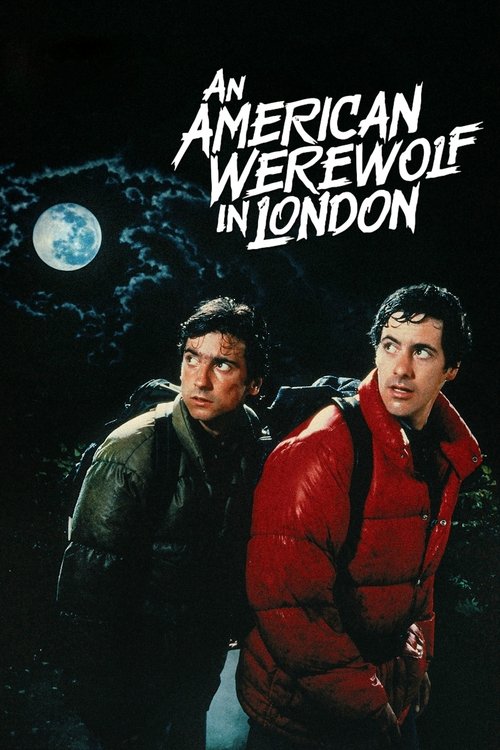
An American Werewolf in London (1981)
Directed by John Landis
No — An American Werewolf in London is not woke, scoring 0 out of 100 on our wokeness meter.
John Landis's 1981 comedy-horror concerns two American students mauled on the Yorkshire moors, one of whom survives to become a werewolf, and it conducts itself with an almost aggressive indifference to the social questions that occupy our current cultural apparatus.
Consciousness Markers
The cast is overwhelmingly white British and American performers; no meaningful diverse or inclusive casting choices are present.
No LGBTQ+ characters, themes, or subtext appear anywhere in the film.
Jenny Agutter's Alex is a caring nurse and love interest; the film offers no feminist critique or gender-role commentary.
The film engages no racial themes or consciousness whatsoever.
There is no environmental or climate-related content in the film.
No economic critique or anti-capitalist messaging is present; the film is a straightforward monster story.
The body horror transformation is grotesque spectacle, not a message of body acceptance or positivity.
David's mental distress is treated as supernatural affliction and plot mechanism, not as neurodivergent identity or advocacy.
The film makes no historical claims and revises no historical record.
The film is a macabre comedy-horror with no didactic or preachy messaging directed at the audience.
Why it received this score
John Landis's 1981 comedy-horror concerns two American students mauled on the Yorkshire moors, one of whom survives to become a werewolf, and it conducts itself with an almost aggressive indifference to the social questions that occupy our current cultural apparatus. The cast is white, British and American, drawn from a pool of performers who happened to be available. Alex, the nurse, exists to care for David and to love him, and the film extends no critique of that arrangement. We searched for contemporary meaning and found a pub, a moor, and a great deal of screaming.
Consider the transformation. Rick Baker's effects remain the gold standard, a body tearing itself apart in agony and practical latex. It is a spectacle of revulsion, not a meditation on self-acceptance. David's torment is lycanthropy, a curse with a lunar schedule, and the film treats his mental suffering as a plot mechanism. No advocacy attaches to it. The undead Jack, rotting cheerfully in a cinema, offers suicide tips to a friend, which is not the language of wellness.
Elsewhere the ledger stays empty. No economic argument is made, though the pub is a pub and the hospital is a hospital. The weather is bad because Landis wanted bad weather, not because of atmospheric carbon. Race goes unmentioned. Nobody lectures us. The film's only sermon is delivered by a decaying corpse urging our hero to slit his wrists, and even that is played for laughs. Here is a monster movie that wants to frighten and amuse in roughly equal measure, and it achieves this without a single progressive gesture. Our instruments registered nothing, and we record that nothing with the gravity it deserves.
Analysis generated by our Consciousness Algorithm


Synopsis
American tourists David and Jack are savagely attacked by an unidentified animal while hiking on the Yorkshire Moors. After retiring to the home of a beautiful nurse to recuperate, David soon begins experiencing disturbing changes to his body and mind.
Questions about An American Werewolf in London
Is An American Werewolf in London woke?
No — An American Werewolf in London is not woke, scoring 0 out of 100 on our wokeness meter. That earns it a verdict of Ultra Based.
Does An American Werewolf in London have any woke elements?
No. All 10 markers score zero.
How does An American Werewolf in London compare to other 1981 movies?
It ranks #32 of the 43 films from 1981 we've scored; their average is 5. The wokest is The Fox and the Hound (18).
How is the Woke Score calculated?
An AI-assisted process researches the film and its reception, scores it 0–100 on ten markers, then combines those into one 0–100 Woke Score. It measures a specific set of 2020s cultural themes, not film quality.