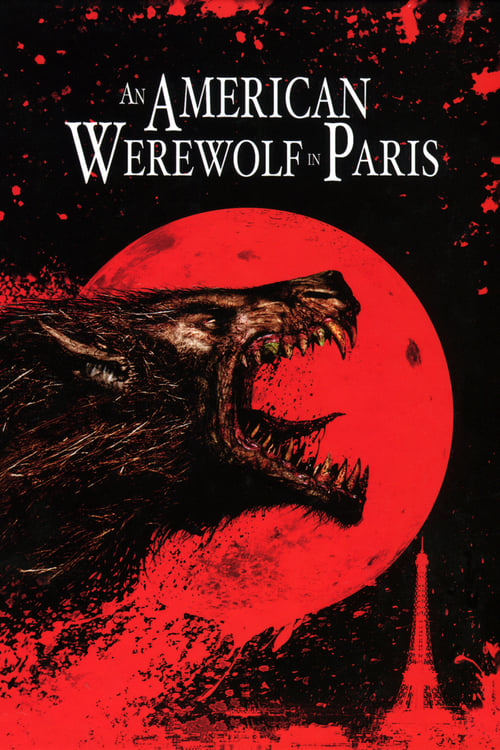
An American Werewolf in Paris (1997)
Directed by Anthony Waller
No — An American Werewolf in Paris is not woke, scoring 0 out of 100 on our wokeness meter.
An American Werewolf in Paris arrived in 1997 as a sequel to a film that had won an Oscar for its makeup and, more to the point, had a sense of humor about the whole business.
Consciousness Markers
The cast is overwhelmingly white and European, with no meaningful diversity casting or commentary on representation. Julie Delpy's French lead is a nationality choice, not a representation statement.
No LGBTQ+ characters, themes, or subtext of any kind appear in the film.
Serafine is a capable female werewolf, but the film offers no feminist thesis, critique of patriarchy, or gender-conscious framing.
No engagement with race, racism, or racial identity whatsoever.
No environmental or climate themes present.
The werewolf society and underground club are pure horror plotting with no economic critique or anti-capitalist messaging.
No body-positive themes; the film's treatment of bodies is strictly horror and titillation.
No neurodivergent characters or themes are present.
The film is a loose sequel with no historical revisionism or reframing of real events.
A late-90s creature-feature comedy with no moralizing, messaging, or preachy monologues. It exists purely to deliver gore and gags.
Why it received this score
An American Werewolf in Paris arrived in 1997 as a sequel to a film that had won an Oscar for its makeup and, more to the point, had a sense of humor about the whole business. The sequel has the comic timing of a man falling down a staircase. Tom Everett Scott plays Andy, a tourist who rescues Julie Delpy from the Eiffel Tower and is rewarded with a curse, a dead best friend who will not stop talking, and an underground nightclub staffed by werewolves who have learned to transform at will. There is a serum. There is a Fourth of July party. Almost everyone dies. The picture was assembled by a rotating cast of writers and directors, and the seams show in every tonal lurch and every computer transformation that resembles a screen saver from the period.
On the matter of social consciousness, the film is a barren field. The cast is white and European, and the screenplay has no interest in remarking on that or on anything else. Serafine is a capable woman with a tragic family history, and nobody involved thinks to make a thesis of it. The werewolf society is a pyramid scheme of appetite, with no economic subtext to speak of. Nobody lectures. Nobody learns. The ghosts are annoying, not allegorical. Claude wants power and flesh, and the film is content to let him have both until the third act removes him.
The whole enterprise exists to deliver gore and gags, and it delivers them badly. Critics at the time were unkind, the box office was indifferent, and John Landis himself said he thought it was lousy. He was correct. This is a film with nothing on its mind, which in a certain light is a kind of integrity. The classification is straightforward. Zero.
Analysis generated by our Consciousness Algorithm


Synopsis
An American man unwittingly gets involved with werewolves who have developed a serum allowing them to transform at will.
Questions about An American Werewolf in Paris
Is An American Werewolf in Paris woke?
No — An American Werewolf in Paris is not woke, scoring 0 out of 100 on our wokeness meter. That earns it a verdict of Ultra Based.
Does An American Werewolf in Paris have any woke elements?
No. All 10 markers score zero.
How does An American Werewolf in Paris compare to other 1997 movies?
It ranks #95 of the 109 films from 1997 we've scored; their average is 12. The wokest is Happy Together (65).
How is the Woke Score calculated?
An AI-assisted process researches the film and its reception, scores it 0–100 on ten markers, then combines those into one 0–100 Woke Score. It measures a specific set of 2020s cultural themes, not film quality.