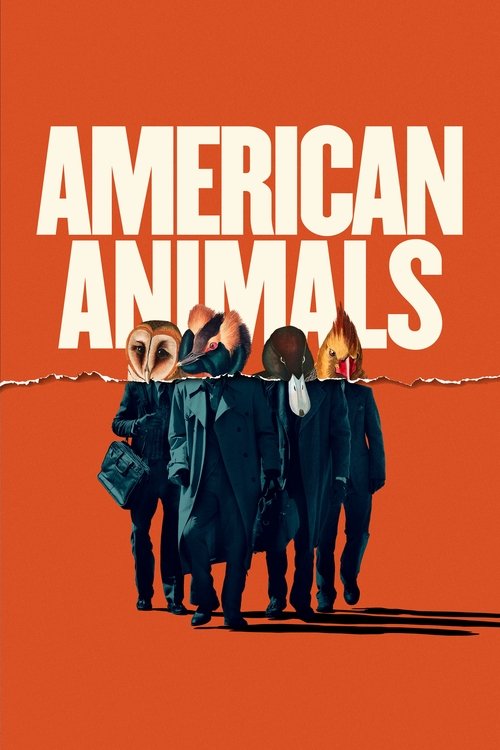
American Animals (2018)
Directed by Bart Layton
No — American Animals is not woke, scoring 0 out of 100 on our wokeness meter.
Bart Layton's American Animals recounts the 2004 Transylvania University book heist, in which four young men from Lexington, Kentucky, set out to steal John James Audubon's Birds of America.
Consciousness Markers
The cast is predominantly white and male, with no deliberate or commented-upon diverse representation.
There are no LGBTQ+ characters, themes, or subtext in the film.
The film does not advance a feminist agenda; the female librarian is a victim whose perspective is included, but not framed through feminist critique.
Race is not a theme or subject of commentary in this story of four white college students.
There is no environmental or climate-related content.
The film critiques entitlement and poor decisions, but does not present an anti-capitalist or eat-the-rich message.
There is no body positivity theme or related content.
Neurodivergence is not depicted or discussed.
The film is a true-crime docudrama with unreliable narrators, but it does not revise history for ideological purposes.
The film is ambiguous and reflective rather than preachy or lecture-driven about social justice issues.
Why it received this score
Bart Layton's American Animals recounts the 2004 Transylvania University book heist, in which four young men from Lexington, Kentucky, set out to steal John James Audubon's Birds of America. The film intercuts interviews with the real participants and actors replaying their accounts, and it contradicts itself on purpose, offering two versions of the same room, the same stun gun, the same bad afternoon. It is a formal stunt executed with a straight face, and the stunt works.
On the matter of contemporary social consciousness, the ledger comes up empty. The cast is white and male. The one woman of any consequence, the librarian Betty Jean Gooch, is stunned and restrained by amateurs, and the film grants her a hearing without dressing it as a gender reckoning. There is no LGBTQ content, no racial commentary, no climate anxiety, no body politics, no neurodivergent coding, and no revision of the historical record for ideological convenience. The film's target is entitlement, the specific entitlement of young men who mistake their boredom for a warrant. That is a moral observation, not a structural critique of capital, and the distinction matters.
Craft and ambiguity remain. Layton declines to tell us what to think, letting Warren's possibly invented trip to Amsterdam sit unprosecuted, letting the thieves age into fitness coaches and painters and regret. No sermon arrives. No moment turns to face the audience and explain the lesson. For a viewer conditioned to being instructed, this restraint may read as an absence, when it is in fact the older discipline of showing. A tidy, well-mannered heist picture that refuses to be about anything except four foolish men and the books they could not keep.
Analysis generated by our Consciousness Algorithm


Synopsis
Lexington, Kentucky, 2004. Four young men attempt to execute one of the most audacious art heists in the history of the United States.
Questions about American Animals
Is American Animals woke?
No — American Animals is not woke, scoring 0 out of 100 on our wokeness meter. That earns it a verdict of Ultra Based.
Does American Animals have any woke elements?
No. All 10 markers score zero.
How does American Animals compare to other 2018 movies?
It ranks #291 of the 325 films from 2018 we've scored; their average is 20. The wokest is Return (92).
How is the Woke Score calculated?
An AI-assisted process researches the film and its reception, scores it 0–100 on ten markers, then combines those into one 0–100 Woke Score. It measures a specific set of 2020s cultural themes, not film quality.