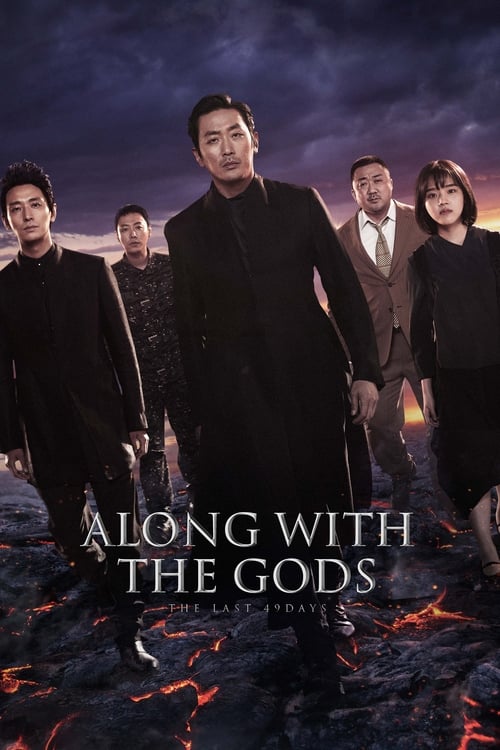
Along with the Gods: The Last 49 Days (2018)
Directed by Kim Yong-hwa
No — Along with the Gods: The Last 49 Days is not woke, scoring 0 out of 100 on our wokeness meter.
Sequels arrive with an obligation to be larger, and this one meets that obligation with the grim determination of a civil servant filing paperwork.
Consciousness Markers
The entirely Korean cast reflects the film's Korean source material and production, not a deliberate modern diversity-casting agenda.
No LGBTQ+ characters, themes, or subtext appear anywhere in the film.
Female characters exist within the ensemble (e.g., the reaper Deok-choon), but the film advances no feminist thesis or gendered critique.
The film engages no racial or ethnic-justice themes; its conflicts are mythological and familial.
No environmental or climate themes are present in this afterlife courtroom fantasy.
No critique of wealth, capitalism, or class structures appears; the drama is about sin, memory, and redemption.
No body-positivity messaging or body-image themes are present.
No neurodivergent characters or themes are depicted.
The Goryeo-era backstory is fantasy mythology, not a re-framing of real history for ideological purposes.
The film is a spectacle-driven fantasy action sequel; it preaches no social or political message to the audience.
Why it received this score
Sequels arrive with an obligation to be larger, and this one meets that obligation with the grim determination of a civil servant filing paperwork. The afterlife bureaucracy of the first film returns, now outfitted with a thousand-year backstory for its three reapers, and the running time swells to one hundred and forty-one minutes. Within any given ten-minute stretch we may sit through a courtroom interrogation, a dinosaur attack, and a tearful reunion in a Goryeo-era village. The tonal whiplash is real. The spectacle is also, at intervals, genuinely impressive given the budget, which is roughly what a Hollywood production spends on craft services.
What the film does not do is lecture. Its moral framework comes from Buddhist and folkloric tradition, and its concerns are sin, memory, and the possibility of forgiveness. Nobody turns to the camera to explain what the audience should think about the world. The cast is entirely Korean because the source webtoon is Korean and the production is Korean, a fact that requires no further editorializing. Female characters appear in the ensemble, including the reaper Deok-choon, and the film lets them do their jobs without mounting an argument about it.
The result is a clean specimen, culturally speaking. There is no climate sermon, no indictment of capital, no lesson about bodies or brains or history. What we have is a very expensive, occasionally exhausting fantasy about guilt and remembrance, made for an audience that wanted spectacle and got it in bulk. The classification is straightforward, and I record it with the flat satisfaction of a sommelier tasting a wine that turns out to be exactly what the label promised. Zero. Not a drop of the modern vintages. We can almost admire the discipline.
Analysis generated by our Consciousness Algorithm


Synopsis
As the deceased soul Ja-hong and his three afterlife guardians prepare for their remaining trials for reincarnation, the guardians soon come face to face with the truth of their tragic time on Earth 1,000 years earlier.
Questions about Along with the Gods: The Last 49 Days
Is Along with the Gods: The Last 49 Days woke?
No — Along with the Gods: The Last 49 Days is not woke, scoring 0 out of 100 on our wokeness meter. That earns it a verdict of Ultra Based.
Does Along with the Gods: The Last 49 Days have any woke elements?
No. All 10 markers score zero.
How does Along with the Gods: The Last 49 Days compare to other 2018 movies?
It ranks #291 of the 325 films from 2018 we've scored; their average is 20. The wokest is Return (92).
How is the Woke Score calculated?
An AI-assisted process researches the film and its reception, scores it 0–100 on ten markers, then combines those into one 0–100 Woke Score. It measures a specific set of 2020s cultural themes, not film quality.