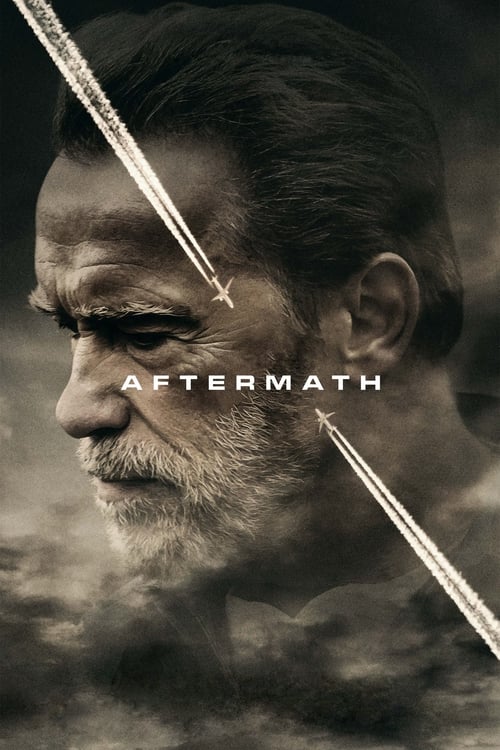
Aftermath (2017)
Directed by Elliott Lester
No — Aftermath is not woke, scoring 6 out of 100 on our wokeness meter.
Aftermath arrives with the grim determination of a film that has read the room and decided the room wants to watch Arnold Schwarzenegger suffer quietly in a cardigan.
Consciousness Markers
The airline's lawyers coldly offer Roman a settlement without any apology, a mild critique of corporate/legal indifference to human grief, though it is not framed as systemic class warfare.
The film carries a somber moral about forgiveness in its final act, but it delivers this through drama rather than preachy, issue-driven lecturing.
The cast is overwhelmingly white, led by Arnold Schwarzenegger, Scoot McNairy, and Maggie Grace, with no deliberate diverse casting or commentary on representation.
There are no LGBTQ+ characters, relationships, or themes anywhere in the film.
Women appear only in supportive roles (the wife, the journalist, the airline representative) with no feminist framing or commentary on gender.
The film engages no racial themes or consciousness; the story is a personal grief-and-revenge drama with an all-white principal cast.
There is no environmental or climate content in the film.
No body-positivity themes or messaging are present.
Jake suffers a psychological breakdown from guilt and trauma, but this is depicted as grief-driven mental illness rather than neurodivergence framed as identity or advocacy.
The film is based on the 2002 Überlingen mid-air collision but changes names, places, and nationalities for dramatic purposes, not to advance an ideological reinterpretation of history.
Why it received this score
Aftermath arrives with the grim determination of a film that has read the room and decided the room wants to watch Arnold Schwarzenegger suffer quietly in a cardigan. Elliott Lester's drama, drawn from the 2002 Überlingen mid-air collision, follows a construction worker who loses his wife and pregnant daughter to a crash, and the air traffic controller whose single shift error caused it. Both men unravel. One drinks. The other buys a new identity and takes a job at a travel agency, which is its own kind of punishment.
The film is somber, well-acted in places, and utterly uninterested in the cultural conversations of its moment. The cast is white, the grief is personal, and the women exist to be mourned or to hand over documents through a mail slot. There is a journalist, a wife, and an airline representative, and none of them gets a thesis. The closest the film comes to a systemic argument is a scene in which corporate lawyers slide a settlement offer across a table and decline to apologize, which registers as a mild jab at institutional coldness and nothing more. No one eats any rich people. No one mentions the planet.
The final act reaches for a moral about forgiveness, delivered through a knife, a prison term, and a young man who cannot bring himself to pull the trigger. It is a moral stated plainly instead of shouted, and the film trusts the drama to carry it. What remains is a modest, melancholy revenge picture that believes in grief, guilt, and the long tail of both. It preaches nothing, represents no one by design, and seems content to let two men sit in a room and fall apart. There are worse ways to spend a runtime. There are also more instructive ones.
Analysis generated by our Consciousness Algorithm


Synopsis
A fatal plane crash changes the lives of Roman and Jake forever. Roman loses his wife and daughter in the accident, while Jake loses his mind—as he happens to be the air traffic controller who failed to avert the nightmare. Rage and revenge engulfs Roman and Jake finds himself swamped with guilt and regret.
Questions about Aftermath
Is Aftermath woke?
No — Aftermath is not woke, scoring 6 out of 100 on our wokeness meter. That earns it a verdict of Ultra Based.
Does Aftermath have any woke elements?
Very few. None of the 10 markers reaches 30, the level where a marker counts as present; the highest is Eat the Rich at 12.
How does Aftermath compare to other 2017 movies?
It ranks #224 of the 309 films from 2017 we've scored; their average is 19. The wokest is I Am Not Your Negro (92).
How is the Woke Score calculated?
An AI-assisted process researches the film and its reception, scores it 0–100 on ten markers, then combines those into one 0–100 Woke Score. It measures a specific set of 2020s cultural themes, not film quality.