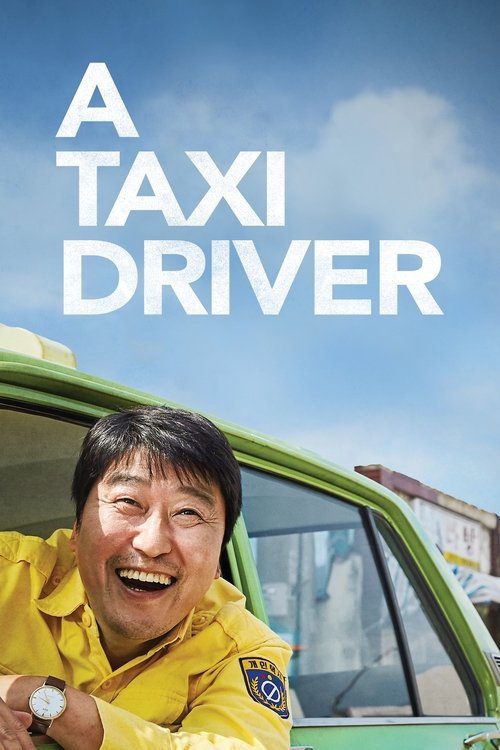
A Taxi Driver (2017)
Directed by Jang Hoon
No — A Taxi Driver is not woke, scoring 2 out of 100 on our wokeness meter.
A Taxi Driver is a 2017 South Korean historical drama about a debt-laden Seoul taxi driver, Kim Man-seob, who reluctantly ferries a German journalist, Jürgen Hinzpeter, into Gwangju during the 1980 uprising.
Consciousness Markers
The cast is entirely Korean, which is appropriate for the setting; no deliberate diversity casting or race-swapping.
No LGBTQ+ characters or themes.
The film focuses on a male taxi driver and a male journalist; female characters are peripheral and no feminist themes are present.
The film deals with political oppression and democratization in South Korea, not racial consciousness or systemic racism as understood in modern progressive discourse.
No environmental or climate themes.
While the protagonist is poor, the film does not critique capitalism or advocate for wealth redistribution; its focus is on political freedom.
No body positivity themes.
No neurodivergent characters or themes.
The film depicts the Gwangju Uprising based on real events; it does not revise history to fit a modern progressive agenda.
The film tells a historical story with emotional impact but does not lecture the audience on contemporary social justice issues.
Why it received this score
A Taxi Driver is a 2017 South Korean historical drama about a debt-laden Seoul taxi driver, Kim Man-seob, who reluctantly ferries a German journalist, Jürgen Hinzpeter, into Gwangju during the 1980 uprising. The film is a sturdy, emotionally direct piece of classical filmmaking. It earns its tears through narrative mechanics: a father missing his daughter, a reporter chasing truth, ordinary people absorbing state violence. The political subject is democratization under an authoritarian regime. That is serious, but it is not the same as contemporary social consciousness.
On the modern cultural scorecard, the film offers little to the current vocabulary. The cast is Korean because the story is Korean. There is no performative diversity, no race-swapping, no imported identity politics. Women appear at the edges, as history and plot dictate, and no feminist revision follows. Queer themes are absent. Climate concerns do not exist. Poverty is personal desperation, not a springboard to an anti-capitalist sermon. The body and the mind are not treated as sites of representation. The film does not recast 1980 to flatter 2020s sensibilities, nor does it revise history to serve a present-day agenda. It dramatizes a real event with conventional liberties and no interest in the modern checklist.
The film leaves us with old-fashioned humanism. A man learns courage. A journalist bears witness. Taxi drivers sacrifice themselves for strangers. The film wants us to feel, not to be instructed. Its politics concern democracy and state violence, which are universal and pre-date the current cultural vocabulary. There is no lecture energy, no post-credit scolding, no attempt to make the audience confess. It is a well-made, moving, historically grounded work. By the standards of contemporary progressive sensibility, it registers no meaningful signal. That is not a criticism. It is simply a classification. The film has other virtues, and we can respect it without pretending it belongs to a movement it never joined.
Analysis generated by our Consciousness Algorithm


Synopsis
May, 1980. Man-seob is a taxi driver in Seoul who lives from hand to mouth, raising his young daughter alone. One day, he hears that there is a foreigner who will pay big money for a drive down to Gwangju city. Not knowing that he’s a German journalist with a hidden agenda, Man-seob takes the job.
Questions about A Taxi Driver
Is A Taxi Driver woke?
No — A Taxi Driver is not woke, scoring 2 out of 100 on our wokeness meter. That earns it a verdict of Ultra Based.
Does A Taxi Driver have any woke elements?
No. All 10 markers score zero.
How does A Taxi Driver compare to other 2017 movies?
It ranks #276 of the 309 films from 2017 we've scored; their average is 19. The wokest is I Am Not Your Negro (92).
How is the Woke Score calculated?
An AI-assisted process researches the film and its reception, scores it 0–100 on ten markers, then combines those into one 0–100 Woke Score. It measures a specific set of 2020s cultural themes, not film quality.