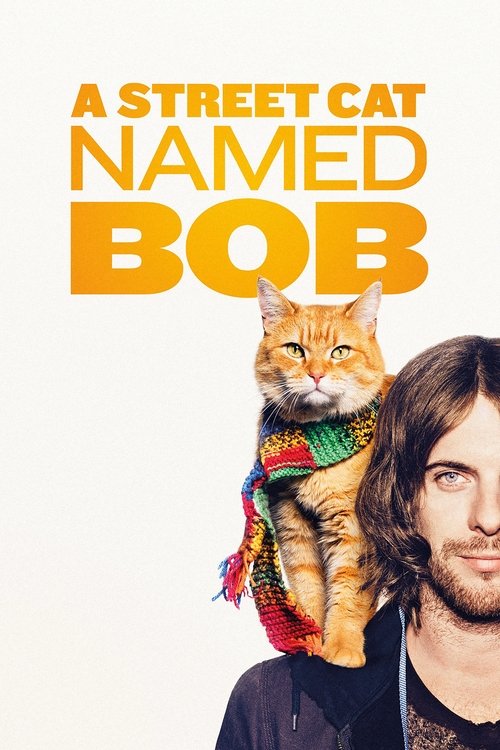
A Street Cat Named Bob (2016)
Directed by Roger Spottiswoode
No — A Street Cat Named Bob is not woke, scoring 6 out of 100 on our wokeness meter.
Here is a film that knows exactly what it wants to do and does it without apology.
Consciousness Markers
The cast is overwhelmingly white British, with Nina Wadia in a minor bus conductress role; no deliberate diverse casting agenda is evident.
Betty and Val are functional supporting figures (love interest, support worker) rather than vehicles for any feminist messaging.
Homelessness and poverty are depicted as personal misfortune to be overcome through individual effort, with no systemic or anti-capitalist critique.
An unapologetically heartwarming feelgood tale that aims to move rather than preach; no lecturing on social issues.
No LGBTQ+ characters or themes appear anywhere in the film.
The film engages no racial themes or commentary whatsoever.
No environmental or climate content of any kind.
No body positivity themes are present.
Addiction and recovery are the subject, but this is not framed as neurodivergence.
The film is a straightforward adaptation of a memoir with no historical revisionism.
Why it received this score
Here is a film that knows exactly what it wants to do and does it without apology. James Bowen is a homeless busker and recovering heroin addict on the streets of London. A ginger cat walks into his council flat, refuses to leave, and slowly drags him toward employment, hygiene, and a book deal. Roger Spottiswoode directs the whole affair with the calm assurance of a man assembling flat-pack furniture. There are setbacks. There is a death. There is a Christmas scene. Nothing is allowed to linger long enough to hurt.
The film's approach to poverty is notable mainly for its refusal to have one. Homelessness here is a personal misfortune, a rough patch that yields to willpower, a methadone prescription, and the commercial appeal of an unusually charismatic cat. James sells The Big Issue, gets banned from his patch, and carries on. No landlord, no benefit system, no economic order is indicted. The cat, in effect, is the labour market, and it purrs. That is the entire political program, and it is delivered without a single raised voice.
The supporting cast does its job. Val the support worker and Betty the neighbour exist to steady our hero and then step aside, which is an economical use of two capable actresses. The ensemble is white British to a degree that suggests the casting director never left the building, with Nina Wadia appearing briefly as a bus conductress and then vanishing. There is no romance of diversity, no sermon on addiction, no environmental aside. This is a film built to warm rather than instruct, and it reaches that narrow goal with a straight face.
Analysis generated by our Consciousness Algorithm


Synopsis
James Bowen, a homeless busker and recovering drug addict, has his life transformed when he meets a stray ginger cat.
Questions about A Street Cat Named Bob
Is A Street Cat Named Bob woke?
No — A Street Cat Named Bob is not woke, scoring 6 out of 100 on our wokeness meter. That earns it a verdict of Ultra Based.
Does A Street Cat Named Bob have any woke elements?
Very few. None of the 10 markers reaches 30, the level where a marker counts as present; the highest is Representation Casting at 12.
How does A Street Cat Named Bob compare to other 2016 movies?
It ranks #202 of the 285 films from 2016 we've scored; their average is 16. The wokest is 13th (92).
How is the Woke Score calculated?
An AI-assisted process researches the film and its reception, scores it 0–100 on ten markers, then combines those into one 0–100 Woke Score. It measures a specific set of 2020s cultural themes, not film quality.