A Monster Calls (2016)
Directed by J. A. Bayona
No — A Monster Calls is not woke, scoring 3 out of 100 on our wokeness meter.
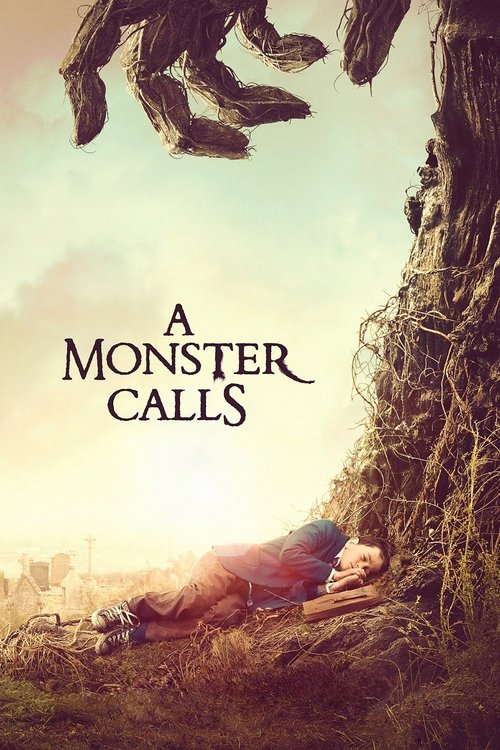
The yew tree at the edge of the churchyard comes alive at seven minutes past midnight, and a twelve-year-old boy named Conor is given three stories and one demand: tell the truth.
Consciousness Markers
The Monster's parables carry moral lessons about truth and human complexity, but they are existential and therapeutic rather than preachy social instruction.
The cast is overwhelmingly white British, with no meaningful diverse representation and no commentary on it. A non-factor.
No LGBTQ+ characters, themes, or subtext of any kind.
Female characters (mother, grandmother) are present and well-drawn, but the film advances no feminist thesis or gendered critique.
No engagement with race, racism, or racial identity whatsoever.
The yew tree is a folkloric healing device, not an environmentalist statement. No climate messaging.
No economic critique or class commentary; the family's struggles are medical and emotional, not structural.
No body-positive themes or messaging about body image.
Conor's grief and anger are framed as universal childhood emotional turmoil, not neurodivergence or a diagnosis.
No historical revisionism; the film is a contemporary fable with no historical claims to reframe.
Why it received this score
The yew tree at the edge of the churchyard comes alive at seven minutes past midnight, and a twelve-year-old boy named Conor is given three stories and one demand: tell the truth. J. A. Bayona directs this arrangement with genuine visual craft, and the result is a sincere, well-made film about a mother dying of an unspecified illness. It is not, and this matters for the record, a document of social instruction. The cast is white, British, and unremarked upon. There is no romantic or identity subplot of any kind. The mother and the grandmother are drawn with real texture, but the film advances no argument about gender, and it would be startled by the suggestion. The family's hardship is medical and emotional. Nobody proposes that the economic order is at fault. We set the dials to zero and move on.
The Monster's parables do carry instruction. A prince murders his beloved and blames the queen. A parson betrays his convictions and loses his house. A man invisible to everyone summons a monster to punish the crowd and ends up more alone than before. These are lessons about the messiness of human beings, delivered in a low rumble by Liam Neeson. The instruction is existential and therapeutic, aimed at one grieving boy, not at an audience that requires correction. This is the only needle that twitches on the panel, and it twitches faintly.
Commercially, the film was a cautionary tale of its own: forty-seven million worldwide against a forty-three million budget, a thirteenth-place finish, and one of the steepest third-week theater drops on record. Critics were generous. Audiences handed it an A. Adapted from Patrick Ness's own novel, it remains a humane, unhappy artifact from a moment when a film could be sad without also being a position paper. Commendable. Also barren. We file it under grief, and we close the drawer quietly so as not to wake it.
{"thematic_tags": ["book_adaptation"]}
Analysis generated by our Consciousness Algorithm


Synopsis
12-year-old Conor encounters an ancient tree monster who proceeds to help him cope with his mother's terminal illness and being bullied in school.
Questions about A Monster Calls
Is A Monster Calls woke?
No — A Monster Calls is not woke, scoring 3 out of 100 on our wokeness meter. That earns it a verdict of Ultra Based.
Does A Monster Calls have any woke elements?
Very few. None of the 10 markers reaches 30, the level where a marker counts as present; the highest is Lecture Energy at 10.
How does A Monster Calls compare to other 2016 movies?
It ranks #252 of the 285 films from 2016 we've scored; their average is 16. The wokest is 13th (92).
How is the Woke Score calculated?
An AI-assisted process researches the film and its reception, scores it 0–100 on ten markers, then combines those into one 0–100 Woke Score. It measures a specific set of 2020s cultural themes, not film quality.