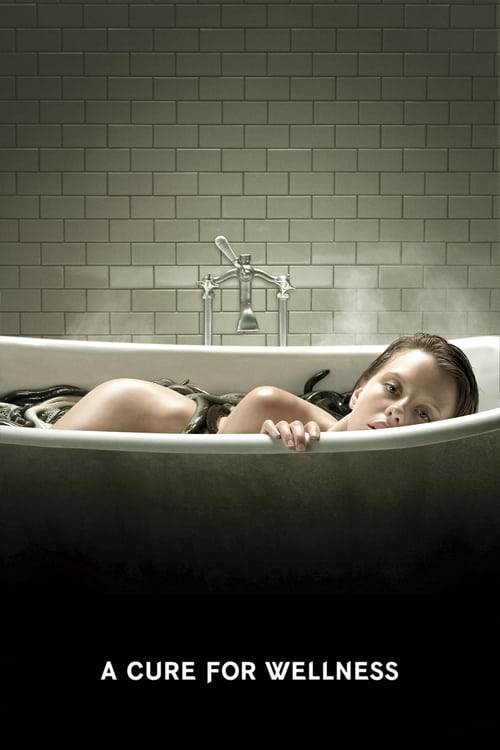
A Cure for Wellness (2017)
Directed by Gore Verbinski
No — A Cure for Wellness is not woke, scoring 12 out of 100 on our wokeness meter.
Gore Verbinski's A Cure for Wellness arrives with the confident stride of a film that believes it has something profound to say about modern life, and then spends two and a half hours saying it in the most beautiful possible way.
Consciousness Markers
Critics noted the film's thematic duel between financial services and the wellness industry as two equally exploitative money-making machines, but this critique is atmospheric subtext rather than an explicit eat-the-rich sermon.
The cast is overwhelmingly white European and American, with only a minor supporting appearance by Ashok Mandanna; diversity is incidental rather than a stated aim.
The film is a moody, atmospheric horror piece that prioritizes dread and imagery over moral instruction; any social commentary is buried beneath style.
Hannah is largely a passive victim of incest, forced marriage, and attempted rape; the film offers no feminist critique or agency-driven framing.
No LGBTQ+ characters, relationships, or themes appear anywhere in the film.
The film engages no racial themes whatsoever; its conflicts are entirely about class, health, and corporate power.
There is no environmental or climate messaging; the aquifer and eels are plot devices, not ecological commentary.
The film's treatment of bodies is grotesque and horror-oriented, with no body-positive messaging.
Madness is depicted as a tool of manipulation and horror, not as neurodivergence to be understood or celebrated.
The baron's backstory is fictional gothic lore, not a revisionist reframing of real historical events.
Why it received this score
Gore Verbinski's A Cure for Wellness arrives with the confident stride of a film that believes it has something profound to say about modern life, and then spends two and a half hours saying it in the most beautiful possible way. The Swiss Alps are photographed with real grandeur. The wellness center, all polished tile and steam, feels like a luxury we would all quietly like to afford until the eels show up. As horror craftsmanship, it is frequently superb. As a cultural document, it is mostly a mood.
Critics of a certain temperament detected a critique of late capitalism here, and they are not wrong to look. The film sets financial services against the wellness industry, two money-making machines that exploit the people inside them. City versus mountaintop, suit versus white coat. The observation is real, and it is atmospheric. The film never stops to lecture about it, which is to its credit. Dr. Volmer's patients place themselves at his mercy, and the film lets that image sit instead of having a character announce its meaning. The sermon never arrives.
On the ledger of contemporary social consciousness, the film is a product of its moment and not much more. The cast is overwhelmingly white, and its lone non-white face appears in a supporting capacity with no comment. Hannah, the young woman at the center, spends the film as a victim of incest, forced marriage, and attempted rape, and the screenplay grants her no framing beyond survival. There is no LGBTQ presence, no racial theme, no environmental message, no interest in body acceptance or neurodivergence, madness here being a tool of control and dread. What remains is a gothic entertainment that gestures at the sins of commerce and then returns to the eels. We classify it accordingly.
Analysis generated by our Consciousness Algorithm


Synopsis
An ambitious young executive is sent to retrieve his company's CEO from an idyllic but mysterious "wellness center" at a remote location in the Swiss Alps but soon suspects that the spa's miraculous treatments are not what they seem.
Questions about A Cure for Wellness
Is A Cure for Wellness woke?
No — A Cure for Wellness is not woke, scoring 12 out of 100 on our wokeness meter. That earns it a verdict of Ultra Based.
Does A Cure for Wellness have any woke elements?
1 of the 10 markers register at 30 or above, led by Eat the Rich (35). On Eat the Rich: Critics noted the film's thematic duel between financial services and the wellness industry as two equally exploitative money-making machines, but this critique is atmospheric subtext rather than an explicit eat-the-rich sermon.
How does A Cure for Wellness compare to other 2017 movies?
It ranks #138 of the 309 films from 2017 we've scored; their average is 19. The wokest is I Am Not Your Negro (92).
How is the Woke Score calculated?
An AI-assisted process researches the film and its reception, scores it 0–100 on ten markers, then combines those into one 0–100 Woke Score. It measures a specific set of 2020s cultural themes, not film quality.