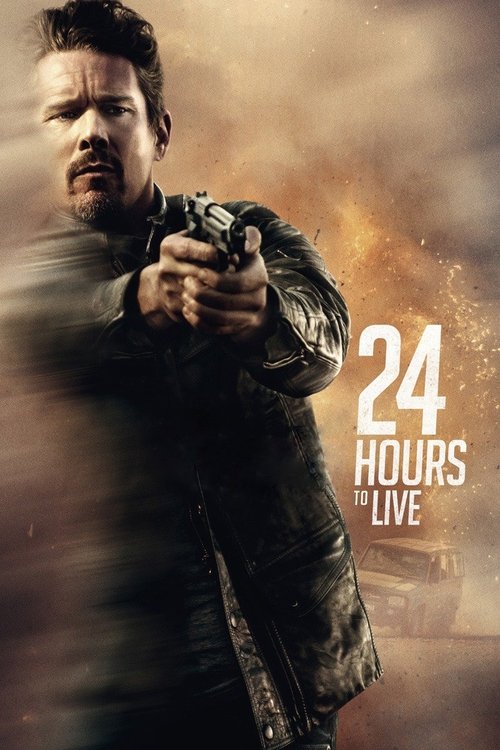
24 Hours to Live (2017)
Directed by Brian Smrz
No — 24 Hours to Live is not woke, scoring 10 out of 100 on our wokeness meter.
Brian Smrz's 24 Hours to Live arrives with a title that doubles as a countdown and a business plan.
Consciousness Markers
Chinese actress Xu Qing co-leads as Interpol agent Lin, and the cast includes Nigerian-British and South African performers, reflecting the film's Chinese-South African co-production rather than a deliberate diversity agenda.
The villainous Red Mountain corporation experiments on over 70 civilians and covers up the deaths, offering a mild corporate-evil thread, though it is standard action-thriller villainy rather than an economic critique.
Lin is a competent, gun-toting Interpol agent who drives part of the plot, but the film never frames her role through any feminist critique or commentary.
The South African setting and a wronged local village exist as backdrop and plot mechanics, with no engagement with racial politics or systemic injustice as a theme.
The film delivers its redemption and corporate-corruption beats through action rather than preaching, with only faint moralizing about Travis's killings.
No LGBTQ+ characters, themes, or subtext appear anywhere in the film.
No environmental or climate themes are present.
No body positivity themes or messaging.
No neurodivergent characters or themes.
The film is a fictional sci-fi thriller with no historical revisionism.
Why it received this score
Brian Smrz's 24 Hours to Live arrives with a title that doubles as a countdown and a business plan. Ethan Hawke plays Travis Conrad, a retired assassin lured back for a million dollars a day, killed, revived by an experimental procedure, and handed a wrist timer that ticks toward his second death. The film was assembled as a Chinese-South African co-production, which explains the presence of Xu Qing as a gun-toting Interpol agent named Lin and a supporting roster drawing on Nigerian-British and South African talent. This is casting by financing arrangement, not by conviction, and the film treats it as such. Lin is competent and central to the plot, though nobody pauses to remark on the significance of it. That silence is welcome.
The villain is a corporation called Red Mountain, which has experimented on more than seventy civilians and buried the evidence. That is a corporate malfeasance thread, and it sits comfortably in the long tradition of action cinema where the bad guy wears a lanyard. No economic argument follows. The South African village where the victims lived gets recruited for a final ambush, a plot convenience dressed as solidarity. There is no engagement with the racial politics of the setting, no environmental sermon, no body-positive messaging, no neurodivergent characters, and no historical claims to revise. The film is a fiction about resurrection and it stays that way.
What moralizing exists is delivered by gunfire. Travis feels remorse for his killings, lets a betrayer live, and dies on schedule, and the film trusts us to absorb this without a speech. The result is a modest, workmanlike thriller with a 52 percent approval rating and $5.8 million in worldwide gross, which is roughly the take of a film that knows exactly what it is. It is not trying to teach us anything. That restraint, in this climate, is almost quaint.
Analysis generated by our Consciousness Algorithm


Synopsis
An assassin seeks redemption after being given a second chance at life.
Questions about 24 Hours to Live
Is 24 Hours to Live woke?
No — 24 Hours to Live is not woke, scoring 10 out of 100 on our wokeness meter. That earns it a verdict of Ultra Based.
Does 24 Hours to Live have any woke elements?
1 of the 10 markers register at 30 or above, led by Representation Casting (32). On Representation Casting: Chinese actress Xu Qing co-leads as Interpol agent Lin, and the cast includes Nigerian-British and South African performers, reflecting the film's Chinese-South African co-production rather than a deliberate diversity agenda.
How does 24 Hours to Live compare to other 2017 movies?
It ranks #162 of the 309 films from 2017 we've scored; their average is 19. The wokest is I Am Not Your Negro (92).
How is the Woke Score calculated?
An AI-assisted process researches the film and its reception, scores it 0–100 on ten markers, then combines those into one 0–100 Woke Score. It measures a specific set of 2020s cultural themes, not film quality.