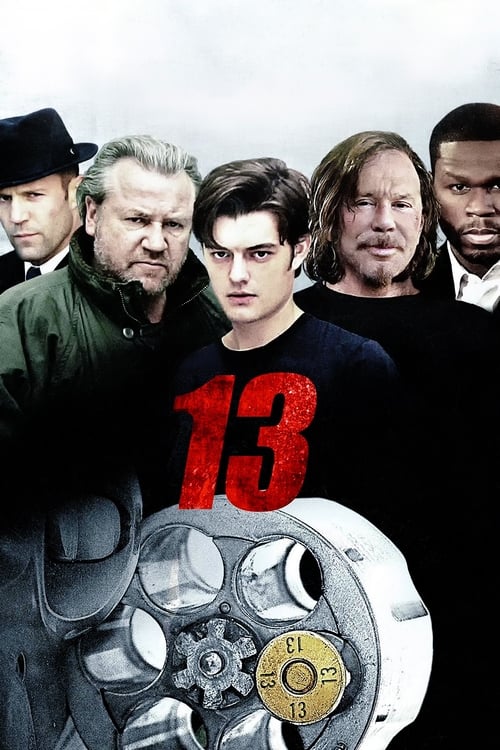
13 (2010)
Directed by Gela Babluani
No — 13 is not woke, scoring 16 out of 100 on our wokeness meter.
13 is an American remake of Géla Babluani's 13 Tzameti, and it arrives with the grim efficiency of a hangover.
Consciousness Markers
The plot centers on wealthy spectators betting on desperate men forced into Russian roulette, offering a blunt critique of elite exploitation and greed.
The cast includes Black and Latino actors such as 50 Cent and David Zayas in supporting roles, but the film does not foreground diversity as a thematic or casting priority.
The film is a grim thriller that shows rather than tells; it contains little explicit moralizing or preachy exposition.
No LGBTQ+ characters, relationships, or themes are present.
Women appear only in marginal supporting roles, and the film offers no feminist critique or gender-focused agenda.
Race is not addressed; minority characters exist without any commentary on racial identity or systemic racism.
No environmental or climate-related themes appear.
No body-positive themes or diverse body representation are present.
A character is sprung from a mental institution, but the film treats this as a plot device rather than exploring neurodivergence as an identity.
The film is a fictional crime thriller and does not revise or reinterpret historical events.
Why it received this score
13 is an American remake of Géla Babluani's 13 Tzameti, and it arrives with the grim efficiency of a hangover. Sam Riley's Vince stumbles into a private Russian roulette tournament where wealthy men wager on which desperate participant will survive. The cast includes 50 Cent and David Zayas in supporting roles, but the film does not treat representation as a project. It hires actors and points them at revolvers. There is no LGBTQ material, no feminist argument, no racial consciousness, and no engagement with climate or body positivity. Women hover at the edges. Race goes unmentioned. The mental institution subplot involving Ray Winstone's character is a plot device, not an exploration of neurodivergence. History is not revised. This is fiction with a body count.
The film's only active social critique is economic. Rich spectators pay to watch desperate men destroy themselves, and the arrangement is a blunt portrait of elite exploitation. This is eat-the-rich territory, though it comes without a manifesto. The camera watches the bets, the sweat, the chamber spins. Little is explained, and almost nothing is sermonized. The result is a nasty, airless thriller that trusts its images more than its dialogue. It is not preachy. It is simply cruel. That cruelty has a target: the patrons in the balcony and the system that sold the players to them. The critique is narrow, but it is present.
As a cultural document, 13 offers minor incidental diversity and a single strand of anti-capitalist anger. Everything else on the modern progressive checklist is absent. The film has no interest in lecturing us about gender, sexuality, race, climate, or bodily acceptance. It wants to make us squirm. Critics at the time found it a blustering cartoon, and their fatigue is understandable. The original had grit and mystery; this remake has color, back stories, and diminished returns. Still, for the sommelier of social consciousness, there is a thin note of class resentment here, buried under sweat and gun oil. We file it under greed, nihilism, and wasted potential. A grim vintage, best served cold.
Analysis generated by our Consciousness Algorithm


Synopsis
A naive young man assumes a dead man's identity and finds himself embroiled in an underground world of power, violence, and chance where men gamble behind closed doors on the lives of other men.
Questions about 13
Is 13 woke?
No — 13 is not woke, scoring 16 out of 100 on our wokeness meter. That earns it a verdict of Ultra Based.
Does 13 have any woke elements?
1 of the 10 markers register at 30 or above, led by Eat the Rich (40). On Eat the Rich: The plot centers on wealthy spectators betting on desperate men forced into Russian roulette, offering a blunt critique of elite exploitation and greed.
How does 13 compare to other 2010 movies?
It ranks #49 of the 238 films from 2010 we've scored; their average is 11. The wokest is My Name Is Khan (84).
How is the Woke Score calculated?
An AI-assisted process researches the film and its reception, scores it 0–100 on ten markers, then combines those into one 0–100 Woke Score. It measures a specific set of 2020s cultural themes, not film quality.