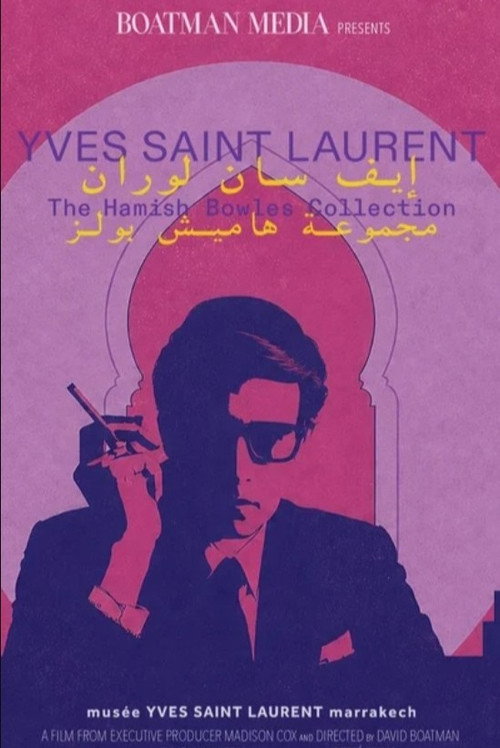
Yves Saint Laurent: The Hamish Bowles Collection (2026)
Directed by David Boatman
There are films that set out to change the world, and then there is a 14-minute documentary about a Vogue editor's closet being exhibited in Marrakech.
Consciousness Markers
Yves Saint Laurent himself was a gay man and his personal and professional partnership with Pierre Bergé is part of the historical record the film inhabits, but the documentary does not foreground queer identity as a theme or agenda.
The documentary features a modestly diverse set of interviewees, including Zerlina Hughes, though the film makes no conscious point of this and the casting is entirely driven by professional expertise rather than representational intent.
Saint Laurent's designs were historically significant in the context of women's fashion and empowerment, but the film approaches this as fashion history rather than feminist argument.
The documentary carries the mild self-seriousness endemic to the fashion world, but it stops well short of sermonizing. It is more hushed reverence than pointed instruction.
No racial consciousness themes, commentary, or framing are present in the film.
No climate or environmental themes are present. The film is concerned with vintage couture, not carbon footprints.
The film is, if anything, a loving tribute to luxury goods and the rarefied world of high fashion. The rich are not being eaten here. They are being dressed.
No body positivity discourse is present. The garments are discussed in terms of artistry and provenance, not as vehicles for challenging beauty standards.
No neurodivergence themes are present in the film.
The film is archival and reverential in its approach to fashion history, not revisionist.
Why it received this score
There are films that set out to change the world, and then there is a 14-minute documentary about a Vogue editor's closet being exhibited in Marrakech. David Boatman's short film accompanying the Musée Yves Saint Laurent exhibition exists in a register so far removed from the cultural anxieties of its era that it almost constitutes a form of protest. Almost. The film's primary concern is the "lived history" of 55 vintage garments, and it pursues that concern with the focused serenity of a monk cataloguing relics.
Hamish Bowles narrates the proceedings with the practiced calm of a man who has been in rooms containing very expensive things for a very long time. The interviewees, including scenographer Patrick Kinmonth and lighting designer Zerlina Hughes, speak about the exhibition with the reverence typically reserved for archaeological discoveries. The film does brush, glancingly, against the biographical fact that Saint Laurent was a gay man whose partnership with Pierre Bergé shaped everything it touches, but it treats this as settled history rather than a point to be argued. The garments themselves bear more ideological weight than anything the film chooses to say about them.
The progressive sensibilities detectable here are vestigial at best. Saint Laurent did, in his time, dress women in ways that expanded what women were permitted to look like in public. The film acknowledges this the way a museum placard acknowledges it: correctly and briefly. What we are left with is a document of curatorship, a film about the act of caring for beautiful things made by a complicated man for wealthy women, presented in a city that is not Paris. The score sits near the floor. The clothes, presumably, do not.
Analysis generated by our Consciousness Algorithm
Synopsis
Yves Saint Laurent: The Hamish Bowles Collection is a documentary revealing the curation of 55 rare, personal YSL garments by Vogue editor-at-large Hamish Bowles. Showcased at the Musée Yves Saint Laurent Marrakech, the film highlights iconic designs from the 1960s to 1990s, focusing on the "lived history" of pieces once worn by fashion figures like Nan Kempner and Betty Catroux, showcasing the designer's genius. This documentary offers a glimpse into the exhibition, with interviews by Hamish Bowles, Madison Cox, Patrick Kinmonth, Zerlina Hughes and Marisa Berenson.