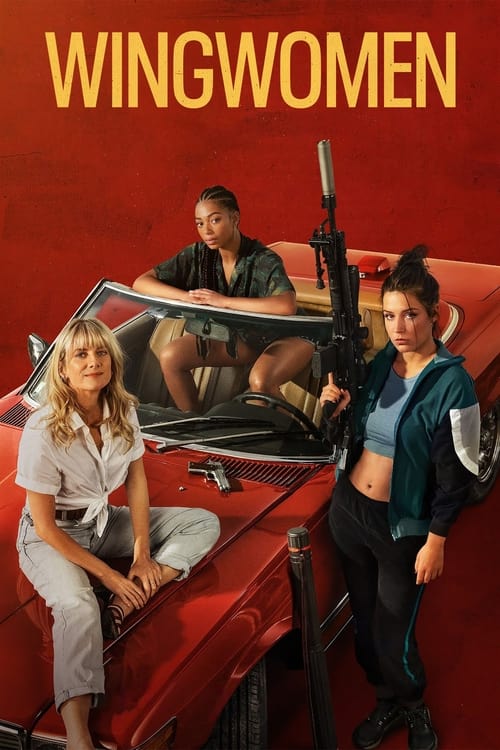
Wingwomen (2023)
Directed by Mélanie Laurent
No — Wingwomen is not especially woke, scoring 26 out of 100 on our wokeness meter.
Wingwomen comes to us from France by way of a graphic novel (La Grande Odalisque), a woman in the director's chair (Mélanie Laurent, who also stars), and three women occupying a genre traditionally reserved for men in well-pressed suits.
Consciousness Markers
Three women headline a heist genre traditionally dominated by men, with a woman director and themes of female friendship and independence.
A female-led ensemble with a Black co-lead (Manon Bresch) and a woman director, though the casting reads as natural rather than a deliberate diversity statement.
The thieves work for a shadowy patron and target wealth, but the film offers no systemic critique of capitalism.
A Black actress holds a lead role, but the film makes no commentary on race or racial injustice.
A breezy action comedy that prioritizes style and set pieces over moral instruction.
The intense Carole-Alex bond is a close female friendship, but the film presents no explicit queer romance or LGBTQ+ identity.
No environmental or climate themes appear in the film.
Carole's pregnancy is a plot device, not a body-positivity statement; no body-image themes are present.
No neurodivergent characters or themes are depicted.
The film is a contemporary heist story with no historical revisionism.
Why it received this score
Wingwomen comes to us from France by way of a graphic novel (La Grande Odalisque), a woman in the director's chair (Mélanie Laurent, who also stars), and three women occupying a genre traditionally reserved for men in well-pressed suits. Carole and Alex lift paintings for a shadowy patron known as The Godmother until Carole's pregnancy inspires a retirement plan, which naturally summons the obligatory final job. Sam, a widowed race car driver, is recruited as the getaway. The chassis is familiar. The engine hums.
The bond between Carole and Alex is the film's true subject, a friendship intense enough to power the plot, and it stays firmly within the bounds of friendship. No romance is offered or implied. Manon Bresch's Sam takes a lead position, and the film never comments on her race, which reads as either quiet confidence or simple disinterest. The thieves rob the wealthy, though the screenplay advances no argument about wealth itself; the money is a payday, not a system. Carole's pregnancy functions as a clock, not a statement about bodies, and the wider culture-war furniture is entirely absent. No sermons, no causes, no history in need of correction.
Laurent directs with a light hand and a fondness for montage, keeping the sermonizing to a minimum. This is a breezy, stylish picture that would sooner show a car chase than a lesson, and its pleasures are modest and real. The closing act reaches for genuine feeling and mostly earns it, though the sentiment sits oddly beside the earlier cool. It is a competent, watchable exercise in genre, distinguished chiefly by who is holding the guns. The classification is unremarkable, which is its own kind of result.
{"thematic_tags": ["book_adaptation"]}
Analysis generated by our Consciousness Algorithm


Synopsis
Tired of life on the run, a pro thief decides to retire — but not before one easy last job with her partner in crime and a feisty new getaway driver.
Questions about Wingwomen
Is Wingwomen woke?
No — Wingwomen is not especially woke, scoring 26 out of 100 on our wokeness meter. That earns it a verdict of Based.
Does Wingwomen have any woke elements?
2 of the 10 markers register at 30 or above, led by Feminist Agenda (58) and Representation Casting (48). On Feminist Agenda: Three women headline a heist genre traditionally dominated by men, with a woman director and themes of female friendship and independence.
How does Wingwomen compare to other 2023 movies?
It ranks #66 of the 200 films from 2023 we've scored; their average is 24. The wokest is Origin (84).
How is the Woke Score calculated?
An AI-assisted process researches the film and its reception, scores it 0–100 on ten markers, then combines those into one 0–100 Woke Score. It measures a specific set of 2020s cultural themes, not film quality.