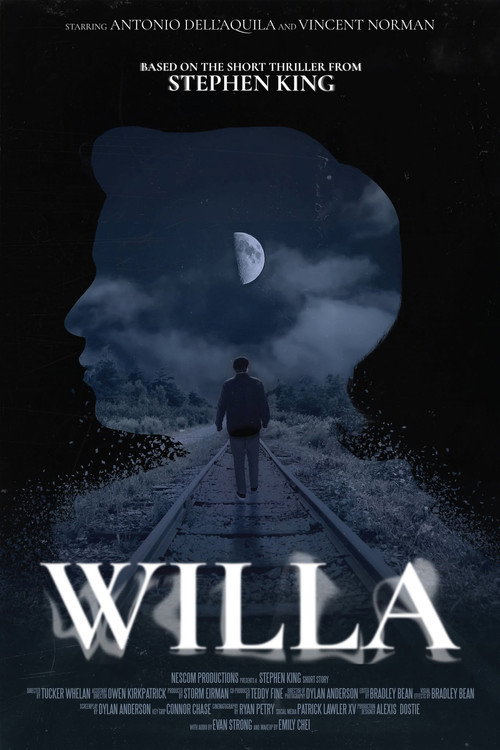
Willa (2026)
Directed by Tucker Whelan
Tucker Whelan's Willa is an independent short adapted from Stephen King's 2008 story of the same name, a tale of the dead who do not yet know they are dead.
Consciousness Markers
No evidence of casting choices made to signal demographic representation. The ensemble appears to reflect the story's needs rather than any documented diversity mandate.
No LGBTQ+ themes, characters, or subtext are present in King's source story or in any reported version of this adaptation.
The title character is a woman, but King's original story is a ghost tale, not a feminist manifesto. No feminist framing has been identified in this adaptation.
No racial consciousness themes, commentary, or discourse have been identified in the film or its reception.
The film is a supernatural horror short. There is no climate or environmental messaging present.
No anti-capitalist themes are present. The story concerns the dead, not the wealthy, and no class critique has been documented.
No body positivity themes or messaging have been identified in the film or its source material.
No neurodivergent characters or themes are present in King's source story or in any reported version of this adaptation.
The film is a contemporary supernatural horror short with no historical setting or revisionist framing.
No social sermonizing has been identified. The film appears to concern itself with ghosts, which is a refreshingly apolitical preoccupation.
Why it received this score
Tucker Whelan's Willa is an independent short adapted from Stephen King's 2008 story of the same name, a tale of the dead who do not yet know they are dead. It is a "Dollar Baby" production, the term for low-budget King adaptations licensed for a nominal fee, which places it in a long tradition of films made by people who love King's work more than they love their own sleep schedules. The source material is a quiet, melancholy ghost story with no particular political agenda, and on the available evidence, Whelan has not attempted to graft one onto it.
The film has generated no cultural discourse, no representation controversies, no progressive framing from critics, and no social media activism from its cast or crew. It has circulated primarily in festival spaces dedicated to King adaptations, where the audience's primary concern is fidelity to the source material and the quality of the atmospheric dread. This is, in the current landscape, almost an act of defiance. A horror film that simply wants to be a horror film. We note this without judgment, only with a certain tired relief.
Across all ten markers of contemporary social consciousness, Willa scores precisely zero. It is not trying to dismantle systems. It is not recasting history. It is not asking us to examine our privilege in the presence of the undead. It is a short film about ghosts, made by people who appear to find ghosts sufficiently interesting on their own merits. In a crowded field, that is a distinguishing characteristic.
Analysis generated by our Consciousness Algorithm
Synopsis
Willa is a short film based on the short story by Stephen King, published in the 2008 "Just After Sunset" collection.