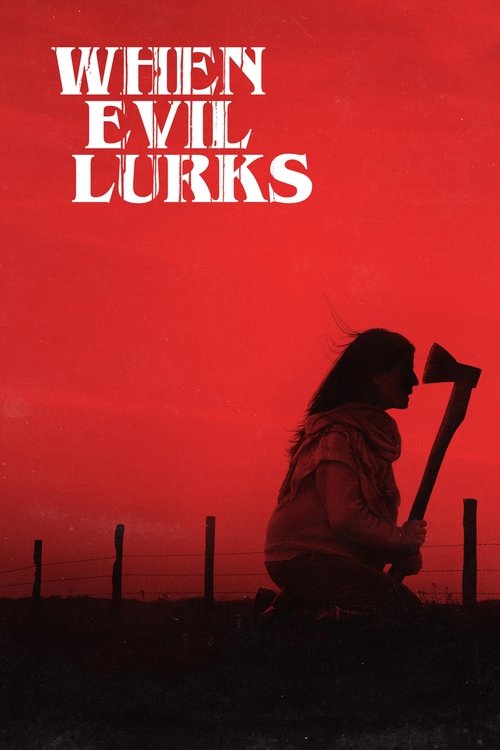
When Evil Lurks (2023)
Directed by Demián Rugna
No — When Evil Lurks is not woke, scoring 12 out of 100 on our wokeness meter.
Argentine horror has spent the past decade cultivating a certain damp, rural dread, and Demián Rugna's When Evil Lurks is the genre's current high-water mark.
Consciousness Markers
Pedro's son Jair is explicitly autistic, and his condition is referenced when Mirtha's possession warning is dismissed as 'related to Jair's autism.' It is a plot element rather than an advocacy theme.
The cast is entirely Argentine and Spanish-speaking, but this reflects the film's natural setting rather than any deliberate diversity-casting agenda. No comment is made on representation.
There are no LGBTQ+ characters, themes, or subtext anywhere in the film.
Female characters (Mirtha, Sabrina, Sara) exist within the horror plot but the film advances no feminist thesis or gendered critique.
The film engages no racial themes or commentary; its concerns are demonic possession and rural decay.
While academic readings frame the film as a socio-environmental allegory of toxic exposure, the film itself contains no explicit climate or environmental messaging.
Themes of institutional decay and rural poverty are present atmospherically, but the film offers no 'eat the rich' polemic or anti-capitalist argument.
The film's grotesque body horror is the antithesis of body-positivity messaging; no such theme is present.
The film is a fictional supernatural horror with no historical subject matter to revise.
The film is a visceral possession horror that shows rather than tells; it delivers no moralizing monologue or didactic sermon.
Why it received this score
Argentine horror has spent the past decade cultivating a certain damp, rural dread, and Demián Rugna's When Evil Lurks is the genre's current high-water mark. The premise is efficient and grim: a man rotting from the inside with an unborn demon, a professional cleaner who failed to finish the job, and two brothers whose cowardice turns a private infestation into a regional epidemic. Rugna handles the material with a craftsman's patience and a sadist's timing. The goat. The dog. The schoolhouse. It earns its acclaim.
Apply the modern cultural ledger and the columns come up almost entirely empty, which is to the film's credit. The cast is Argentine because the film is Argentine. Nobody is cast to make a statement. There is no romantic subplot to diversify, no gendered thesis to advance, no racial grievance to litigate, no dying planet to mourn, no billionaire to devour, no body to celebrate. The bodies here are for ruining. The film's grotesquerie is the precise inverse of self-acceptance messaging. Scholars have read the infected as a somatic metaphor for toxic exposure and state abandonment in the Argentine interior, which is a fine way to spend a dissertation. The film itself never lectures. It shows a woman eating her son's brains and lets the image do the arguing.
The single contemporary marker present arrives quietly. Pedro's son Jair is autistic, and the condition surfaces once, when Mirtha's warning about the boy is dismissed as 'related to Jair's autism.' It is a line of dialogue, a plot hinge, not a plea for understanding. Later, when Jair begins walking and speaking without impediment, the film treats the change as an omen, which is clever or tactless depending on the viewer's patience. Rugna wants no part of advocacy. He wants the moment a father collapses in his yard and wails. On the ledger of social consciousness, this is a null set with one faint decimal. As horror, it is close to essential.
Analysis generated by our Consciousness Algorithm


Synopsis
When brothers Pedro and Jimi discover that a demonic infection has been festering in a nearby farmhouse, they attempt to evict the victim from their land. Failing to adhere to the proper rites of exorcism, their reckless actions inadvertently trigger an epidemic of possessions across their rural community.
Questions about When Evil Lurks
Is When Evil Lurks woke?
No — When Evil Lurks is not woke, scoring 12 out of 100 on our wokeness meter. That earns it a verdict of Ultra Based.
Does When Evil Lurks have any woke elements?
Very few. None of the 10 markers reaches 30, the level where a marker counts as present; the highest is Neurodivergence at 20.
How does When Evil Lurks compare to other 2023 movies?
It ranks #135 of the 200 films from 2023 we've scored; their average is 24. The wokest is Origin (84).
How is the Woke Score calculated?
An AI-assisted process researches the film and its reception, scores it 0–100 on ten markers, then combines those into one 0–100 Woke Score. It measures a specific set of 2020s cultural themes, not film quality.