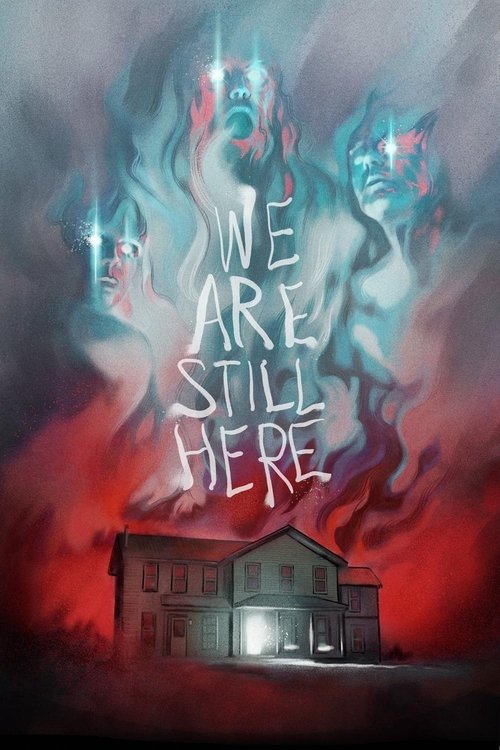
We Are Still Here (2015)
Directed by Ted Geoghegan
No — We Are Still Here is not woke, scoring 0 out of 100 on our wokeness meter.
We Are Still Here arrives from 2015 with a title that promises endurance and a premise that promises nothing of the sort.
Consciousness Markers
The cast is entirely white, with no meaningful representation casting choices or diverse ensemble.
No LGBTQ+ characters, themes, or subtext appear anywhere in the film.
Barbara Crampton anchors the film as a grieving mother, but the role carries no feminist thesis or gendered commentary.
The film engages no racial themes or consciousness whatsoever.
No environmental or climate themes are present.
The Dagmar funeral-home swindle is a plot device about a haunted house's origin, not a critique of capitalism or class.
No body positivity themes or messaging appear.
No neurodivergence themes or characters are present.
The film is a straightforward haunted-house horror with no historical revisionism.
The film delivers atmosphere and scares rather than moral instruction or social messaging.
Why it received this score
We Are Still Here arrives from 2015 with a title that promises endurance and a premise that promises nothing of the sort. Ted Geoghegan's debut deposits a grieving couple, Anne and Paul Sacchetti, into the snowbound Massachusetts hamlet of Aylesbury, where the locals are withholding, the basement is busy, and the house has been eating on a thirty-year schedule since the nineteenth century. Barbara Crampton plays Anne with a hollowed-out stillness that the film trusts more than it trusts dialogue. This is a haunted-house picture, plainly and completely.
On the matter of contemporary social instruction, the ledger is blank. The Dagmar funeral-home swindle supplies the plot's engine: corpses sold, caskets buried empty, a village that burned a family alive to feed something underneath. That is horror mechanics, not an indictment of commerce. The cast is white, the village is white, and no character pauses to observe either fact. Anne's grief belongs to a mother and to no thesis. The New Age couple arrive as comic relief and exit as casualties, their spiritualism serving the séance set piece and nothing further. There is no climate anxiety in the snow, no body politics in the carnage, no vocabulary for anyone's neurology, and no revisionist reading of the historical record. The 1979 setting is a costume, not an argument.
The film's closing image, a father smiling down a cellar staircase at whatever his son has become, is offered without comment. No lesson is appended. No audience is addressed. Geoghegan set out to honor The House by the Cemetery and stopped when he was finished. We are left with craft, atmosphere, and a body count, a leaner proposition than most of the decade's genre output, and a rarer one.
Analysis generated by our Consciousness Algorithm


Synopsis
After the death of their college age son, Anne and Paul Sacchetti relocate to the snowswept New England hamlet of Aylesbury, a sleepy village where all is most certainly not as it seems. When strange sounds and eerie feelings convince Anne that her son's spirit is still with them, they invite an eccentric, New Age couple to help them get to the bottom of the mystery.
Questions about We Are Still Here
Is We Are Still Here woke?
No — We Are Still Here is not woke, scoring 0 out of 100 on our wokeness meter. That earns it a verdict of Ultra Based.
Does We Are Still Here have any woke elements?
No. All 10 markers score zero.
How does We Are Still Here compare to other 2015 movies?
It ranks #258 of the 289 films from 2015 we've scored; their average is 15. The wokest is Chi-Raq (78).
How is the Woke Score calculated?
An AI-assisted process researches the film and its reception, scores it 0–100 on ten markers, then combines those into one 0–100 Woke Score. It measures a specific set of 2020s cultural themes, not film quality.