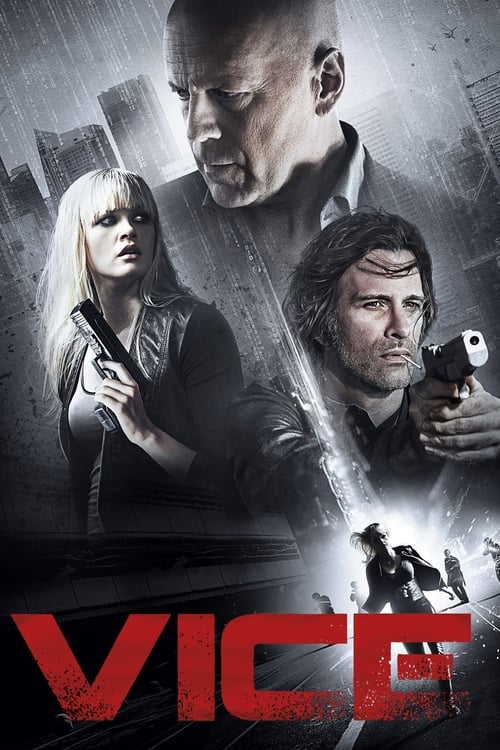
Vice (2015)
Directed by Brian A. Miller
No — Vice is not woke, scoring 14 out of 100 on our wokeness meter.
Vice (2015) arrives with the confidence of a film that believes it has something to say and the budget of a film that cannot afford to say it well.
Consciousness Markers
The film critiques a profit-driven resort corporation that commodifies androids, bribes police, and generates tax revenue from violence, offering a mild anti-corporate undercurrent.
The film features a female android protagonist who escapes sexual exploitation and leads a rebellion against her abusers, but this is handled as generic genre revenge rather than a deliberate feminist statement.
The film includes some expository dialogue about society becoming desensitized to violence and rape, but it is largely drowned out by action set pieces.
The cast is overwhelmingly white, led by Bruce Willis, Thomas Jane, and Ambyr Childers, with no meaningful diverse representation in the ensemble.
No LGBTQ+ characters, relationships, or themes appear anywhere in the film.
No racial themes, commentary, or consciousness are present in the narrative.
No environmental or climate themes appear in the film.
No body positivity themes or messaging are present.
No neurodivergence themes or characters are depicted.
No historical revisionism is present; the film is a wholly fictional futuristic setting.
Why it received this score
Vice (2015) arrives with the confidence of a film that believes it has something to say and the budget of a film that cannot afford to say it well. Bruce Willis plays Julian Michaels, proprietor of a resort where paying customers act out their ugliest impulses on androids who believe themselves human. Thomas Jane is the detective who wants it shut down. Ambyr Childers is Kelly, the gynoid who becomes self-aware, escapes, and returns with a virus and a vendetta. The ensemble is almost entirely white, a demographic fact the film never notices and never troubles itself to address. On matters of orientation, race, climate, and body, the film is a vacuum. It simply has no interest.
There is a feminine pulse here, faint as it is. Kelly is exploited, killed, and resurrected for the amusement of men, and when she finally turns on her abusers it lands as genre revenge, not thesis. The film gestures at a critique of the corporation that commodifies her, noting the tax revenue Vice generates and the bribes that keep it running, and for a moment the machinery of profit looks like the real villain. Then the shooting resumes. A detective mutters that the resort desensitizes its patrons to violence and rape, which is the closest the screenplay comes to an argument. The action sequences swallow it whole.
We are left with a hodgepodge of borrowed ideas, reviewed unkindly at the time and remembered barely at all. It wants the shine of dystopian satire and settles for mercenaries in corridors. The progressive content, such as it is, registers as ambient noise rather than intent. A weary viewer can admire the efficiency of a film that checks so few boxes while trying so hard to mean something. Then Michaels' eyes open, because of course they do, and the credits roll on a sequel that never came.
Analysis generated by our Consciousness Algorithm


Synopsis
Julian Michaels has designed the ultimate resort: VICE, where anything goes and the customers can play out their wildest fantasies with artificial inhabitants who look, think and feel like humans. When an artificial becomes self-aware and escapes, she finds herself caught in the crossfire between Julian's mercenaries and a cop who is hell-bent on shutting down Vice, and stopping the violence once and for all.
Questions about Vice
Is Vice woke?
No — Vice is not woke, scoring 14 out of 100 on our wokeness meter. That earns it a verdict of Ultra Based.
Does Vice have any woke elements?
1 of the 10 markers register at 30 or above, led by Eat the Rich (30). On Eat the Rich: The film critiques a profit-driven resort corporation that commodifies androids, bribes police, and generates tax revenue from violence, offering a mild anti-corporate undercurrent.
How does Vice compare to other 2015 movies?
It ranks #112 of the 289 films from 2015 we've scored; their average is 15. The wokest is Chi-Raq (78).
How is the Woke Score calculated?
An AI-assisted process researches the film and its reception, scores it 0–100 on ten markers, then combines those into one 0–100 Woke Score. It measures a specific set of 2020s cultural themes, not film quality.